Honouring the timeless language of knowledge

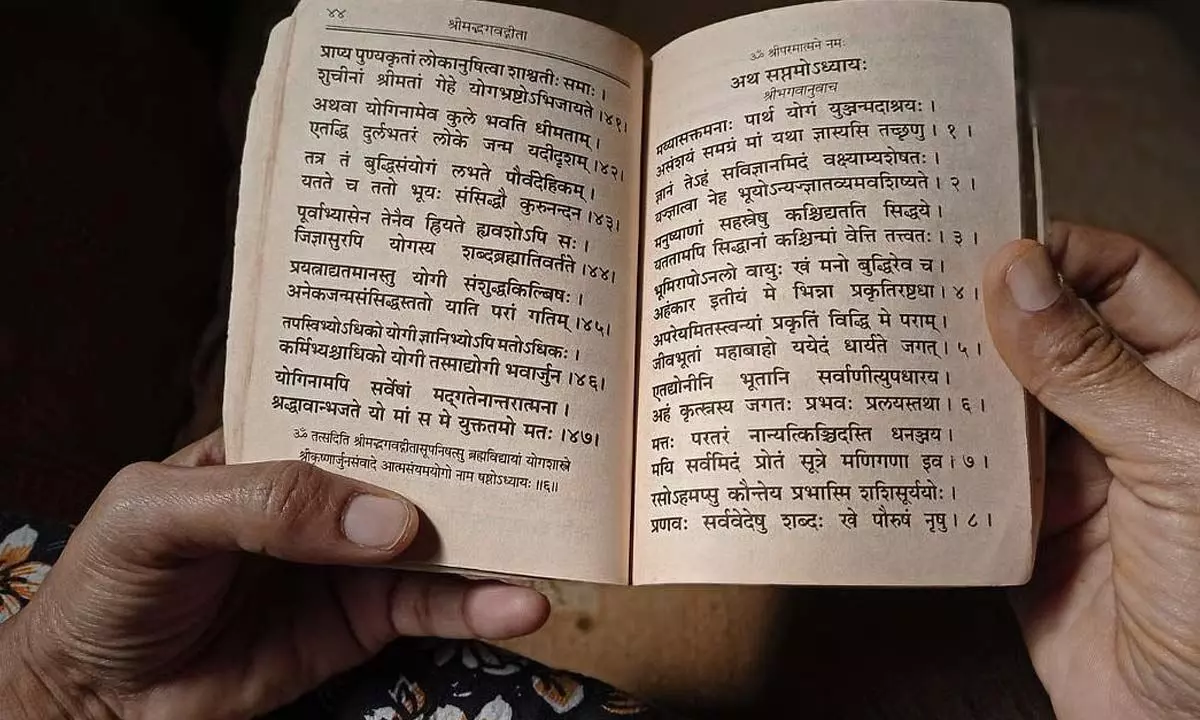
World Sanskrit Day is celebrated annually to pay tribute to one of the world’s oldest and most profound languages—Sanskrit. Observed on Shravana Purnima, which usually falls in August, the day highlights the significance of Sanskrit as not just a classical language, but as a cultural and intellectual treasure that continues to inspire generations.
Sanskrit, often referred to as the “language of the gods,” has been the medium of India’s most revered texts—the Vedas, Upanishads, epics like the Ramayana and Mahabharata, and countless works of philosophy, science, and literature.
Despite being an ancient language, it holds timeless relevance in understanding India’s traditions, thought systems, and knowledge heritage.
Students are encouraged to recite shlokas, perform plays, or participate in essay competitions, creating a bridge between tradition and contemporary learning. World Sanskrit Day also emphasizes the importance of reviving and promoting Sanskrit in daily life. Efforts such as teaching spoken Sanskrit, translating modern works, and digital learning platforms are helping the younger generation reconnect with this linguistic heritage.
The celebration is not only about preserving a language but also about safeguarding the wisdom it carries. Sanskrit embodies values of harmony, respect for nature, and pursuit of knowledge—messages that remain vitalin today’s world.