Silk farmers in Kolar rejoice as cocoon prices surge to ₹1,000 per kg

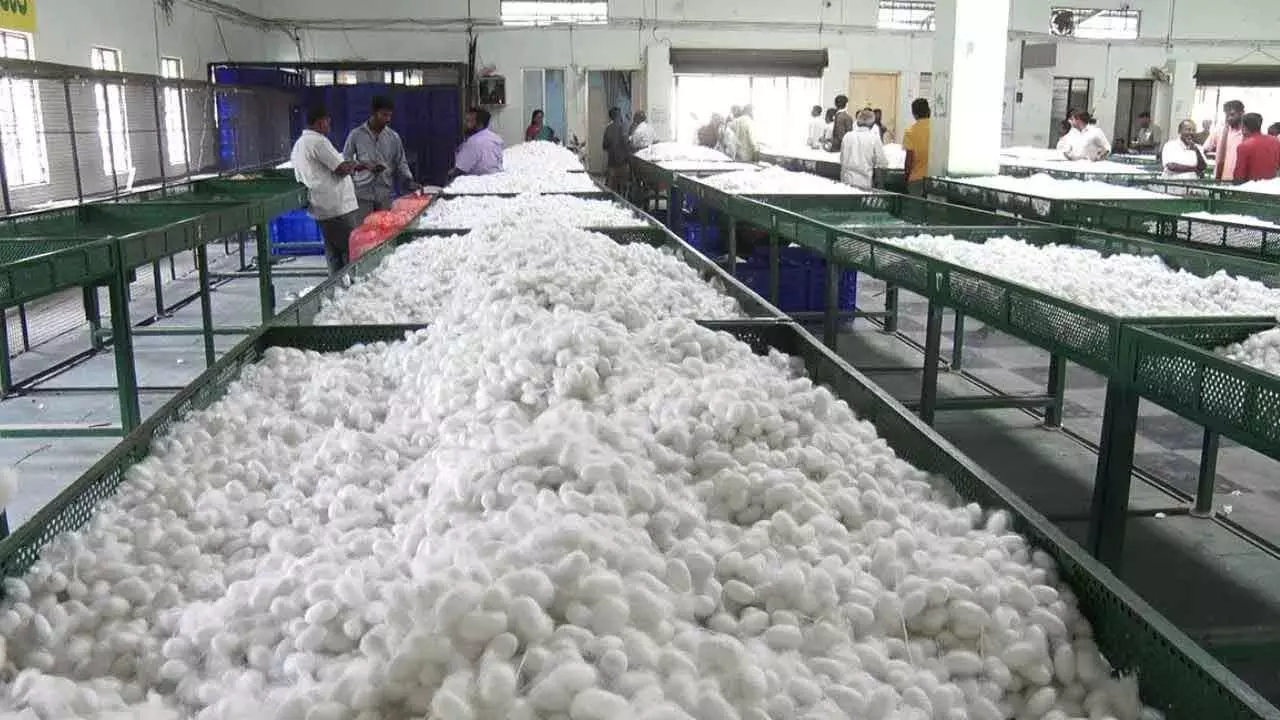
Kolar : Silk farmers in Kolar district, long known for its silk and milk production, are witnessing a rare phase of prosperity as cocoon prices have surged significantly in recent days. For the first time since the COVID-19 pandemic, farmers are receiving highly remunerative prices for their produce, bringing much-needed relief and optimism to thousands of sericulture-dependent families.
According to market data, bi-voltine silk cocoons are currently fetching between ₹800 and ₹1,000 per kilogram in Kolar markets. This sharp rise in prices over the past two to three days has brought smiles back to farmers who had been struggling with fluctuating prices, rising input costs, and declining productivity in recent years.
Farmers said such high prices were last seen during the pandemic period, when imports of Chinese silk had declined sharply. Since then, prices had remained relatively subdued, affecting farm incomes. However, recent climatic fluctuations, decline in mulberry leaf quality, and reduced cocoon production have resulted in lower supply, pushing up demand and prices in the market.
Reelers, who extract silk yarn from cocoons, are now offering higher prices due to increased demand for quality silk in both domestic and international markets. This has directly benefited farmers who have invested in quality mulberry cultivation and cocoon production.
Kolar district has been a major hub for sericulture for several decades. Currently, mulberry is cultivated in approximately 20,134 hectares across the district, producing around 11,500 metric tonnes of silk annually. Nearly 19,739 farmers from 1,477 villages depend on sericulture for their livelihood.
However, the sector has faced multiple challenges in recent years, including labour shortages, erratic weather conditions, and rising costs. Many farmers had reduced their production or shifted to other crops due to uncertainty and declining returns.
Silk Market Deputy Director Srinivas said production levels have dropped significantly compared to earlier years. “Farmers who once produced one tonne of silk are now producing only 400 to 500 kilograms due to various constraints. However, strong international demand and stable prices are encouraging signs. Farmers can earn good income if they focus on sericulture,” he said.
Sericulture Department Deputy Director Anjaney Reddy said farmers have significant income potential. “Quality silk continues to fetch premium prices. Farmers have the opportunity to earn lakhs of rupees through sericulture. The department is implementing several schemes to support farmers and encourage silk cultivation,” he said.
The recent price surge has renewed confidence among farmers who were considering exiting sericulture. Many now see silk farming as a viable and profitable livelihood option once again.