Makhana vs Peanuts: Which Snack Supports Weight Loss Better?

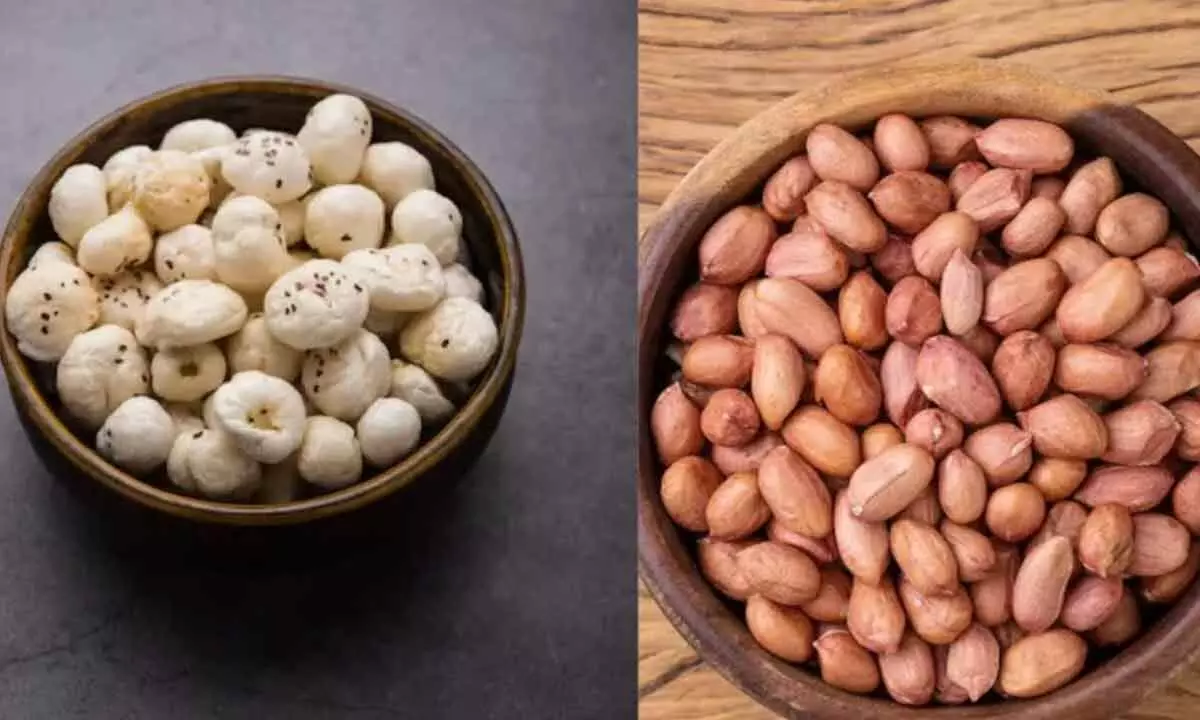
Choosing low-calorie, nutrient-rich snacks like makhana and peanuts can support weight management while keeping hunger pangs at bay.
Snacking is often unavoidable, whether it’s mid-afternoon cravings or movie-time munching. Reaching for light, nutritious options is essential, as unhealthy snacks may satisfy taste buds but add unnecessary calories. Two popular choices—makhana (fox nuts) and peanuts—stand out for their nutrient profiles and versatility, making them favourites for health-conscious individuals.
Nutritional Breakdown
Makhana is low in calories yet high in fibre, which helps maintain fullness for longer periods. It provides plant-based protein, potassium, and antioxidants, aiding digestion and blood sugar control. Peanuts, on the other hand, are calorie-dense but nutrient-packed, offering higher protein, vitamin E, B vitamins, magnesium, and heart-healthy fats. They also contain antioxidants that help protect the body from oxidative stress.
In terms of macronutrients, 100 grams of makhana contain around 75–80 grams of low-glycaemic carbohydrates and roughly 10 grams of protein, while peanuts provide 18–38 grams of carbohydrates and 20–25 grams of protein. This makes makhana lighter on the stomach, while peanuts suit those needing more energy or focusing on muscle and heart health.
Weight Loss Considerations
For individuals aiming to lose weight, calorie count plays a crucial role. Makhana emerges as the better option for weight management, being lower in fat and calories. Dry-roasted makhana provides around 356 calories per 100 grams with minimal fat content, making it ideal for evening snacks without risking overeating later. Peanuts are more energy-dense, with over 550 calories and 40–50 grams of fat per 100 grams, requiring careful portion control on a calorie-deficit diet.
Smart Consumption Tips
Moderation is key: 30–50 grams of either snack per day is generally recommended. Combining both snacks can offer a balance of protein and fibre, with a suggested ratio of 75 percent makhana and 25 percent peanuts for optimal nutrient intake. Adequate water consumption is essential to prevent constipation, especially when consuming high-fibre snacks.
The cooking method also matters. Roasting or adding them to salads or cereals is healthier than frying or using excessive oil. Mild seasoning is acceptable, but heavy salt, spice, or ghee can diminish the health benefits.
Both makhana and peanuts provide valuable nutrients, with makhana offering low-calorie, high-fibre benefits, and peanuts supplying protein and healthy fats. Rather than relying solely on one snack, incorporating both in moderation can support overall health and weight management. Balanced eating, combined with an active lifestyle and sufficient sleep, remains crucial for achieving sustainable weight loss goals.