
Bengaluru's Traffic Crisis: A Deep Dive With Police Officials And Zerodha's Kamath

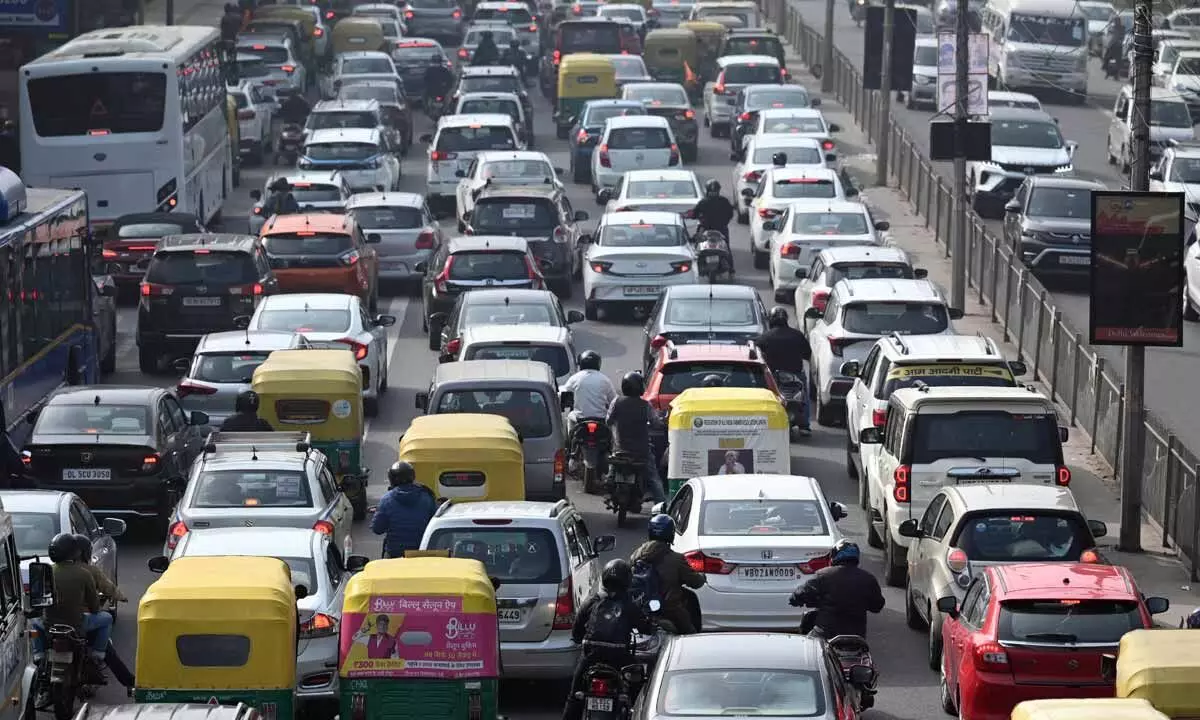
- Explore Bengaluru's crippling traffic crisis as Zerodha's Nikhil Kamath discusses with top police officials the city's 872 vehicles per 1,000 people, outdated infrastructure, and how public transport expansion like the metro has already reduced congestion by 17% in some areas.
- Learn why India's tech hub is choking on its own success and what solutions might finally ease the gridlock.
"Whenever people hear me praise Bengaluru, they immediately counter with: traffic, traffic, traffic," remarked Zerodha co-founder Nikhil Kamath, capturing the sentiment of millions. In his podcast 'WTF Is', Kamath recently engaged in a frank, data-driven conversation with Bengaluru Police Commissioner B Dayananda and Joint Commissioner (Traffic) MN Anucheth about the city's most notorious problem—its gridlocked streets. The discussion revealed a metropolis struggling to manage its own rapid growth, with no quick fixes in sight.
Following the IT boom after 2000, Bengaluru experienced explosive growth that its infrastructure simply couldn't match," explained Anucheth.
The statistics tell a sobering story: Bengaluru now hosts over 1.23 crore registered vehicles serving a population of approximately 1.5 crore—translating to 872 vehicles per 1,000 residents. This density surpasses both Mumbai and Delhi. More alarming is that this figure has doubled within just a decade, with vehicle numbers growing at an 8% annual compounded rate while road networks remained virtually static.
While Bengaluru's traffic has become legendary fodder for social media humor, the reality is far from amusing for residents. The city currently ranks third in the TomTom Traffic Index, with commuters spending over 34 minutes on average to travel just 10 kilometers.
The congestion isn't solely due to passenger vehicles. "Unlike Delhi with its dedicated truck terminals, Bengaluru lacks proper peripheral road networks. Heavy goods vehicles must use city roads, creating bottlenecks at junctions and flyovers," noted Anucheth.
Seasonal challenges compound these problems. "Every monsoon, waterlogging significantly disrupts traffic. Our outdated drainage infrastructure makes conditions worse for commuters and nearly impossible for traffic police to manage effectively," he added.
When pressed about solutions, the conversation repeatedly returned to public transportation. "Historically, Bengaluru lacked robust public transport options. Before the metro, we relied solely on BMTC buses. Delhi developed its Metro system, Mumbai has its local trains, and Kolkata has trams—Bengaluru missed these opportunities," said Anucheth.
Even limited progress has shown promising results. "When the Baiyyappanahalli line connected to the Whitefield line, peak hour traffic automatically decreased by 17%. This demonstrates the critical importance of interconnected public transportation," he emphasized.
Kamath expressed skepticism about the pace of development: "Metro construction near my home on Bannerghatta Road began perhaps ten years ago and remains unfinished."
While acknowledging the delays, Anucheth remained optimistic: "Implementation has been slow, but momentum is building. Once fully operational, the difference will be dramatic. Metro lines will reduce congestion, and road space currently occupied by construction—such as the Outer Ring Road—will finally reopen. The complete ten-lane carriageway will become available again."
In addressing immediate concerns, Anucheth outlined current initiatives: "We're implementing AI-based traffic signals and technological interventions to improve traffic flow."
Commissioner Dayananda reinforced this approach: "Enhanced public transportation, smarter road systems, and increased infrastructure investment are all part of our strategy. Complaining is easy, but meaningful solutions require time."
Kamath's candid assessment resonated with listeners: a rapidly expanding tech hub constrained by its civic limitations.
Anucheth concluded emphatically: "The definitive long-term solution is public transport—whether suburban rail, metro, or K-Ride. That's the only sustainable path forward."
The episode titled "WTF Is Policing" generated significant online engagement.
X user Anoosha Soham Bathwal commended its practical approach: "Loved how you tackled everyday chaos with tech and practical thinking. Bangalore traffic needs more such honest conversations."
Another user, Rolwyn Castelino, raised questions about enforcement: "You asked if politicians receive traffic challans. The answer was fair, but auto-rickshaws rarely face fines from IMTS cameras. These violations are filtered out, showing leniency toward the auto mafia."


