Birdwatching can promote environmentally responsible behaviour, says IIM Lucknow study

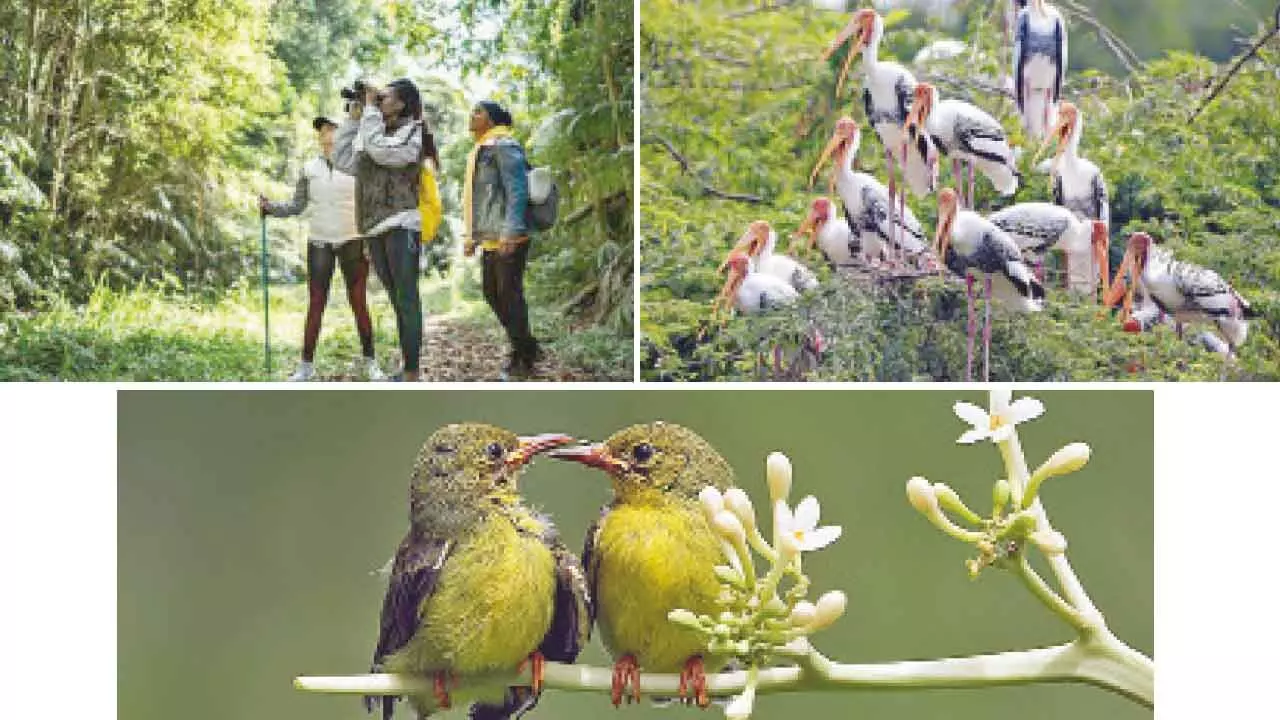
The quality of the birdwatching experience – including guidance, informativeness, and service – directly affects tourists’ behaviour, the report says
Hyderabad: The Indian Institute of Management (IIM) Lucknow is conducting research that explores the consequences of avi-tourism (birdwatching) experiences on tourists and examines whether these experiences can promote Environmentally Responsible Behaviour (ERB). This study, published in the prestigious journal Tourism Recreation Research, was co-authored by Dr Anirban Chakraborty, Associate Professor of Marketing at IIM Lucknow, and Dr Debankur Saha, Assistant Professor at IFMR Graduate Business School, Krea University.
It investigates how birdwatching creates an immersive experience in nature, motivating individuals to act in an environmentally conscious manner. The research is vital for stakeholders aiming to design policies that promote sustainability and environmental stewardship.
The key research findings of the study claim that birdwatching activities allow tourists to witness the beauty of avian species in their natural habitats, creating lasting and memorable impressions. The sense of adventure within serene natural environments, combined with the joy of spotting rare bird species, contributes to immediate feelings of discovery, happiness, and contentment. This positive emotional state encourages individuals to recognise the value of the natural environment and fosters a moral obligation to preserve it for future generations.
“However, the quality of the birdwatching experience – including guidance, informativeness, and service – directly relates to the motivation for exhibiting ERB,” the study says.
Thus, well-informed guides, who can explain the intricate interconnectedness of local ecosystems, are essential for delivering an impactful experience. The presence of eco-friendly and comfortable hospitality facilities enhances the overall experience for tourists.
To arrive at these findings, the research team utilised the Stimulus-Organism-Response (SOR) framework to develop a conceptual model and analyse the responses of over 300 birdwatching tourists. Commenting on the significance of this study, Prof Anirban Chakraborty stated, “India is home to more than 1,300 species of birds, representing over 12 per cent of the world’s total bird diversity.
This presents tremendous potential for avi-tourism. The growing interest in experiential tourism can be leveraged to promote this sector.
A sustainable and eco-friendly approach to tapping this potential will generate funds necessary for the conservation of these often-neglected habitats. A well-designed avi-tourism encounter can provide a transformative experience for participants, fostering appreciation for complex ecosystems and empathy towards local communities. Even if a small fraction of these avi-tourists become environmental advocates, the wider societal interests will be served.
The proposed framework offers valuable guidance for tourism operators seeking to enhance tourist experiences, resulting in more environmentally conscious visitors.
Additionally, these insights can assist policymakers in designing tourism activities and policies that promote environmental sustainability, ultimately contributing to the overall welfare of society, the study said.