Mission Bhashini: India’s AI leap to translate every voice, every language


That’s how Bharat’s Bhashini shaped up – Prof Rajeev Sangal
In a rare and insightful account, Prof Rajeev Sangal, founding Chair of Mission Bhashini’s Executive Committee, has unveiled the strategic blueprint behind India’s ambitious speech-to-speech machine translation (SSMT) initiative. Mission Bhashini, now a national flagship program, is redefining India’s approach to AI-powered language technology—placing inclusivity, domain-specific innovation, and ethical design at its core.
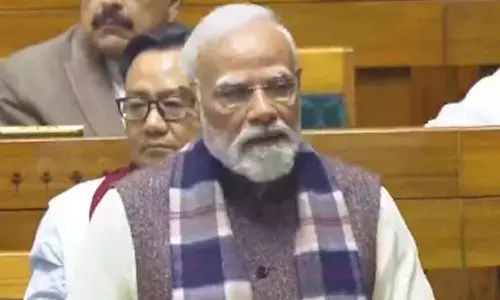
Explaining the time line of Bhashini’s development, he said, conceived in 2018–19 under the Prime Minister’s Science Technology and Innovation Advisory Council (PM-STIAC), the Mission was born from a directive by then-chairman Prof K. Vijayraghavan to develop scalable translation systems, especially for science and technology content. Prof Sangal recalled demonstrating early machine translation capabilities to Prime Minister Narendra Modi in 2016, which later inspired the mission-mode approach.
At the time, few believed India could rival multinational tech giants like Google or Meta. But decades of research under MeitY’s TDIL program had already laid the groundwork. “The challenge was rebuilding these systems with modern tools and engineering them for scale,” said Prof Sangal. India’s success with platforms like UPI and Aadhaar further boosted confidence in delivering world-class technology.
Mission Bhashini’s scope was deliberately bold. It was not just text-to-text translation, but full speech-to-speech machine translation. This required bridging traditionally siloed domains—machine translation and speech processing. A pivotal workshop at IIIT Hyderabad in January 2019 brought experts together, confirming India’s readiness to pursue SSMT.
Educational content was prioritized for initial deployment, with platforms like NPTEL and Swayam identified as early beneficiaries. The system would operate as a human–machine hybrid, combining automated output with human corrections until full automation became viable.
Technologically, Bhashini developed a complete SSMT pipeline integrating automatic speech recognition (ASR), machine translation (MT), and text-to-speech (TTS), supported by modules for disfluency correction, named entity recognition, and OCR for Indian scripts. Each component could also function independently, enabling applications in transcription, summarization, sentiment analysis, and future LLM integration.
Inclusivity remains a cornerstone of the Mission. Unlike MNCs that focus on commercially viable languages, Bhashini is committed to all 22 official Indian languages. “By developing this technology within India, we retain full control and ensure it serves every linguistic community,” Prof Sangal affirmed.
Strategically, Bhashini draws inspiration from nature—where smaller species thrive by occupying niches. Instead of competing head-on with global giants, the Mission focuses on domain-specific applications where Indian startups can excel. To support this, Technology Acceleration Centres (TACs)—formerly Centres of Excellence—were established to incubate startups and engineer scalable solutions.
The Mission’s research model is equally innovative. Recognizing that no single institution holds all necessary expertise, Bhashini funded 13 consortium-led projects involving over 70 research groups across 30 institutions. These consortia brought together computer scientists, linguists, and Sanskrit scholars to collaboratively build AI models. However, digital accounting systems like PFMS posed challenges to consortium operations, frustrating ministries and threatening best practices.
On the data front, Prof Rajeev Sangal said, Bhashini invested heavily in building spoken corpora and parallel translations. All datasets and models were made open source to empower Indian researchers and startups—despite concerns about MNCs accessing the same resources. Prof Sangal acknowledged the trade-off, noting that restricting access would have hurt local innovators more than global players.
Bhashini’s ecosystem spans three interlinked cycles. They include, ‘Technology cycle’ for R&D and startups co-develop tools like ASR, MT, and TTS; ‘Market cycle’ for Startups collaborate with publishers and content providers to deliver AI services, and ‘Social cycle’ for Citizens, students, and cultural bodies generate and use Indian language content, supported by state governments.
These cycles reinforce one another—knowledge drives technology, money fuels markets, and service sustains social impact. While the technology cycle has matured, the market and social cycles require further activation.
So far, Bhashini has delivered over 350 AI models covering 20+ languages, translated 200+ NPTEL/Swayam courses, and enabled voice Bot services across government portals. The free Bhashini app brings these tools to mobile users nationwide.
Looking ahead, the Mission will focus on prosody—the rhythm and emotion in speech—to enable more nuanced, paragraph-level translation. Indian academia is well-positioned to lead this frontier.
With its inclusive vision, strategic design, and ethical foundation, Mission Bhashini is poised to unleash a revolution in Indian language AI—making every voice heard, and every language understood, he added.
Prof. Rajeev Sangal, a pioneering computer scientist and former Director of IIT (BHU) Varanasi and founder Director of IIIT Hyderabad offers a masterclass on AI and language technology. A distinguished alumnus of IIT Kanpur and the University of Pennsylvania, Prof. Sangal is a world-renowned expert in computational linguistics, best known for his groundbreaking work on the Computational Paninian Grammar framework for Indian languages.