Devastating Kishtwar Cloudburst Claims 37 Lives, Injures Over 100 Pilgrims On Machail Mata Yatra Route

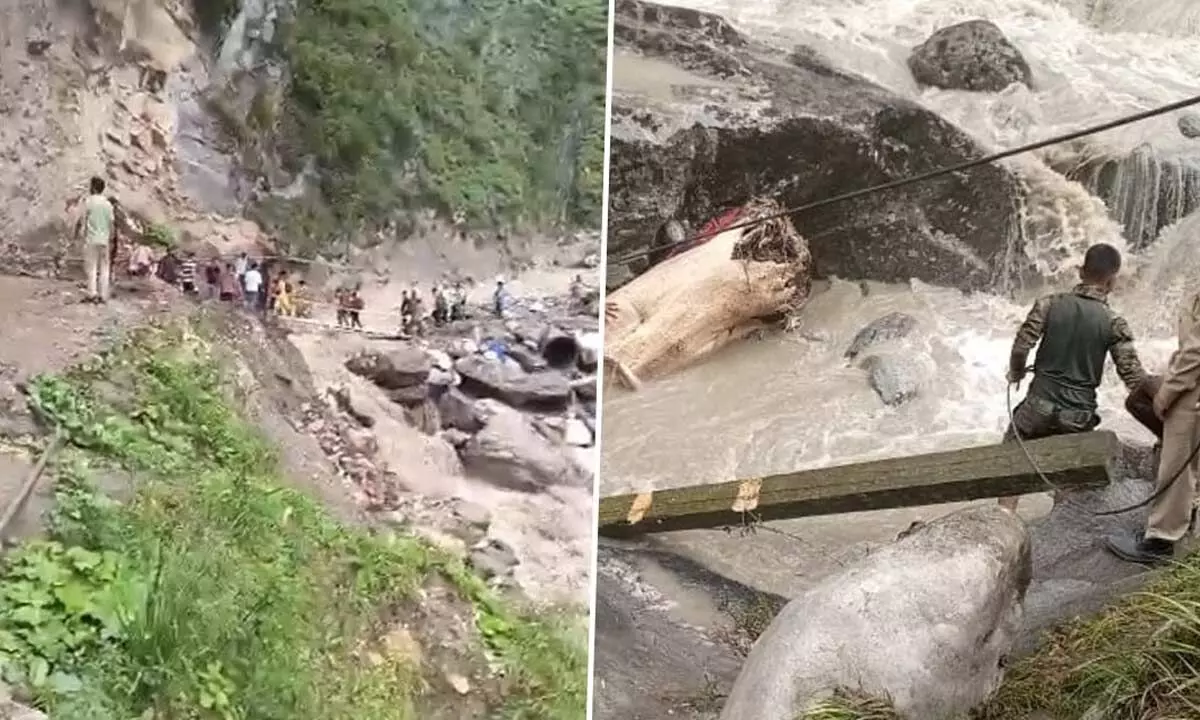
Tragic cloudburst in Kishtwar's Chositi village kills 37 pilgrims and injures over 100 during Machail Mata Yatra as rescue operations continue amid heavy rainfall in Jammu and Kashmir.
A catastrophic cloudburst struck Chositi village in Jammu and Kashmir's Kishtwar district on Thursday afternoon, claiming at least 37 lives and injuring more than 100 people, predominantly pilgrims participating in the annual Machail Mata Yatra. The disaster occurred between 12 and 1 pm when hundreds of devotees had assembled at the village, which serves as the final motorable point before the 8.5-kilometer trek to the sacred Machail Mata temple situated at 9,500 feet elevation.
Deputy Commissioner Pankaj Kumar Sharma confirmed the casualties to media outlets, while Inspector General of Police BS Tuti indicated that the death toll could rise as several individuals remain missing. The natural disaster struck with devastating force, targeting a community kitchen that had been established to serve the pilgrims, causing maximum casualties among those gathered for the religious journey.
Rescue teams have successfully evacuated 65 people from the affected area, though operations continue under challenging conditions with heavy rainfall and debris hampering efforts. Among the confirmed casualties is one Central Industrial Security Force officer, with three additional CISF personnel still missing. These security personnel had been deployed for temporary internal security duties during the pilgrimage season.
Chief Minister Omar Abdullah immediately contacted Union Home Minister Amit Shah to brief him about the evolving situation and coordinate relief efforts. Abdullah emphasized that verified information from the disaster zone was arriving slowly due to the remote location and difficult terrain. He assured that all available resources from within Jammu and Kashmir and beyond were being mobilized to manage rescue operations effectively.
Lieutenant Governor Manoj Sinha expressed profound grief over the incident and directed civil administration, police, army, National Disaster Response Force, and State Disaster Response Force officials to intensify rescue and relief operations. He assured that all possible assistance would be provided to those affected by the tragedy.
Union Minister Jitendra Singh, who maintains close contact with the region, spoke directly with the district administration after being alerted by local MLA and Leader of Opposition Sunil Kumar Sharma. Singh confirmed that the administration had immediately responded to the emergency, with rescue teams dispatched to the site and comprehensive damage assessment and medical arrangements being implemented.
The cloudburst represents part of a broader pattern of extreme weather events affecting mountainous regions across northern India during the current monsoon season. Heavy rainfall has triggered multiple incidents of cloudbursts, flash floods, and landslides, causing significant loss of life and property damage throughout the Himalayan regions.
Similar weather-related disasters have recently occurred in neighboring Uttarakhand, where cloudbursts and landslides have disrupted transportation networks and caused substantial destruction. The Uttarkashi region experienced severe flooding on August 5, leading to mass destruction in Dharali and Harsil villages, prompting authorities to reconstruct critical infrastructure to facilitate relief operations.
Himachal Pradesh has also been severely impacted by the monsoon fury, with 396 roads closed due to cloudbursts and flash floods affecting multiple districts including Shimla, Kullu, Kinnaur, and Lahaul and Spiti. The meteorological department has issued yellow alerts warning of continued heavy rainfall in isolated areas until August 20.
The Machail Mata Yatra attracts thousands of devotees annually who undertake the challenging journey to seek blessings at the high-altitude shrine. The pilgrimage route passes through difficult terrain, making rescue and relief operations particularly challenging during adverse weather conditions.
Local authorities continue coordinating with multiple agencies to ensure comprehensive rescue coverage and medical assistance for the injured. The incident highlights the vulnerability of pilgrimage routes in mountainous regions during monsoon seasons and underscores the need for enhanced early warning systems and emergency preparedness measures.
The tragedy has prompted renewed discussions about implementing better safety protocols for religious gatherings in disaster-prone areas, particularly during monsoon periods when the risk of sudden weather events remains elevated in the Himalayan regions.