Dharmasthala Mass Burial Investigation: Police Prepare For Major Forensic Operation

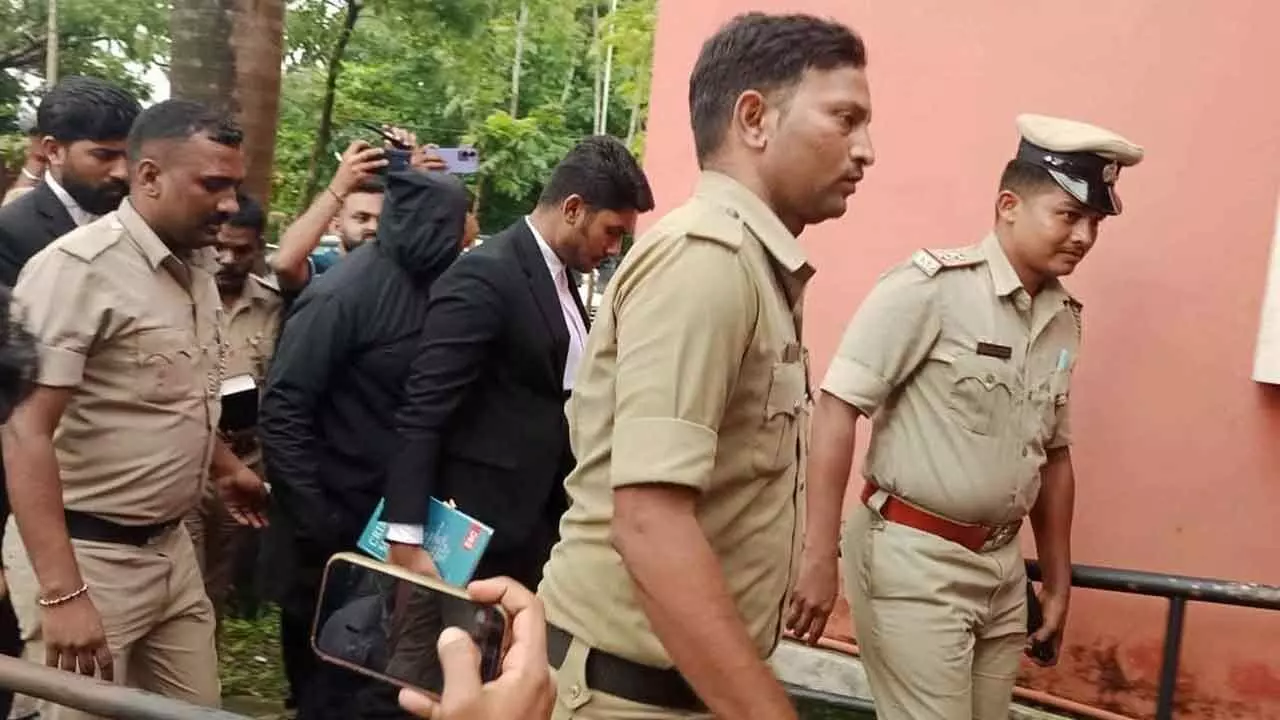
Karnataka's Special Investigation Team gears up for extensive forensic probe following sanitation worker's claims of over 100 bodies buried at Dharmasthala pilgrimage site.
In the sacred grounds of Dharmasthala, where thousands of devotees arrive seeking spiritual solace, law enforcement authorities are now confronting a potentially horrific reality that could transform this revered pilgrimage destination into a complex crime scene. What started as disturbing revelations from a former sanitation employee has evolved into what may become Karnataka's most extensive forensic investigation in recent memory.
The location under scrutiny, currently overgrown with thick vegetation and historically used as a burial ground for unidentified deceased individuals, could potentially yield evidence of numerous criminal acts according to investigating officials. Based on the worker's allegations, more than one hundred bodies may lie beneath the surface, though the actual number remains uncertain until excavation work commences.
A high-ranking official working with the Special Investigation Team established by the Karnataka government to examine these allegations described the preparations for what promises to be an extraordinarily detailed operation. The anonymous officer emphasized that this investigation extends far beyond a typical criminal case, potentially uncovering multiple unsolved cases that have remained buried beneath layers of earth for years.
The complexity of this investigation stems from several challenging factors. Officials acknowledge that establishing the identity of potential victims will require creating comprehensive databases, including DNA profiles, which represents a monumental task given the scope of the allegations. The SIT must coordinate with local police departments to recover historical documentation, including First Information Reports and missing person files spanning the relevant time period.
Investigators face additional complications due to Dharmasthala's lack of a dedicated police station until 2016, meaning crucial records may be scattered across different jurisdictions or potentially incomplete. The process will require examining two decades worth of documentation, with some files possibly damaged or missing entirely.
The verification process presents unique challenges since the area was legitimately used for burying unclaimed bodies, making it difficult to distinguish between authorized burials and potential criminal activities. Officials hope that information from historical missing person cases and details shared through police helplines, particularly in situations where formal complaints were never filed, will assist in building accurate victim databases.
While DNA extraction from human remains remains scientifically feasible, matching these profiles with existing records poses significant difficulties. The most substantial challenge involves proving allegations of sexual assault and murder, as claimed by the worker, when only skeletal remains may be available for examination after such extended periods underground.
Given the considerable time that has elapsed since most of these alleged incidents occurred, conventional forensic methodologies may prove inadequate for the investigation's requirements. Consequently, the SIT is exploring the establishment of a specialized forensic laboratory at Dharmasthala, equipped with molecular biology experts and advanced DNA analysis capabilities. Officials are also considering partnerships with national-level laboratory facilities to support the investigation.
The current SIT comprises twenty-four members, including four senior officers, but the potential scale of this investigation may necessitate significantly expanded personnel. According to one official, if the allegations prove accurate and numerous bodies are discovered, each case will require individual investigation teams. Whether dealing with murder cases or natural deaths, each incident demands comprehensive processing by dedicated personnel, potentially requiring hundreds of additional investigators.
The investigation represents a delicate balance between respecting the spiritual significance of Dharmasthala while thoroughly examining serious criminal allegations. The site's importance as a religious destination adds another layer of complexity to an already challenging forensic operation.
As the SIT prepares for what could become a landmark investigation in Indian forensic science, the outcome will depend heavily on the former sanitation worker's ability to accurately identify specific burial locations as claimed. Only through precise location identification can investigators begin the systematic excavation and analysis process necessary to either substantiate or disprove these deeply troubling allegations.
The investigation's success will ultimately rely on the coordination between multiple agencies, advanced forensic techniques, and the careful preservation of evidence that may have remained undisturbed for over a decade beneath the sacred soil of this prominent pilgrimage site.