IAF Chief Confirms Pakistan Lost 4–5 Fighter Jets, Likely F-16s, In Operation Sindoor

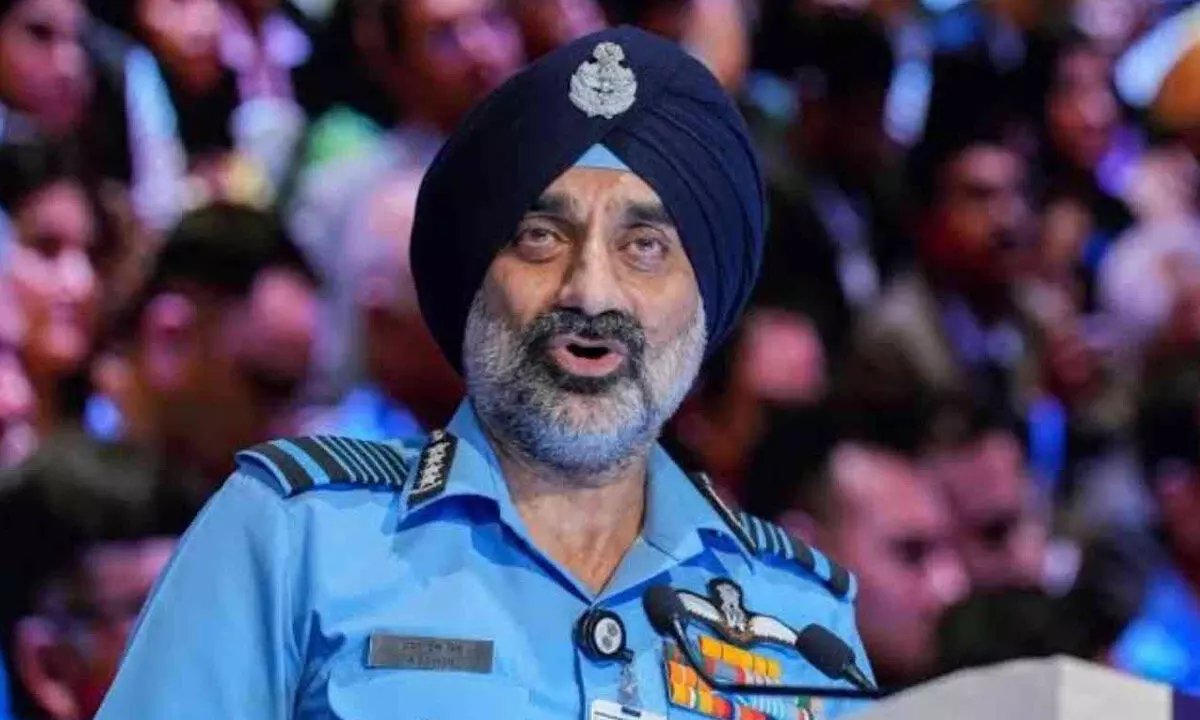
- Air Chief Marshal A P Singh has confirmed that India’s Operation Sindoor destroyed 4–5 Pakistani fighter aircraft, most likely F-16s, along with radars, runways, and key installations.
- This marks the first official acknowledgment of the specific jets lost by Pakistan during the May strikes.
New Delhi: For the first time since Operation Sindoor in May 2025, Air Chief Marshal A P Singh has confirmed in detail the scale of Pakistan’s air losses, stating that the Indian Air Force (IAF) destroyed four to five fighter jets — most likely F-16s — during the cross-border strikes. This marks a significant disclosure, as earlier official statements had only mentioned the destruction of “at least five fighters and one large aircraft” without specifying their type.
Speaking at the 93rd Air Force Day celebrations, the IAF Chief elaborated that the strikes were not limited to aerial targets alone but involved coordinated attacks on multiple strategic assets. “We have struck a large number of Pakistan’s airfields and installations,” Singh said. “Our strikes damaged radars at at least four locations, command-and-control centres at two places, and runways at two stations. Additionally, three hangars across different bases were destroyed. Our data confirms the destruction of at least one C-130 class transport aircraft and four to five fighter aircraft, most likely F-16s, which were under maintenance at the time of the attack.”
The strikes, launched on the intervening night of May 6–7, were a response to the April 22 terrorist attack in Pahalgam, which claimed the lives of multiple civilians. Operation Sindoor, described by defence analysts as the largest cross-border retaliation since the 2019 Balakot airstrikes and the 2016 Uri surgical strikes, targeted Pakistani air bases, radars, command centres, and fighter fleets to degrade Pakistan’s air combat capabilities.
Singh further revealed: “Alongside the fighter jets, we destroyed a Surface-to-Air Missile (SAM) system and struck with precision a long-range target over 300 kilometres away, believed to be either an AEW&C (Airborne Early Warning and Control) aircraft or a similar high-value asset. Our reconnaissance confirms destruction of at least five high-tech fighter aircraft of the F-16 and JF-17 class.”
This disclosure represents the first official confirmation that Pakistan’s advanced F-16 fighter jets were among the losses. Until now, defence statements had only referred broadly to “fighter aircraft” and refrained from naming the type.
On India’s own losses, Singh did not comment, though senior officials have previously acknowledged aircraft losses without specifying numbers. Chief of Defence Staff General Anil Chauhan admitted in May that India had lost aircraft during the strikes, and Defence Minister Rajnath Singh reaffirmed the success of the operation while asserting there were no soldier casualties.
Operation Sindoor stands as a critical moment in India’s strategic military response posture, showcasing the IAF’s capability to execute precise, large-scale operations deep inside adversary territory. The operation not only inflicted substantial damage to Pakistan’s air infrastructure but also sent a clear message about India’s readiness and capacity to respond to cross-border terrorism with decisive force.