India Declines To Endorse SCO Statement Over Pahalgam Terror Attack Omission


Defense Minister Rajnath Singh refuses to sign Shanghai Cooperation Organisation joint statement that excluded Pahalgam terror attack while mentioning Balochistan, citing India's anti-terror stance.
Defense Minister Rajnath Singh has declined to endorse a joint declaration at the Shanghai Cooperation Organisation's Defense Ministers' meeting in China's Qingdao, citing the document's failure to acknowledge the Pahalgam terrorist incident that resulted in 26 civilian deaths while simultaneously referencing Balochistan in what appeared to be veiled criticism of India.
The document's omission of the Pahalgam attack, which India considers a significant terrorist incident, while including references to Balochistan suggests Pakistan's influence on the statement's content, particularly given China's current chairmanship of the organization and its close relationship with Islamabad. India has consistently rejected Pakistani allegations regarding its involvement in Balochistan, maintaining that Pakistan should address its own internal issues and cease supporting terrorist activities rather than making unfounded accusations.
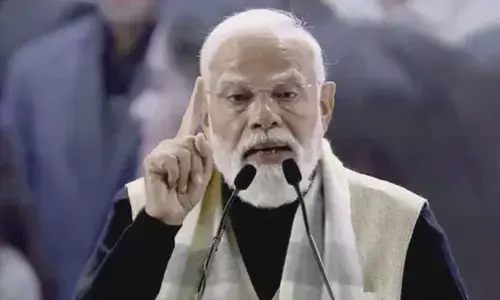
During his address to the SCO summit, which includes member nations Russia, Pakistan, China, Belarus, Iran, Kazakhstan, Kyrgyzstan, Tajikistan, and Uzbekistan, Singh emphasized the need for collective action against terrorism to ensure regional security. He identified radicalization, extremism, and terrorism as fundamental threats to peace, security, and trust within the region.
Singh delivered pointed remarks about nations that employ cross-border terrorism as a policy instrument while providing sanctuary to terrorist organizations. He argued that countries sponsoring and nurturing terrorism for narrow interests must face consequences, criticizing the double standards exhibited by some nations. The Defense Minister urged the SCO not to hesitate in condemning such practices.
Specifically addressing the Pahalgam incident, Singh detailed how victims were targeted based on their religious identity and noted that the Resistance Front, identified as a proxy of the UN-designated terrorist group Lashkar-e-Taiba, claimed responsibility for the attack. He drew parallels between the Pahalgam assault and previous LeT operations in India, emphasizing that the attack patterns were consistent with the organization's historical methods.
Singh affirmed India's zero-tolerance policy toward terrorism and its right to self-defense against terrorist threats. He declared that terrorist epicenters are no longer immune from retaliation and that India would not hesitate to target them when necessary. His statements reinforced India's position following Operation Sindoor, the military response to the Pahalgam attack.
The Defense Minister called for accountability among perpetrators, organizers, financiers, and sponsors of terrorism, emphasizing that all terrorist acts are criminal and unjustifiable. He urged SCO members to unequivocally condemn terrorism in all its forms.
Singh's refusal to sign the joint statement represents India's firm stance against terrorism and aligns with the country's broader diplomatic messaging following Operation Sindoor. As part of this strategy, India has dispatched eight diplomatic delegations internationally to articulate New Delhi's position on counterterrorism and its future approach to addressing such threats.