New Covid variant XFG detected in 163 cases

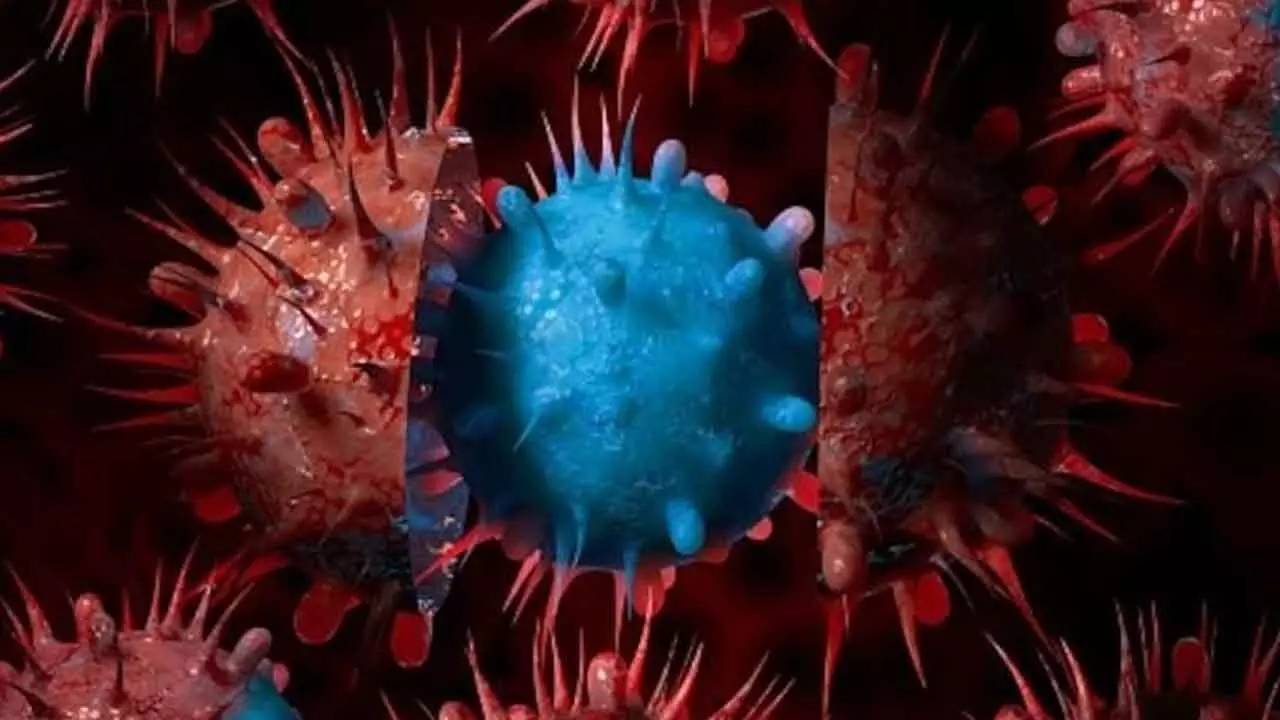
This recombinant subvariant evades immunity
New Delhi: A new Covid-19 variant known as XFG has been detected in 163 cases across India, according to the latest update from INSACOG, the Indian SARS-CoV-2 Genomics Consortium.
A network of 54 laboratories across India that track how the virus that causes Covid-19 is changing, INSACOG plays a crucial role in flagging emerging variants so that public health systems can respond effectively.
This comes at a time when active Covid-19 cases in the country are inching upwards, with over 6,000 active cases currently reported by the Union Health Ministry.
What is XFG variant?
XFG is a recombinant subvariant of the SARS-CoV-2 virus, which means it is formed by the mixing of two earlier variants, first detected in Canada.
In this case, LF.7 and LP.8.1.2 have combined to form XFG. Recombinant variants emerge when a person is infected with two different strains of the virus simultaneously, and the virus "mixes and matches" its genetic material.
XFG is classified under the larger Omicron family of Covid-19 variants, which has been dominant globally since late 2021.
According to INSACOG’s latest data: Maharashtra has recorded the highest number of XFG cases (89), followed by Tamil Nadu (16), Kerala (15), Gujarat (11), and Andhra Pradesh, Madhya Pradesh, and West Bengal (six each). Most of these cases (159) were detected in May 2024, while two each were reported in April and June. Indian scientists are closely watching XFG because of certain mutations in its spike protein, the part of the virus that helps it attach to and enter human cells.
These include changes named His445Arg, Asn487Asp, Gln493Glu, and Thr572Ile, according to a report by The Lancet. These mutations may affect how easily the virus enters human cells, how well it evades the immune system, and how fast it spreads from person to person.
While some of the changes reduce the virus's ability to latch onto human cells (what experts call reduced ACE2 receptor binding), others seem to help it evade immune responses, meaning it can escape detection by the body's natural defences or vaccines.
This combination means that while XFG might not be as infectious as earlier strains, its immune evasion capabilities make it harder for the body to fight once infected, especially in people with weaker immunity or without updated vaccines.
At the moment, there is no evidence to suggest that XFG is causing more severe illness or hospitalisations. However, its ability to spread quietly, by evading immunity, could make it a challenge if it becomes widespread. According to the Lancet report, XFG and other related emerging variants like NB.1.8.1, LF.7.9, and XFH show growth advantages, meaning they may be better at spreading than previous strains. These variants could potentially drive the next wave of infections if not monitored closely.