Nitin Gadkari Challenges Critics To Prove E20 Ethanol Petrol Causes Vehicle Problems


Union Minister Nitin Gadkari defends government's ethanol-blending program, stating no vehicle issues reported from 20% ethanol-blended petrol and dismisses criticism as misinformation.
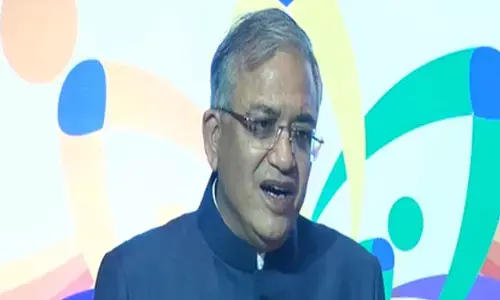
Union Minister for Road Transport and Highways Nitin Gadkari has issued a direct challenge to critics of ethanol-blended petrol, demanding they provide concrete evidence of any vehicle experiencing problems from the government's E20 fuel program.
Speaking at the Business Today India@100 Summit on Friday, Gadkari emphatically dismissed concerns surrounding the use of 20% ethanol-blended petrol, asserting that no complaints have been documented despite widespread implementation across the country. He accused detractors of deliberately spreading false information about the government's ethanol-blending initiative.
The minister questioned whether any automobile in India had encountered issues due to ethanol-blended fuel, emphasizing that both the Society of Indian Automobile Manufacturers and the Automotive Research Association of India have publicly endorsed the program. Gadkari maintained that extensive testing and research support the safety and effectiveness of ethanol-blended petrol for vehicle operations.
Beyond addressing safety concerns, Gadkari highlighted significant economic and environmental advantages of the ethanol-blending program. The initiative substantially reduces India's crude oil import expenditure while simultaneously decreasing vehicular emissions, supporting both national energy security objectives and climate change mitigation goals.
The minister specifically noted how ethanol production has created valuable new income streams for agricultural communities. He cited corn prices as an example, explaining that the commodity previously sold for Rs 1,200 per quintal now commands Rs 2,600 per quintal when used for ethanol production, directly benefiting rural farming households through enhanced agricultural revenues.
Gadkari characterized the ethanol initiative as representing agricultural diversification toward energy and power sectors, creating sustainable economic opportunities for farmers while reducing dependence on imported petroleum products. This transformation aligns with broader government objectives of promoting renewable energy sources and supporting rural economic development.
The minister suggested that some criticism may stem from vested interests opposed to the program's success, though he indicated the government remains confident in scientific validation. He emphasized that all ethanol-blending standards undergo rigorous testing by the Automotive Research Association of India, with comprehensive reports informing ministry policy decisions.
His remarks followed detailed clarification from the Ministry of Petroleum and Natural Gas addressing public concerns about E20 fuel's impact on vehicle performance. The ministry characterized widespread fears as scientifically unfounded, citing extensive long-term testing data demonstrating minimal performance differences between ethanol-blended and conventional petrol.
Government testing involved running both carbureted and fuel-injected vehicles for 100,000 kilometers using E20 fuel, with performance evaluations conducted every 10,000 kilometers. These comprehensive assessments found no statistically significant variations in power output, torque generation, or fuel efficiency compared to traditional petrol usage.
Additional evaluations by the Indian Institute of Petroleum and Indian Oil Corporation's research division confirmed that even older legacy vehicles did not experience abnormal wear patterns or component degradation. The E20 fuel successfully passed both cold-start and hot-start engine tests without operational difficulties.
While acknowledging that ethanol's lower energy density can slightly reduce mileage, officials clarified that the decline remains minimal at approximately 1-2% for newer vehicles calibrated for E20 usage, and 3-6% for older models. This reduction can be further mitigated through proper engine tuning and ethanol-compatible materials now standard in automotive manufacturing.
The government emphasized environmental benefits, noting that sugarcane-based ethanol produces 65% lower lifecycle emissions than conventional petrol, while maize-based ethanol reduces emissions by 50%. The program has saved over Rs 1.40 lakh crore in foreign exchange since 2014-15 while providing more than Rs 1.20 lakh crore in payments to farmers through ethanol procurement initiatives.