Supreme Court Modifies Delhi Stray Dog Order, Permits Release After Sterilization While Banning Street Feeding

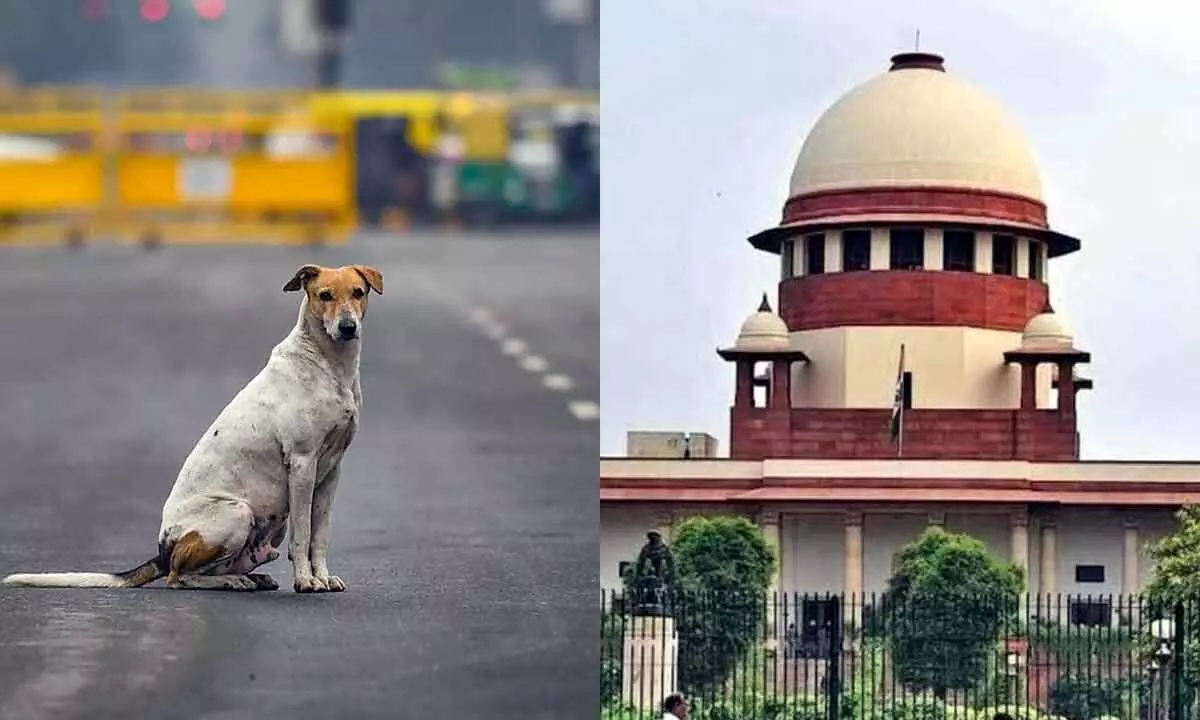
Supreme Court revises controversial stray dog order for Delhi-NCR, allowing release after sterilization and vaccination but prohibiting public feeding in streets.
The Supreme Court delivered its much-anticipated verdict on Friday regarding the contentious August 11 directive concerning stray dogs in the Delhi National Capital Region, significantly softening its earlier position while maintaining certain restrictions. The apex court stayed the previous order that mandated permanent relocation of stray dogs and instead ruled that while dogs should be collected by authorities, they must be released back into their territories following sterilization and immunization procedures.
A three-judge bench announced the modified directive, clarifying that the release provision applies exclusively to dogs that do not exhibit rabies infection or display aggressive behavioral patterns. This represents a substantial departure from the original August 11 order, which had required authorities to capture all stray dogs within eight weeks and house them permanently in shelters without any provision for their return to the streets.
The original directive had sparked widespread protests across India, with animal welfare advocates and concerned citizens demonstrating not only in the national capital but also in various other cities throughout the country. These protests highlighted public concern about the humanitarian implications of mass dog capture and permanent confinement, leading to the legal challenges that ultimately resulted in Friday's modified ruling.
While allowing for the return of sterilized dogs, the Supreme Court imposed significant restrictions on public feeding practices. The court directed that dedicated feeding stations be established rather than permitting indiscriminate street feeding, representing a compromise between animal welfare concerns and public safety considerations. This directive aims to create more controlled environments for feeding stray animals while addressing concerns about unregulated food distribution that may contribute to stray dog population growth.
The stayed August 11 order had contained strict enforcement provisions, warning of severe consequences for any individual or organization that interfered with the dog capture operations. The original directive had required authorities to construct adequate shelter facilities to house the captured animals permanently, explicitly prohibiting their release back onto public streets regardless of their health status or behavior.
During the comprehensive hearing held last week, the three-judge bench examined arguments from multiple parties representing different perspectives on the stray dog management issue. The deliberations involved detailed presentations from government representatives supporting the original order and animal welfare advocates challenging its implementation feasibility and humanitarian implications.
Solicitor General Tushar Mehta, representing the government's position, presented alarming statistics to support the need for aggressive intervention in stray dog management. He cited data indicating 37 lakh dog bite incidents annually and 305 rabies-related deaths each year, arguing that immediate and comprehensive action was necessary to protect public health and safety. These figures were presented as evidence of the urgent nature of the stray dog problem and the inadequacy of existing management approaches.
The government's legal team emphasized that the scale of the problem required decisive action to prevent further casualties and protect vulnerable populations, particularly children and elderly citizens who might be more susceptible to serious injuries from dog attacks. They argued that traditional sterilization and release programs had proven insufficient to address the magnitude of the public health challenge.
Senior advocate Kapil Sibal, representing the petitioners challenging the original order, focused his arguments on practical implementation challenges, particularly the severe shortage of adequate dog shelter facilities throughout the Delhi-NCR region. When the Supreme Court specifically requested clarification on the objectionable aspects of the August 11 directive, Sibal's presentation centered on the logistical impossibility of housing thousands of captured dogs in the limited shelter infrastructure currently available.
The petitioners' legal team argued that attempting to implement mass capture without sufficient shelter capacity would inevitably result in overcrowding, inadequate veterinary care, and poor living conditions that would constitute animal cruelty. They contended that the original order's prohibition on releasing dogs back to their territories, even after sterilization, was both impractical and inhumane given the infrastructure limitations.
Animal welfare advocates had consistently argued that established protocols under existing legislation, including the Animal Birth Control Rules, provided more humane and scientifically sound approaches to stray dog population management. These protocols typically involve capture, sterilization, vaccination, and return to the same locality, a practice known internationally as TNR (Trap-Neuter-Return) programs.
The Supreme Court's modified directive represents an attempt to balance competing concerns about public safety and animal welfare while acknowledging practical implementation constraints. By permitting the release of sterilized and vaccinated dogs that pose no health or safety risks, the court has aligned its approach more closely with established veterinary and animal welfare best practices.
The restriction on street feeding through the creation of designated feeding stations addresses another contentious aspect of stray dog management. Uncontrolled feeding practices have been criticized for potentially encouraging stray dog populations to concentrate in particular areas and for creating dependency relationships that may not serve the animals' long-term interests.
The verdict's emphasis on sterilization and vaccination as prerequisites for release reflects scientific consensus on effective stray dog population management. These procedures not only prevent reproduction but also protect both the animals and human populations from rabies and other transmissible diseases.
Implementation of the modified order will require significant coordination between municipal authorities, animal welfare organizations, and veterinary services throughout the Delhi-NCR region. The success of this approach will depend on establishing adequate veterinary infrastructure for sterilization and vaccination procedures, creating appropriate feeding stations, and developing protocols for identifying and managing dogs that exhibit aggressive behavior or health issues.
The Supreme Court's decision demonstrates judicial recognition of the complex balance required between protecting public health and safety while ensuring humane treatment of animals. The modified approach acknowledges that effective stray dog management requires comprehensive strategies that address root causes rather than simply removing animals from public spaces without addressing underlying population dynamics.
This verdict is likely to influence stray dog management policies in other Indian cities facing similar challenges, potentially establishing precedents for balancing public safety concerns with animal welfare obligations. The emphasis on sterilization, vaccination, and controlled feeding may serve as a model for other jurisdictions dealing with stray animal populations while respecting both human and animal welfare considerations.