AI’s Coding Leap Sparks Career Questions for Developers, Says Zoho’s Sridhar Vembu

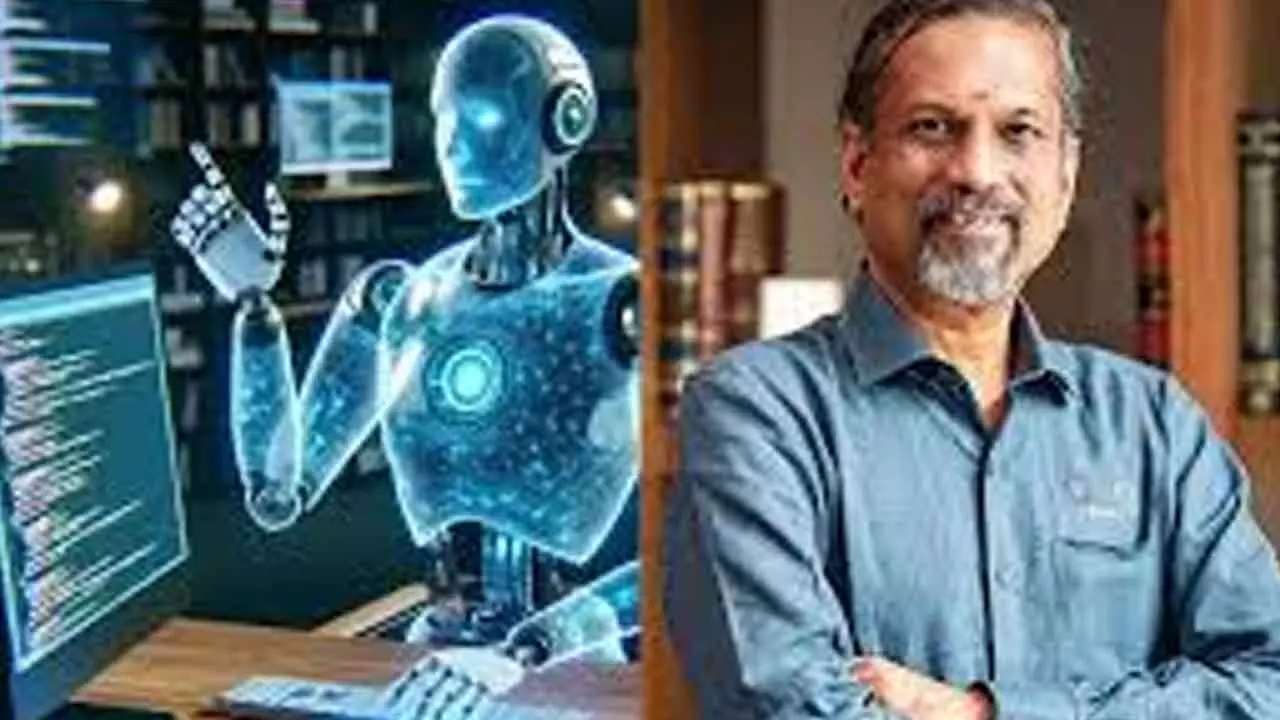
Rapid advances in AI coding tools are forcing developers to rethink careers as machines increasingly handle complex engineering tasks.
Artificial intelligence is rapidly reshaping the software development landscape, and some industry leaders now believe coding as a primary profession may soon look very different.
The latest trigger for this conversation came after Anthropic’s new Claude Opus 4.6 model reportedly built a full C compiler from scratch — a task many engineers consider highly complex even for experienced teams. The development has renewed concerns about how far AI can go in replacing traditional programming roles.
Zoho cofounder and chief Sridhar Vembu weighed in on the shift, suggesting that programmers should start preparing for a future where writing code may no longer be the core skill that guarantees employment.
In a recent post on X, Vembu pointed to examples of how AI is already boosting productivity to unexpected levels. He referenced a developer, Anish Moonka, who admitted he had no prior coding knowledge but still managed to create a Bhagavad Gita app within a week using tools from Anthropic and OpenAI.
Vembu described this as evidence of “AI-assisted Code Engineering productivity,” underscoring how quickly barriers to software creation are disappearing.
He also acknowledged the scale of Anthropic’s technical feat, saying, “That is not an easy engineering feat at all.”
While his remarks may sound alarming, Vembu emphasized calm acceptance rather than fear. He wrote, “At this point, it is best for those of us who depend on writing code for a living to start considering alternative livelihoods. I include myself in this. I don't say this in panic, but with calm acceptance and embrace.”
The broader industry context adds weight to his statement. AI advancements have already rattled tech markets, with tools like Claude Cowork reportedly contributing to sharp declines in valuations of SaaS companies. At the same time, several tech firms have announced layoffs as automation becomes more capable.
Vembu’s views echo similar sentiments expressed by other technology leaders. NodeJS creator Ryan Dahl, among others, has acknowledged that the era of manual coding could be nearing its end.
During a discussion with Google’s Gemini Pro, Vembu explored how the AI revolution might reshape society and the economy. He suggested two possible outcomes: an optimistic future where “technology will make most technological prowess by humans redundant and that would push tech to the background and we then get to focus on life,” or a darker alternative marked by heavy centralisation and control.
For now, the message from industry veterans is clear: rather than resist AI, professionals may need to adapt, reskill, and find new ways to stay relevant in a rapidly evolving digital world.