Bill Gates Warns AI Could Replace Jobs and Reshape Society

Bill Gates Identifies Three Jobs That Will Survive AI Disruption
Bill Gates warns AI could replace jobs, reshape industries, and disrupt economies. Experts push for urgent regulation to ensure AI benefits society.
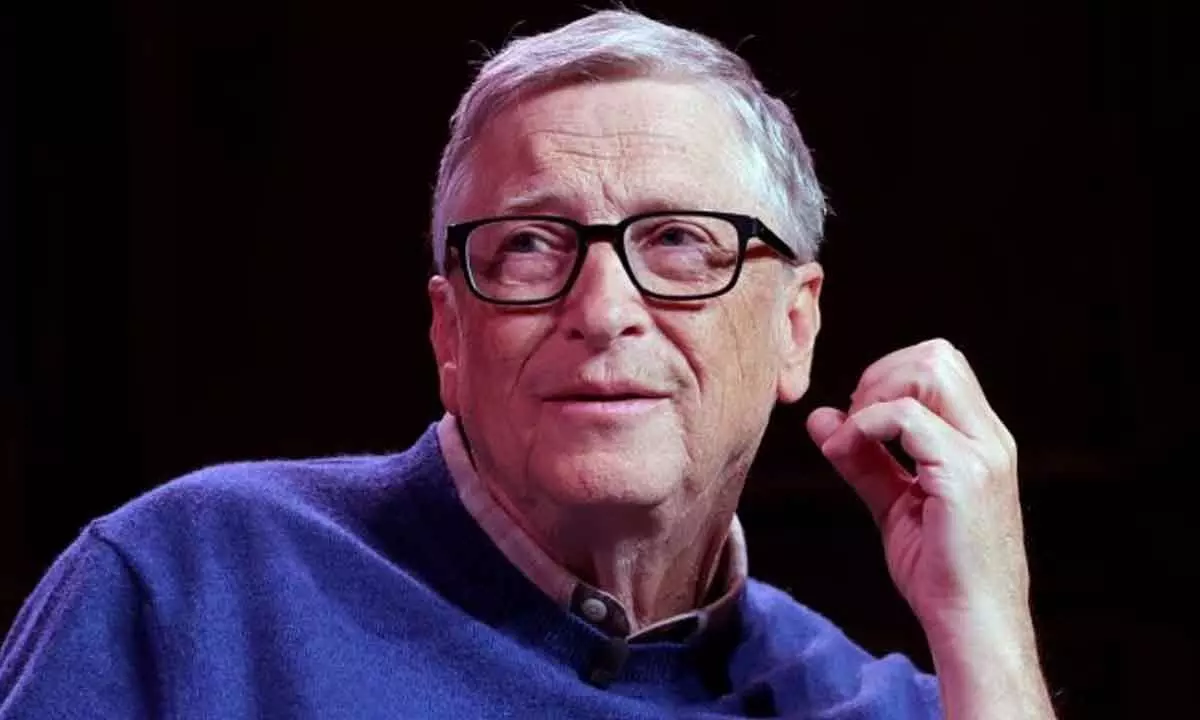
Microsoft co-founder Bill Gates has reiterated his concerns about artificial intelligence (AI) and its implications for the future. In a recent appearance on The Tonight Show Starring Jimmy Fallon, Gates discussed the rapid evolution of AI and how it is set to transform industries, including education and healthcare. While he acknowledged the technology’s benefits, he also expressed apprehension, stating, “Wow, this is a bit scary.”
As AI development accelerates, its societal impact is becoming an urgent topic of discussion. Gates’ remarks align with those of industry experts warning about automation’s disruptive effects, including job displacement, economic shifts, and ethical dilemmas. With governments and tech leaders still debating regulations, Gates underscored the need for proactive policies to ensure AI benefits humanity without rendering human workers obsolete.
Gates highlighted AI’s potential to revolutionize education and healthcare, particularly by addressing shortages of skilled professionals. He suggested AI could soon provide cost-free, high-quality tutoring and medical advice, making expert knowledge more accessible. This transformation could significantly improve learning and medical outcomes, especially in underserved regions.
AI-driven diagnostic tools have already demonstrated accuracy comparable to trained medical professionals, enhancing early disease detection and treatment recommendations. In education, AI-powered tutoring systems can offer personalized learning experiences, adapting to individual student needs and improving knowledge retention.
A major concern surrounding AI is its impact on the job market. Gates questioned whether a traditional five-day workweek would remain necessary as AI continues to automate tasks once performed by humans. He warned that AI’s ability to handle both routine and complex cognitive functions could lead to widespread job displacement.
When asked by Fallon whether humans would still be needed for most jobs, Gates responded, “Uh, not for most things.” His statement highlights ongoing fears that AI could replace workers faster than new job opportunities emerge. Historically, automation has eliminated some positions while creating new industries, but the speed of AI advancements raises concerns about whether economies can adapt quickly enough.
Despite AI’s rapid progress, global regulatory efforts remain in early stages. Gates compared AI’s risks to those posed by pandemics and nuclear threats, highlighting the need for swift action. He referenced an open letter co-signed in 2023 with leaders such as OpenAI CEO Sam Altman and Google DeepMind CEO Demis Hassabis, which called for tighter AI governance.
The upcoming AI Action Summit in Paris on February 10–11 will bring together policymakers and industry executives to discuss AI’s role in shaping the global workforce and economy. These discussions are expected to influence future regulations aimed at balancing innovation with societal stability.
Much of the AI discourse has recently focused on DeepSeek, a Chinese AI chatbot that has outperformed some competitors, including OpenAI’s ChatGPT. Developed in just two months with a budget of $5.6 million—significantly less than OpenAI’s estimated $100 million spent on GPT-4—DeepSeek’s efficiency is raising concerns in the tech sector.
Unlike AI models relying on high-end hardware, DeepSeek utilized around 2,000 Nvidia H800 GPUs, less advanced than the 100,000 Nvidia H100 chips reportedly used by Elon Musk’s xAI. This development has already impacted semiconductor markets, with Nvidia’s stock experiencing fluctuations as investors reassess the need for high-end processors in AI training.