Safety Standards in the Global E-Mobility Sector: How Premium Manufacturing is Redefining Market Expectations

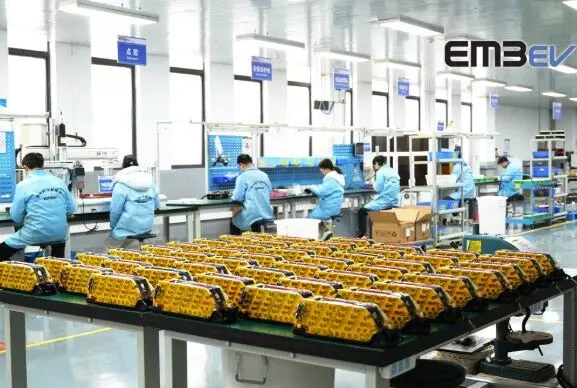
The global transition to electric mobility is accelerating at an unprecedented pace. From the busy streets of Mumbai to the cycle paths of Europe and the United States, electric bicycles (e-bikes) are becoming a primary mode of transport. However, this rapid democratization of technology has brought a critical, and sometimes dangerous, issue to the forefront: battery safety.
As the market floods with budget-friendly options, reports of battery fires and thermal incidents have risen. These incidents are rarely caused by the technology itself, but rather by cost-cutting manufacturing shortcuts. In response, industry experts and discerning consumers are turning towards premium manufacturers who adhere to rigorous safety standards.
The Hidden Dangers of "Generic" Packs
To understand the safety landscape, one must look inside the black box of the battery. A typical e-bike battery is made up of dozens of individual lithium-ion cells welded together. In cheap, mass-produced packs, manufacturers use thin nickel strips and inconsistent spot-welding techniques.
The danger arises when these packs are subjected to the vibrations of the road. Poor welds can break, leading to resistance, heat buildup, and eventually, short circuits. Furthermore, many generic packs lack adequate physical protection or cell holders, relying on hot glue to hold the volatile energy cells in place. This "race to the bottom" on price has created a significant safety hazard for the industry.
The Premium Standard: Wire Bonding and Fusing
In contrast, industry leaders like EM3ev have established a benchmark for safety that far exceeds standard regulations. A key differentiator in premium manufacturing is the use of advanced assembly techniques such as ultrasonic wire bonding.
Wire bonding technology, often used in the automotive EV sector (like in Tesla vehicles), involves using individual fuse wires for each cell. This is a critical safety redundancy. In a standard battery, if one cell develops an internal short, the surrounding cells can dump their energy into the bad cell, causing a fire.
In a wire-bonded pack from a premium manufacturer, each cell is individually fused. If a cell fails, the tiny fuse wire melts instantly, electrically isolating the bad cell from the rest of the pack. The battery continues to function safely, and the risk of thermal runaway is mitigated. This level of engineering transforms the battery from a potential hazard into a reliable, robust energy source.
The Brain of the System: Smart BMS
Hardware is only part of the safety equation. An e-bike battery must also possess high intelligence. The Battery Management System (BMS) is the electronic gatekeeper.
High-end manufacturers are now standardizing "Smart BMS" technology. These systems monitor not just the total voltage, but the temperature and health of every cell group in real-time. If the battery gets too hot during a climb, the BMS throttles the power. If a cell group becomes unbalanced, the BMS prevents charging to avoid over-voltage scenarios.
The Shift in Consumer Awareness
We are witnessing a maturity in the e-bike market. In 2020, consumers looked primarily at price and top speed. In 2026, the educated consumer asks about cell origin (Samsung/LG vs. generic), assembly methods, and warranty support.
Regulatory bodies in the US and EU are also catching up, with stricter certifications (like UL 2271) becoming mandatory in many regions. This regulatory pressure is slowly pushing dangerous, low-quality assemblers out of the market.
Conclusion
The future of e-mobility relies on trust. For electric bicycles to be accepted as true replacements for cars, they must be perceived as safe and reliable. By prioritizing advanced manufacturing techniques like wire bonding and Smart BMS integration, premium brands are not just selling batteries; they are selling the assurance that riders can charge their bikes in their homes and ride with their families without fear. Quality, in this industry, is not a luxury—it is a necessity.