Why I ditched my Apple watch for a smart ring

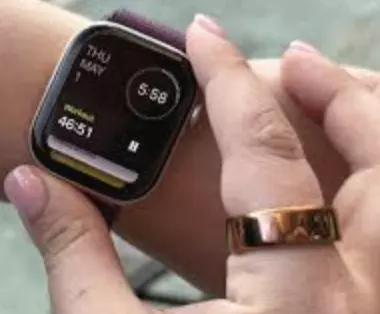
Ultrahuman Ring Air beats the Apple Watch for health tracking, sleep comfort, battery life & perimenopause insights—no subscription required.
I’ve been an Apple Watch user for years—logging walks, monitoring heart rate, and tracking sleep with my SE 2. It worked well enough during relatively smooth times. But life, and my body, changed.
Enter perimenopause. With it came restless nights, unpredictable mood swings, hot flashes, and a nagging brain fog. The Apple Watch, with its basic tracking and lack of detailed insight, suddenly felt insufficient. I needed more from my wearable—and not another screen demanding my attention.
After weighing options like the Whoop band (plus subscription) and the popular Oura Ring (also with a subscription wall), I chose the Ultrahuman Ring Air. And I'm glad I did.
Why a Smart Ring?
The form factor made an immediate difference. I’m a light sleeper—so light that even wearing the Apple Watch overnight was distracting. The Ultrahuman Ring Air, although slightly thicker than my usual rings, is light, unintrusive, and extremely comfortable—even when sleeping. No buzzing alerts, no glowing screens—just passive, silent health monitoring.
Then there’s battery life. Unlike the Apple Watch’s 18-hour cycle, the ring lasts several days. I charge it during a quick shower, and it’s ready to go again.
What It Gets Right
The Ultrahuman Ring Air offers deep health insights without a subscription. That’s a big deal. The ring doesn’t offer “solutions,” but it provides data points I can analyze or take to my doctor—like sleep efficiency, heart rate drop, restfulness, body temperature fluctuations, and even social jetlag metrics.
It also calculates Sleep Debt—something I now use to justify (and optimize) weekend naps—and alerts me to ideal bedtime routines. While I can’t always meet its 8:45pm wind-down suggestions, having those data-driven recommendations helps me try.
Thoughtful Wellness Touches
One standout feature? Vitamin D tracking. The ring uses data like skin tone, age, gender, and real-time UV index in my location (sunny Sydney) to suggest optimal sun exposure windows—down to the hour. It’s a unique, wellness-first approach that feels smart and personal.
What's Missing?
One thing I hoped for: real-time alerts for skin temperature spikes—especially helpful for perimenopausal hot flashes. Unfortunately, those temperature changes are only reflected post-factum, usually within sleep analytics. Still, that’s better than the Apple Watch SE, which doesn’t have a temperature sensor at all.
Interestingly, when I came down with COVID recently, the ring’s temperature readings matched my thermometer, proving its accuracy.
Final Thoughts
No, the Ultrahuman Ring Air doesn’t magically solve perimenopause or sleep disorders—but it delivers more insight than I’ve ever gotten from a smartwatch. And it does so without a distracting screen or the need for a pricey subscription.
So while my Apple Watch gathers dust, I’m embracing the ring—quietly, comfortably, and with a better understanding of my health than ever before.