Efforts on to increase PG seats, says NTR UHS V-C

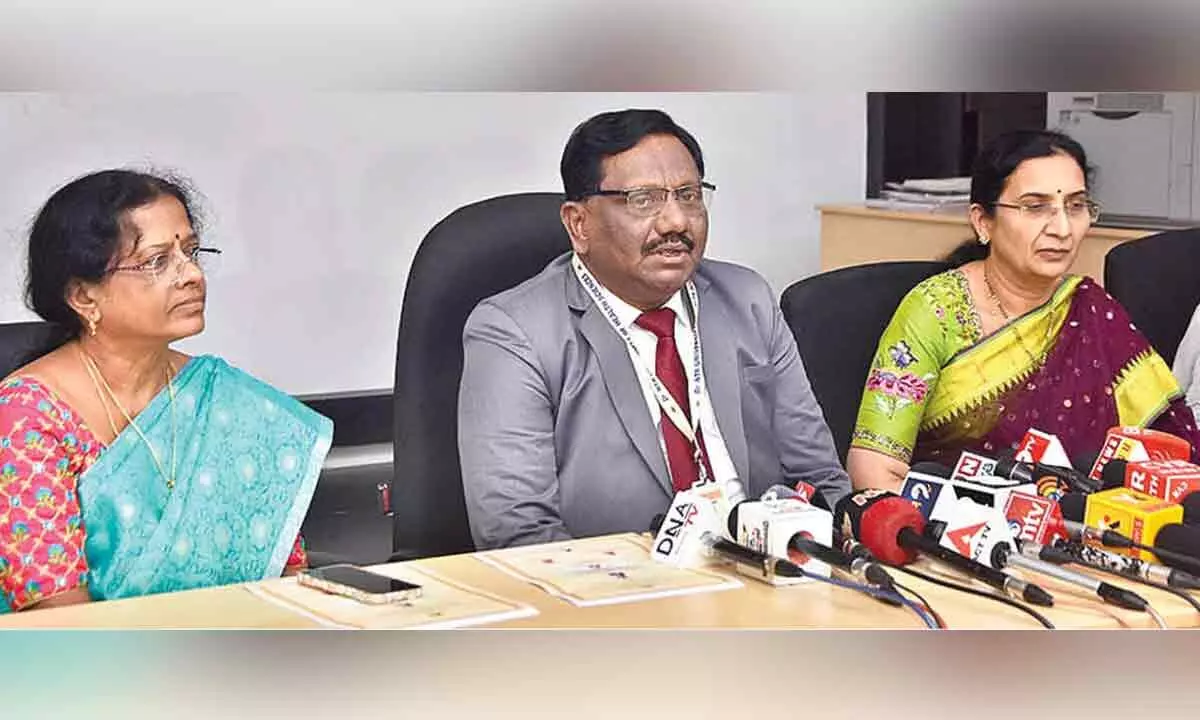
Prof P Chandrasekhar, vice-chancellor of NTR University of Health Sciences, addressing the media at the university on Wednesday
Vijayawada: NTR University of Health Sciences Vice-Chancellor Prof P Chandrasekhar has shared several important initiatives aimed at strengthening medical education, research and healthcare delivery in Andhra Pradesh. Speaking to the media here on Wednesday, the Vice-Chancellor stated that at present, postgraduate (PG) medical seats account for only about 40 per cent when compared to undergraduate MBBS seats. He said the University is taking concrete steps to increase PG seats in the coming years and bring them on par with MBBS seats, thereby creating more opportunities for advanced medical training.
To address the acute shortage of doctors in taluk-level hospitals and hospitals with 50 to 100 beds, the University is introducing a new concept called “Family Medicine.” Through this initiative, around 500 seats will be made available, which is expected to significantly strengthen primary and secondary healthcare services across the state. Prof Chandrasekhar also announced that, for the first time in the history of the University, a “University Research Day” will be observed on January 12, coinciding with the birth centenary celebrations of Dr Yellapragada Subbarao. He said the event would promote a strong research culture among faculty and students.
Emphasising the importance of research and sports, the Vice-Chancellor revealed that each government medical college will be allotted Rs 50 lakh per year to support research activities, while Rs 25 lakh per year will be earmarked for the development of sports and physical activities.
As a mark of respect, a statue of the world-renowned scientist Dr Yellapragada Subbarao will be unveiled on January 12 by State Medical and Health Minister Satya Kumar Yadav. Recalling Dr Subbarao’s immense contributions, the Vice-Chancellor highlighted his role in the discovery of Methotrexate for cancer treatment, antibiotics such as Tetracycline, and Diethylcarbamazine for the treatment of filariasis.