Simplified land regularisation will benefit poor: Collector

New system will simplify the regularisation process, allowing beneficiaries to complete it without the need to visit govt offices
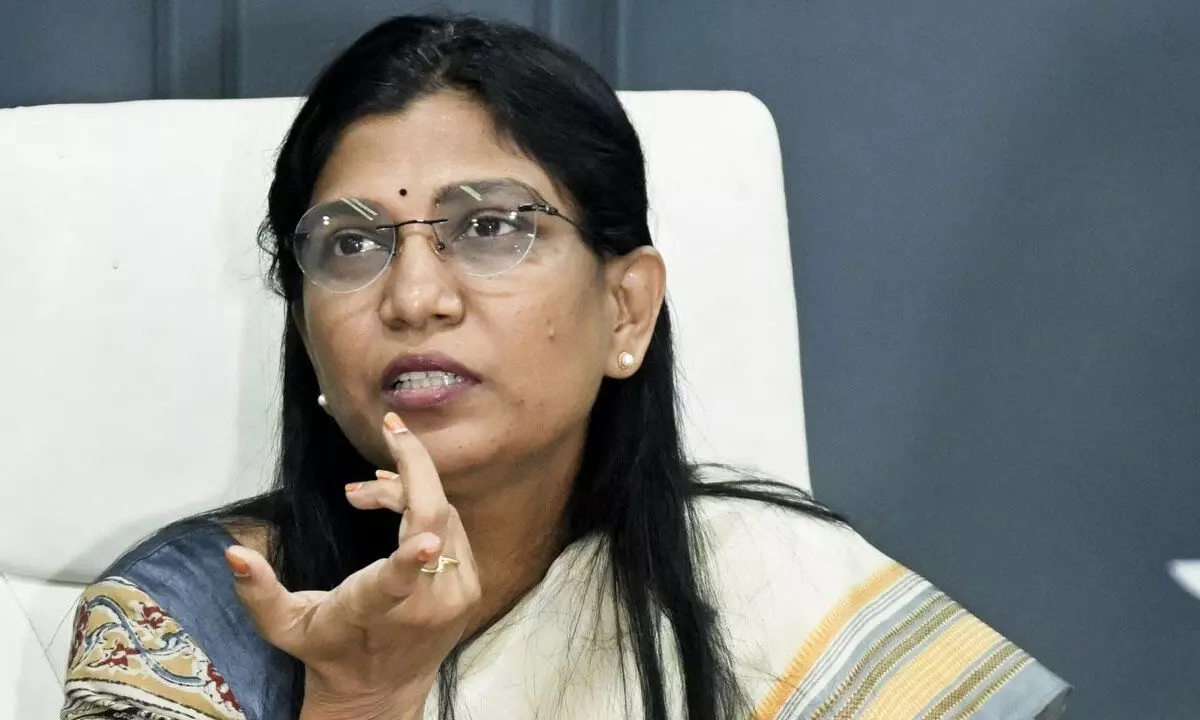
Rajamahendravaram: The state government’s decision to regularise encroached government lands without objections is set to benefit eligible poor families, informed district collector P Prasanthi on Sunday.
She stated that the new system would simplify the regularisation process, allowing beneficiaries to complete it without the need to visit multiple government offices. To facilitate this, applications can now be submitted through Mee Seva centres, village, and ward secretariats, according to Revenue Department Special Chief Secretary and CCLA Chief Commissioner G Jayalakshmi.
Collector further informed that necessary instructions had been issued to field-level staff to implement the process efficiently.
Following GO No 30, the government has launched the Land Regularization Scheme 2025, under which encroached lands will be regularised. Applications will be accepted at village and ward secretariats until December 31.
District Collector Prasanthi stated that regularization pattas will be issued only in the name of women. Full ownership rights will be granted two years after issuing the patta and conveyance deed.
Eligible beneficiaries must upload their complete details along with the required documents through Mee Seva centres. Only lands occupied before October 15, 2019, will be considered for regularisation as per the guidelines.
Collector Prasanthi announced that land encroachments up to 150 square yards will be regularised free of cost, with no registration fee required. For 151 to 300 square yards, those below the poverty line must pay 15 per cent of the basic land value and 50 percent of the registration fee, while those above the poverty line must pay the full registration fee. For 300 to 450 square yards, families below the poverty line will have to pay 100 per cent of the basic land value and 50 per cent of the registration fee, whereas those above the poverty line will need to pay 200 per cent of the basic land value and the full registration fee. For land above 450 square yards, encroachers must pay five times the basic land value and 100 percent of the registration fee for regularisation. Those unwilling to comply will have their land taken over by the government.
Certain encroachments will not be regularised, including layout areas, canals, riverbanks, master plan zones, zonal plan areas, and water resource lands. To qualify for regularisation, the applicant and their family members must not be income taxpayers. Encroachers owning four-wheelers are ineligible. The maximum monthly income limit is Rs 10,000 in villages and Rs 14,000 in towns. Monthly electricity bills should not exceed Rs 300. The family should not own more than 10 acres of land, including both wet and dry land. Only structures with RCC or asbestos roofs and brick walls will be considered. Proofs such as property tax payments, electricity bills, and water bills will be used for verification.
Applications already submitted and pending will be processed under the same rules. Village and ward secretariat staff, under tahsildar supervision, will verify encroachments. A list of eligible beneficiaries will be displayed at village and ward offices for objections. If there are objections to the list approved by the sub-division level approval committee, appeals can be made to the joint collector
within 30 days.