HCAH launches Telangana’s most advanced Robotics & Recovery Lab on World Stroke Day

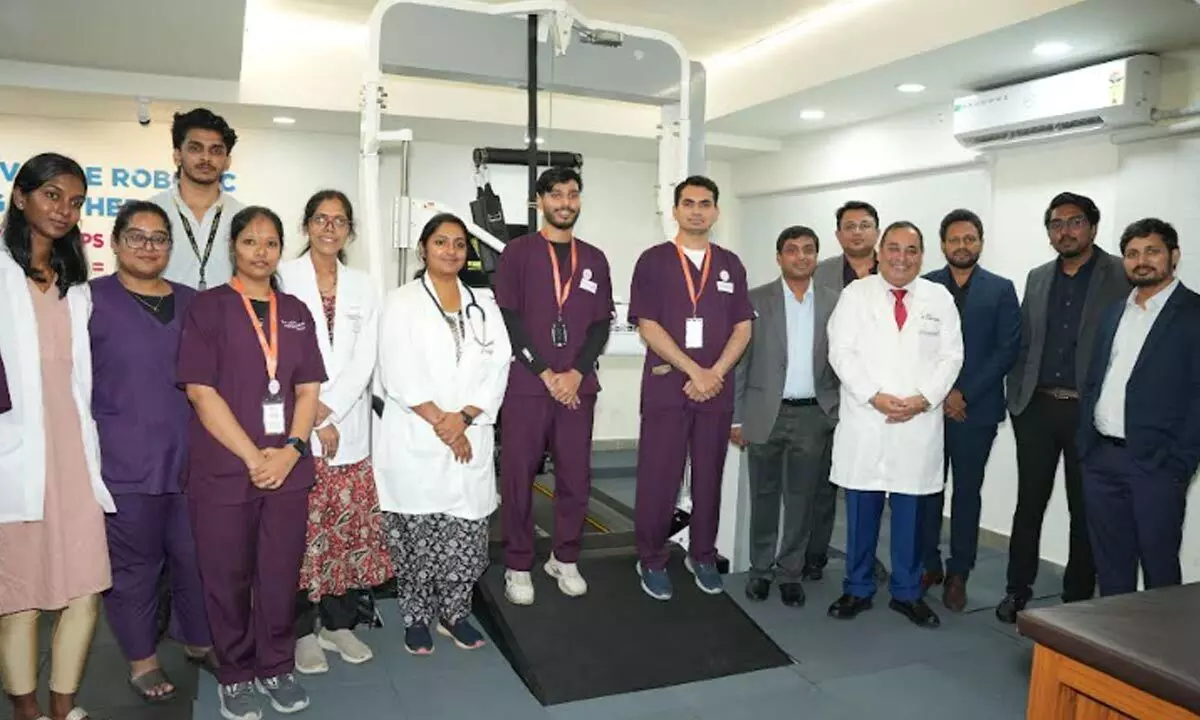
On the occasion of World Stroke Day, HCAH SuVitas Rehabilitation Centre, Hyderabad, inaugurated the Center for Advanced Robotics and Recovery, marking a major step forward in stroke and neuro rehabilitation. The center represents HCAH’s mission to deliver the fastest recovery in India through robotics, AI, and a seamless blend of science, data, and human care.
Telangana is witnessing a sharp rise in stroke cases, with nearly 20–30% of urban patients now between 18 and 45 years old. Sedentary lifestyles, stress, obesity, and post-COVID complications are key contributors to this alarming increase. As the state faces a growing need for specialized rehabilitation, HCAH is redefining what recovery can mean—making it measurable, data-driven, and patient-centric.
India currently has only 1,251 stroke rehabilitation centers for a population of 1.46 billion—roughly one for every 1.17 million people. This shortage underscores the urgent need for structured, technology-enabled recovery care. HCAH is bridging this gap with its Robotics & Recovery Labs, starting in Telangana and expanding to Delhi-NCR, Bengaluru, Mumbai, and Kolkata. By combining robotic precision, AI-based therapy tracking, and clinical expertise, HCAH is setting a new standard for outcome-based rehabilitation.
At the Hyderabad center, recovery meets technology through a complete suite of world-class robotic systems engineered for safety, accuracy, and speed. Robotic Gait Training Systems, Robotic Arm and Hand Rehabilitation Units, Neuromuscular Electrical Stimulation (NMES), Gamified Balance Boards, and Virtual Reality (VR) Neurotherapy work in synergy to help patients walk, move, speak, and balance again—thousands of precise repetitions per session that retrain the brain and body far faster than traditional methods.
Patients can now take up to 1,000 guided steps in just 30 minutes using exoskeleton-assisted gait systems that mimic natural walking while keeping them fully supported. Importantly, the flagship robotic gait trainer Gaitor—a Made in India innovation—highlights the country’s growing medtech capability. For arm and hand recovery, robotic-assisted therapy measures every movement and effort in real time, ensuring quantifiable progress. NMES devices strengthen muscles involved in swallowing and speech, helping patients regain independent eating, speaking, and breathing functions. Gamified balance therapy and VR-based motor training make rehabilitation more engaging, stimulating neuroplasticity and cognitive function for sustainable recovery.
Dr. Gaurav Thukral, Co-Founder and President of HCAH India, emphasized: “The first 90 days after a stroke or major surgery are the most decisive phase in a patient’s recovery journey. At the HCAH Robotics and Recovery Lab, our focus is singular—delivering the fastest recovery possible. Every element of this ecosystem is designed to accelerate healing. Robotic gait systems help patients rebuild mobility quickly and safely, AI-powered dashboards track each milestone in real time, and therapists use this data to adapt sessions with scientific precision. By merging robotics, analytics, and compassionate care, we are setting a new national benchmark in how quickly and completely patients can regain mobility, speech, and independence.”
Ankit Goel, Co-Founder and President of HCAH, said: “The Robotics & Recovery Lab reflects our belief that recovery should be as scientific as treatment itself. By combining robotics, AI, and the expertise of our therapists, we make the recovery process measurable, consistent, and motivating. Our partnership with Apollo Ayurveda adds another dimension—healing the body and mind together. With every patient we help walk, speak, or eat again, we move closer to our vision of a nation that recovers faster and better.”
Dr. BSV Raju, MS, DNB(ortho), MCh(Neuro), Senior Consultant Neuro & Spine Surgeon, added:“Robotic-assisted therapy gives clinicians the ability to guide hundreds of perfect movements per session. It helps the brain relearn lost functions and improves neuroplasticity at a pace that was never possible before. With VR, NMES, and gamified balance systems, patients recover mobility, speech, and coordination more naturally and confidently. This lab is where science meets care, and recovery becomes a journey of rediscovery.”
For patients and families, this center is more than a medical facility—it is a space where they sit again, stand again, speak again, swallow again, walk again, and go home again. The HCAH Robotics & Recovery Lab is not just about treatment; it is about restoring life to motion.