How women are powering Sri City’s industrial transformation

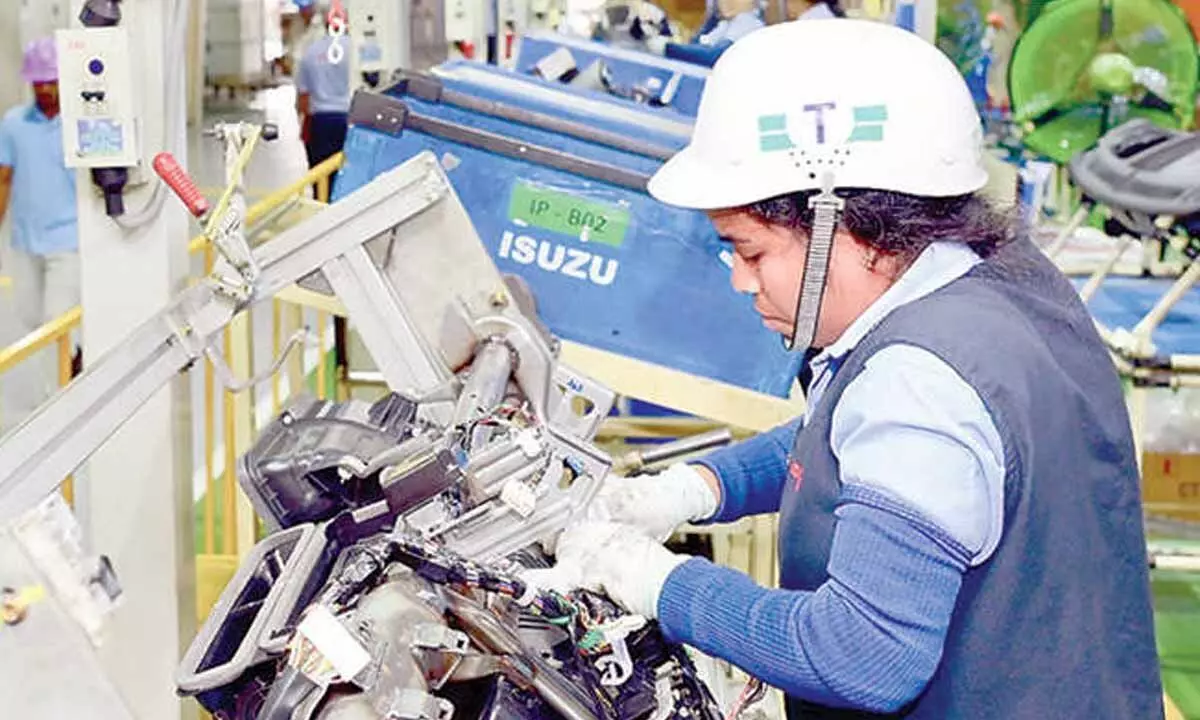
As the country commemorates International Women’s Day, Sri City stands out as a compelling illustration of how inclusive employment practices can accelerate industrial progress. Traditionally perceived as male centric, manufacturing floors here now tell a different story - women are integral to operations, efficiency and innovation.
Women at the Helm
Home to over 250 companies from 31 countries, Sri City employs more than 70,000 people, with women comprising nearly half the workforce - earning it the moniker ‘Sthree City’. Women are represented across sectors and hierarchies, from shop-floor technicians to leadership roles. Across automobiles, electronics, garments, food processing, formulations, healthcare & hygiene, and consumer goods, they drive assembly, quality control, testing, supply-chain and supervisory operations. In several units, female participation ranges from 20 per cent to 97 per cent, with some production lines run entirely by women.
Companies including MSR Garments (Cad & Dandy Bespoke maker in Saville Row London, UK), Zen Linen, Everton Tea, Alstom, Daikin, Havells, Blue Star, Isuzu, Mondelez India, Kellogg’s, ColgatePalmolive, Axxelent Pharma and Unicharm continue to expand women’s participation, particularly in precision-driven manufacturing.
Why Industry Prefers Women
Operational advantages drive demand for women workers. Precision tasks such as soldering, wiring, brazing, and robotics-assisted assembly benefit from women’s attention to detail. Lower attrition rates further enhance stability, reducing recruitment costs. Employers also note women’s agility in mastering automated systems. Beyond factories, their employment uplifts entire communities, inspiring others to pursue industrial careers.
Building a women-friendly ecosystem
Sri City’s success rests on its commitment to safety, accessibility, and skill development. Dedicated transport, childcare, healthcare, and robust security measures - including CCTV and female security staff - create a supportive environment. Specialised training programmes equip women with technical expertise for roles once considered male domains. Alstom trains diploma engineers for metro assembly, Thermax’s Pragati program prepares women welders, and Isuzu ensures a quarter of its workforce comprises trained women engineers. Even before its formal establishment, Sri City’s HR Academy trained over 4,000 locals, many of them women, while CSR investments exceeding Rs 61 crore strengthened education, healthcare, and infrastructure in the villages in the vicinity. As Deputy Chairman of Rajya Sabha, Harivansh Narayan Singh observed at the 2025 National Conference on Women’s Empowerment in Tirupati, “With women making up nearly half of its workforce and contributing meaningfully to its growth, Sri City reflects the spirit of India’s inclusive development.”
Reinforcing this perspective, Managing Director Dr Ravindra Sannareddy has noted that narrowing gender gaps and prioritising skill development have cultivated an ecosystem where women thrive across diverse sectors. Independent assessments by the Tata Institute of Social Sciences, Prof Aradhna Agarwal of the University of Denmark, Sri Padmavati Mahila University and studies published in the Economic and Political Weekly (September 20, 2025) point to tangible outcomes - higher incomes, enhanced mobility and stronger decision-making power within households. Collaboration with the Andhra Pradesh State Skill Development Corporation has further deepened this progress.
Stories of Confidence and Change
The true measure of transformation lies in the women who power the shop floors of Sri City. At Isuzu, K Chandini, a diploma graduate from Gudur, has spent five years in Quality Control sharpening her expertise. Professional growth and the ability to support her family financially, she says, are her proudest milestones. Young engineers Rutu and Devi Priya share that sense of assurance - structured training, strong safety systems and an open work culture have prepared them for demanding technical roles. Ms. Harika, HR Official at Isuzu, remarked that women now constitute nearly a quarter of the workforce and are empowered to be future‑ready. She highlighted that management encourages employees to raise concerns openly, with strong welfare measures in place to support them. Confidence is equally visible at Mondelez India. Sadana Varma, Health, Safety, and Environment (HSE) Lead, points to the positive work culture, strong safety framework that makes even night shifts feel secure, while Ramya underscores the employee-focused welfare initiatives backed by healthcare consultation support. Member of Advanced Team Mahalakshmi leverages over 10 years of varied experience to manage complex systems with ease, reflecting her ongoing skill development.
At Daikin, N Aarthi mastered brazing and now trains others, while engineer Soumya takes pride in contributing to her family’s income. At Havells, D. Jyothi’s rise to HR leadership reflects clear pathways for advancement. And at Daiki Aluminium, Zarina’s progression from worker to Line Leader - including overseas training - signals opportunity without limits.
These stories carry a simple message:when safety, skill and opportunity converge, women don’t just join Industry - they shape its future.
A Model for Inclusive Growth
Global giants thriving in Sri City have earned recognition as India’s best companies for women. Diversity here is not tokenism - it is a proven productivity strategy. Research shows broader benefits: Economic prosperity, education access, and shifting gender roles across communities. Sri City’s journey demonstrates that empowering women is not just about equity - it is about driving industrial progress and societal transformation.