Tariff treaties, tense rupee: Can India turn deals into real power?

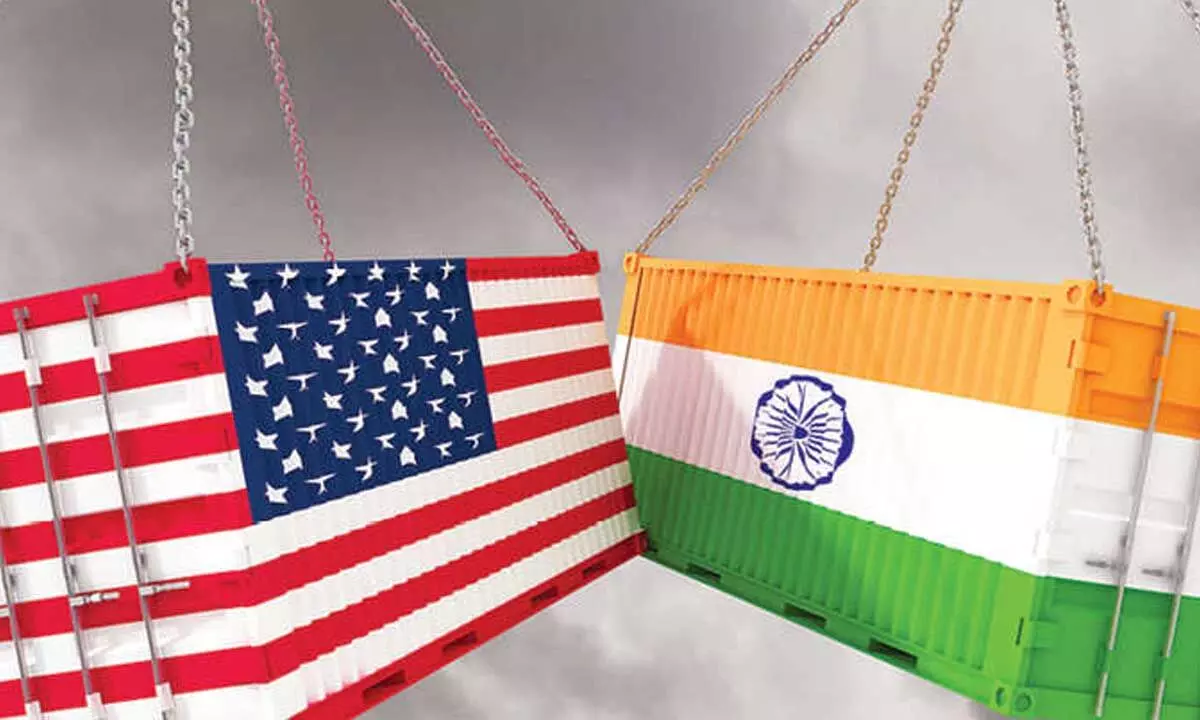
India has recently achieved significant trade agreements with the United States and the European Union, providing better access to these major markets through reduced or eliminated tariffs. These deals represent a positive step in India’s foreign policy, trade strategy, and efforts to stabilize the rupee amid rising global protectionism. The key question is whether India can convert this temporary advantage into lasting improvements in economic growth, exports, and currency strength - or if it will only offer short-term relief in a challenging world.
India’s overall economic outlook remains strong. GDP growth is expected to be around 7.4 per cent in FY26 and 7.2 per cent in FY27, placing it among the world’s fastest-growing major economies. Inflation has stayed very low at about 2.1 per cent in FY26 and is projected to rise moderately to 4.3 per cent in FY27. The current account deficit (CAD) - the gap between what India earns and spends abroad - is forecasted to stay manageable at roughly 1 per cent of GDP in both years. The fiscal deficit is set to narrow to 4.3 per cent of GDP in FY27, reducing central government debt to about 55.6 per cent of GDP. Long-term bond yields may ease to 6.4–6.6 per cent by the end of FY26, and the rupee is likely to trade around 89–90 per US dollar by the end of FY27.
These positive headlines mask some underlying weaknesses that the trade deals can help ease but not eliminate entirely.
The trade agreements serve more as protective measures than automatic boosts to prosperity. The India-EU deal grants preferential access in sectors where India is already competitive. In FY25, India’s exports to the EU reached about $76 billion, yielding a surplus of nearly $16 billion. Engineering goods previously faced tariffs up to 22 per cent, chemicals up to 12.8 per cent, textiles and clothing up to 12 per cent, and gems/jewellery up to 4 per cent - many of these will now move to zero duty or full preferential treatment.
The India-US agreement delivers comparable benefits. India’s exports to the US were around $87 billion in FY25 (against imports of $45 billion). Tariffs on key items like textiles, leather, footwear, gems/jewellery, toys, and machinery are being reduced significantly - in some cases from as high as 50 per cent down to around 18 per cent. Analysts suggest this could add about 0.2 per cent (20 basis points) to India’s FY27 growth projections.
These concessions arrive at a critical time. Global trade growth is slowing from 4.1 per cent in 2025 to about 2.6 per cent in 2026, amid rising protectionism. The deals lock in some certainty and shield Indian exporters from worsening barriers.
However, lower tariffs do not guarantee higher export volumes. Recent data shows challenges: non-petroleum export growth to the US slowed to just over 1 per cent in Q3 FY26 (down from over 6 per cent earlier), with declines in gems/jewellery, garments, and textiles. Exports to the EU contributed negatively to overall growth in the same period, with contractions to countries like the Netherlands and Italy. The relief comes amid global headwinds, so exporters must seize it actively rather than assuming permanent advantages. Without efforts to move up the value chain, India risks merely holding ground in existing markets.
India’s external finances look comfortable but leave little room for error. The low CAD projection depends on a solid services surplus, stable crude oil prices, and controlled non-oil imports.
Services exports have been a strength, growing about 6.5 per cent year-on-year in the first nine months of FY26, though momentum slowed to 1.4 per cent in Q3 from 8.6 per cent in Q2 - showing vulnerability to global slowdowns. The combined goods-and-services trade deficit widened to around $97 billion in April–December FY26 (from $88.5 billion a year earlier), driven by higher non-oil merchandise imports despite better services performance.
On goods, petroleum exports fell sharply, while non-petroleum exports grew only in mid-single digits. Non-petroleum imports rose near double digits due to strong domestic demand. Oil prices and sourcing remain pivotal: Russia’s share in India’s crude imports has declined, with wider discounts over Brent reappearing, and the US gaining share through diversification. Moderate global prices and some discounted supplies keep the CAD in check, but tensions in West Asia (especially involving Iran) could spike costs and pressure the rupee.
The rupee has strengthened somewhat thanks to the trade deals and expectations of softer US interest rates. From lows near 92 per dollar, it has stabilized around 90–91 in mid-February 2026. A weaker dollar index, aided by US inflation nearing the Federal Reserve’s target, has eased pressure on emerging currencies like the rupee.
A steadier rupee gives the Reserve Bank of India (RBI) more flexibility. With fewer immediate external risks, the RBI can reduce aggressive forex interventions, preserving rupee liquidity amid heavy government borrowing (Rs 17.2 trillion in FY27) and state borrowings. The RBI is likely to use open market operations to maintain comfortable liquidity and anchor long-term yields.
Still, the balance is fragile. India’s 10-year bond yields remain relatively high historically, and global risk aversion could spark outflows, pressuring the rupee again. The RBI would then face tough choices between currency defense and low borrowing costs.
More importantly, the rupee’s resilience is limited as long as exports rely heavily on price- and tariff-sensitive sectors like engineering goods, basic chemicals, textiles, and jewellery. These gain from current cuts but remain exposed to future reversals, non-tariff barriers, or new restrictions tied to climate or labor standards in advanced economies.
India’s strongest defenses lie in robust domestic drivers and sound policies. Consumption is picking up, supported by lower taxes, simplified GST, low inflation, and past rate cuts. Sales of cars, two-wheelers, three-wheelers, and tractors show broad demand recovery, with steady rural and improving urban spending.
Fiscally, the government met its FY26 deficit target of 4.4 per cent of GDP despite softer revenues, aided by spending control and higher RBI dividends. For FY27, tax revenue growth is conservatively budgeted at 8 per cent (below nominal GDP growth of around 10 per cent). Capital expenditure rises 11.5 per cent to Rs 12.2 trillion, with broader public sector capex (including grants) growing over 22 per cent and reaching about 5.6 per cent of GDP. This sustained investment push should boost productivity and growth over the medium term.
Inflation remains benign: headline CPI was about 2.75 per cent in January 2026 (from a low base), averaging 2.1 per cent for FY26 overall. It may rise to 4.3 per cent in FY27 as base effects wane and commodities normalize. This gives the RBI room to hold rates steady unless conditions worsen sharply.
The true test is turning this breathing room into genuine competitiveness. Three priorities stand out:
1. Flawless implementation - Strict adherence to rules of origin, product standards, and efficient customs/port processes is essential. Any domestic delays could undermine the negotiated gains.
2. Shift to higher-value exports - Treat the deals as stepping stones, not permanent supports for low-margin sectors. Rapidly scaling electronics, advanced manufacturing, complex chemicals, and high-value services will build stronger, more durable export strength and rupee resilience than tariff cuts alone.
3. Balanced currency approach - Avoid excessive real appreciation (which hurts competitiveness) or forced weakness (which fuels inflation and volatility). The RBI should adopt a nimble, light-touch intervention strategy, focusing on real effective exchange rates and capital flows rather than rigid nominal levels.
India has skillfully secured tariff relief from two highly protectionist major economies - a notable diplomatic and strategic win. Yet this is only the start. By using this window to enhance export capabilities, diversify energy sources, and sustain disciplined macroeconomic policies, India can build genuine, earned stability for the rupee and economy. If it merely enjoys the current comfort without deeper reforms, today’s gains may prove fleeting before the next global challenge arrives.
(The author is with Cholleti BlackRobe Chambers, Hyderabad)