Aditya Pittie’s vision of Nari Shakti

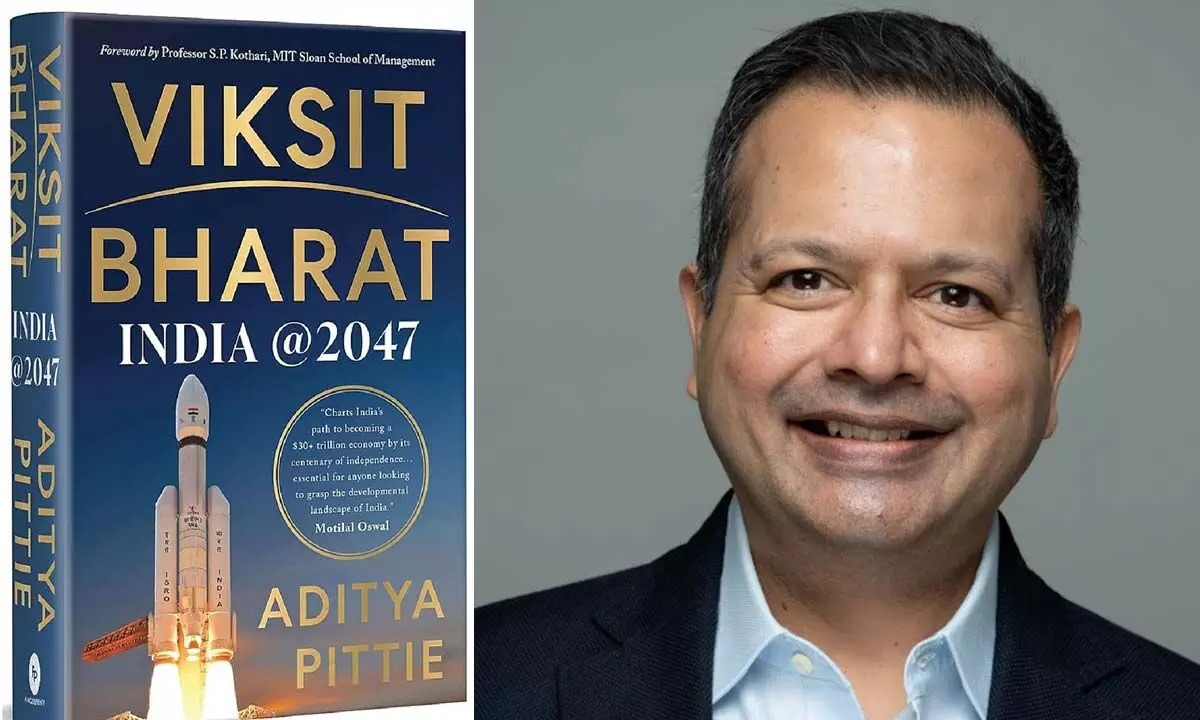
India’s journey to becoming a $30+ trillion economy by 2047 hinges not only on reforms and innovation but also on inclusive growth. In his new book ‘Viksit Bharat: India @2047’, entrepreneur and thought leader Aditya Pittie outlines a bold roadmap for this transformation. At the core of his vision lies a powerful truth: empowering women is essential to unlocking India’s full potential
In Aditya Pittie landmark book ‘Viksit Bharat: India @2047’, entrepreneur and thought leader Aditya Pittie lays out a sweeping blueprint for India’s transformation into a $30+ trillion economy by its centenary of independence. With endorsements from eminent leaders such as Shri Motilal Oswal, Shri T.V. Mohandas Pai, Dr. Anand Ranganathan, Shri Suresh Prabhu, Dr. Arvind Gupta, and Shri Harish Mehta, and a foreword by Prof. S.P. Kothari of MIT Sloan, the book is a meticulously researched resource for policymakers, business leaders, academics, and engaged citizens alike.
At its heart, Pittie’s vision emphasises inclusive growth. He argues that India’s development story cannot be complete without making women central to its economic and social fabric. Currently, India’s Female Labour Force Participation Rate (FLFPR) stands at 31.7%—an improvement from 23.3% in 2017-18 but still far below the global average of 47.2%. For Pittie, this gap represents not just a challenge but a tremendous opportunity. “Women drive consumption, innovation, and entrepreneurship—sectors pivotal to our vision. Without their full involvement, achieving Viksit Bharat remains incomplete,” he stresses in the book.
Pittie underscores that when women earn, the benefits ripple beyond immediate income. Households invest more in nutrition, education, and health, creating intergenerational dividends that multiply productivity across society. This “economic arithmetic of empowerment” is why women’s participation is not merely desirable but essential to realising India’s growth ambitions.
Yet, progress requires a combination of structural reforms and social change. Policy interventions, Pittie notes, must include the expansion of collateral-free loan schemes like the Pradhan Mantri Mudra Yojana, upgrades to childcare facilities through strengthened Anganwadi services, and investments in safe transport systems dedicated to women commuters. He also advocates enforcing and incentivising the 2024 Employer Advisory that promotes flexible work and mentorship, alongside tax breaks for firms hiring women.
Procurement policies also hold untapped potential. India’s mandate that 25% of public procurement must come from Micro and Small Enterprises (MSEs), with 3% reserved for women-owned firms, remains underutilised. Full implementation of this could catalyze thousands of women-led businesses. Socially, campaigns such as Beti Bachao Beti Padhao must be coupled with deeper cultural shifts—redistributing unpaid care work through paternity leave, investing in rural STEM education for girls, and promoting equitable domestic responsibilities.
Entrepreneurship, particularly in emerging sectors like digital innovation, fintech, and sustainability, is another cornerstone of Pittie’s roadmap. While India boasts the world’s third-largest startup ecosystem, women-led ventures remain a minority. To change this, Pittie proposes tailored funding programs under Startup India, low-interest loans, and dedicated grants for women entrepreneurs. Market access, too, is key: reserving categories on the Government e-Marketplace (GeM) for women-led firms and ensuring prompt digital payments through systems like TReDS and UPI AutoPay can solve liquidity bottlenecks. Mentorship and incubation programs designed exclusively for women cohorts, he suggests, would further strengthen this pipeline of innovation.
Education and skill development, however, form the bedrock.
While female literacy stands at 70%, higher education enrollment and participation in STEM remain uneven. Pittie calls for a sharper emphasis on vocational training in digital skills and entrepreneurship, championed by national initiatives like Skill India. He also highlights the importance of building “T-shaped skills”—where women cultivate deep expertise in one domain while acquiring complementary abilities such as data analytics, sales, or compliance. Such multi-dimensional skills, he argues, will allow women to thrive in the future economy.
The business case for inclusion is equally strong. Global research consistently shows that companies with greater gender diversity outperform peers financially, a fact Indian businesses are beginning to recognise. Pittie recommends proactive corporate measures to build inclusive workplaces—ranging from training programs to leadership pipelines for women.
The payoff, he notes, is not just higher profitability but also enhanced innovation and resilience, aligning seamlessly with the broader vision of a Viksit Bharat. Technology, meanwhile, emerges as a transformative enabler. Pittie highlights India’s world-class Digital Public Infrastructure (DPI)—from UPI and Aadhaar to the Open Network for Digital Commerce (ONDC)—as powerful tools for women’s economic empowerment.
By bridging the digital gender divide, fintech can close credit gaps, edtech platforms can expand access to quality education, and digital marketplaces can amplify women-led businesses. “Technology doesn’t just include women; it accelerates their impact,” Pittie observes.
For India’s young women—aspiring entrepreneurs, professionals, and leaders—Pittie’s message is simple yet powerful: embrace your potential. He urges them to pursue STEM education relentlessly, leverage schemes like Skill India, and actively seek mentorship and sponsorship to break barriers.
“You aren’t just participating in India’s rise; you’re architecting it,” he emphasises, reminding them that “everything is possible” through compounding—consistent daily progress that outpaces sporadic bursts of effort. Looking ahead, Pittie envisions a transformed India if women are placed at the center of its growth journey. Economically, this could allow India to reach the $30+ trillion milestone well before 2047, accelerating both scale and speed.
Socially, it would mean a nation with reduced inequality, empowered communities, and a deeply embedded ethos of balance and inclusion.
“Nari Shakti must be the cornerstone of Viksit Bharat,” he declares, imagining a future where women’s agency is woven into laws, markets, and everyday life.
In ‘Viksit Bharat: India @2047’, Aditya Pittie offers more than a policy roadmap; he presents a vision of empowerment that is both pragmatic and inspirational. For him, the rise of India and the rise of its women are inseparable journeys—two sides of the same coin that will shape the destiny of the world’s largest democracy.