A daughter’s chronicle of legacy, ambition and the sharp edge of memory
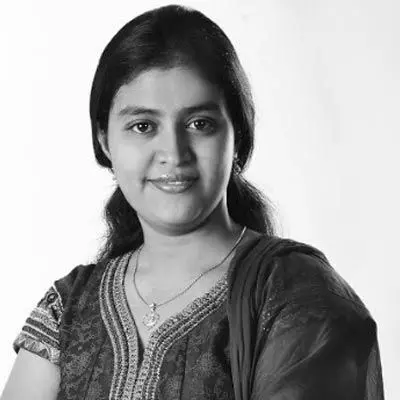
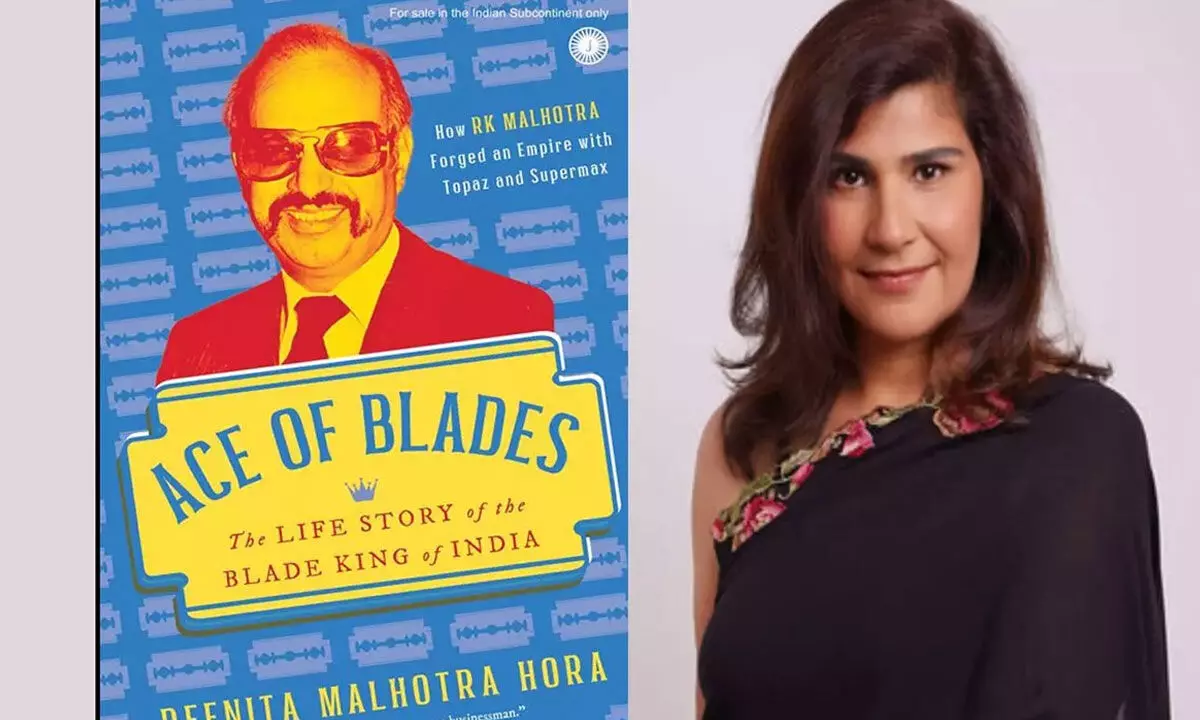
Mumbai-born and now based in California, Reenita Malhotra Hora has built a career telling stories that travel across borders and generations. An award-winning novelist and screenwriter, she brings the South Asian experience to global audiences with warmth, wit and historical depth. A former journalist with Bloomberg and Radio Television Hong Kong, her bylines have appeared in many famous publications. Her historical love story ‘Vermilion Harvest – Playtime at the Bagh’, set against the 1919 Amritsar massacre, won the Overall Grand Prize at the Chanticleer International Book Awards, while her young-adult rom-com ‘Operation Mom’ has earned recognition from the Sundance Institute Development Slate, The Writers Lab, the Eric Hoffer Book Award and the Indie Reader Discovery Award. LA Weekly has hailed her as one of the top indie writers redefining Indian culture and comedy for global audiences.
Yet, for all her international accolades, the most personal story she has ever written began at home. I believe we all have a purpose in life. Mine just took a little while to announce itself,” says Reenita.
After years of reporting on other people’s lives and histories, she realised that the story demanding to be told was her own family’s — specifically that of her father, industrialist R.K. Malhotra, the man who built one of the largest razor blade companies in the world by volume.
“That’s not a business story. “That’s an epic. The kind we tell around fires,” she says.
Growing up in what she calls “an extremely conservative Punjabi business family,” Reenita watched ambition from the sidelines. The rules were unspoken but firm.
“Daughters don’t get a seat at the table. Actually, they don’t even get shown where the table is. Unless it involves bringing food from the kitchen,” she says with a wry smile.
While the sons inherited factories and boardrooms, she inherited observation — the quiet accumulation of memory, nuance and untold histories. Over time, she began to see that storytelling itself could be a form of legacy. “I’d been telling other people’s stories for years. At some point, your own won’t stay quiet anymore,” she says.
Her father’s journey certainly refused silence. From modest beginnings with carbon blades in post-war Calcutta, R K Malhotra went on to introduce India’s first stainless steel premium blade and eventually built a global empire. But Reenita was not interested in myth-making.
“India loves the polished startup origin story,” she says. “But my father’s story is messier and more interesting than any myth. He didn’t have venture capital or an MBA. He had instinct, audacity and a willingness to do whatever it took. I wanted people to see what building something from nothing actually looks like — the real version.”
Writing it, however, proved emotionally complex.
“The facts aren’t the hard part,” she explains. “The hard part is the space between the facts. The silences at the dinner table that lasted thirty years. The things everyone knew but nobody said out loud.”
Interviewing her father in his eighties added urgency. “Some days he was sharp as a razor blade. Other days he was somewhere else entirely. Every conversation felt precious — like it might be the last one where he remembered what I needed him to remember.”
Portraying him honestly meant resisting both hero worship and resentment. “You don’t get to choose which version of your father shows up on the page,” she says. “You just have to let him be all of it.”
And “all of it” meant contradiction: a visionary and a patriarch, generous yet demanding, fiercely loving yet often emotionally distant.
“Complicated doesn’t mean unworthy of love,” she adds. “It usually means the opposite.”
A central metaphor in both her father’s life and the book is the pursuit of the “perfect edge.” Reenita remembers him standing in factories late at night, holding blades to the light, hunting for invisible flaws.
“He didn’t believe in ‘good enough.’ Good enough was an insult.”
Thatobsession made him formidable in business. When collaborations failed, he hired talent away. When regulations blocked him, he innovated around them. “When you closed one door on RK, he built another door. Stronger. Sharper.”
But the same drive shaped family life too. “He ran his family the way he ran his factory — with precision and very little tolerance for deviation. He loved deeply, fiercely. But tenderness didn’t always come naturally. Was it inspiring? Yes. Was it exhausting? Also yes.”
Being a daughter in that ecosystem came with its own lessons.
“They don’t inherit ambition at all,” she says of daughters in traditional business families. “They absorb it.”
She remembers sitting quietly at the edges of conversations, learning everything without being formally included. Over time, that exclusion became unexpected power. “My brothers inherited the business. I inherited the narrative. And honestly, I think I got the better deal. Businesses get sold or taken over. Stories are forever.”
Today, she hopes her father is remembered not merely as the “Blade King” but as something more symbolic — a name she coined after his passing: the “Ace of Blades.” “The ace is the highest card, but it’s also the one — the starting point,” she explains. “That was him. Always beginning again. Every time life knocked the cards out of his hands, he dealt himself back in.”
She recalls a moment that feels almost cinematic. After his cremation, while collecting his ashes, the family found a single double-edged blade lying intact. “Unscathed,” she says softly. “You can’t write an ending like that. Except apparently, life can.”
If there’s one message she hopes young women — especially those growing up inside powerful, traditional families — take from her story, it is this: don’t wait to be invited. “Don’t wait for permission,” she says. “Sometimes your seat at the table isn’t meant to be there. Maybe you’re meant to build your own table.”
In the end, Reenita believes, inheritance isn’t always measured in factories or fortunes. Sometimes it is measured in voice.
“Find your purpose. Tell your story. Once it’s told, it belongs to everyone. Forever.” And for a writer who grew up watching history from the margins, that may be the sharpest edge of all.