Carrying the fire of Kuchipudi across the world

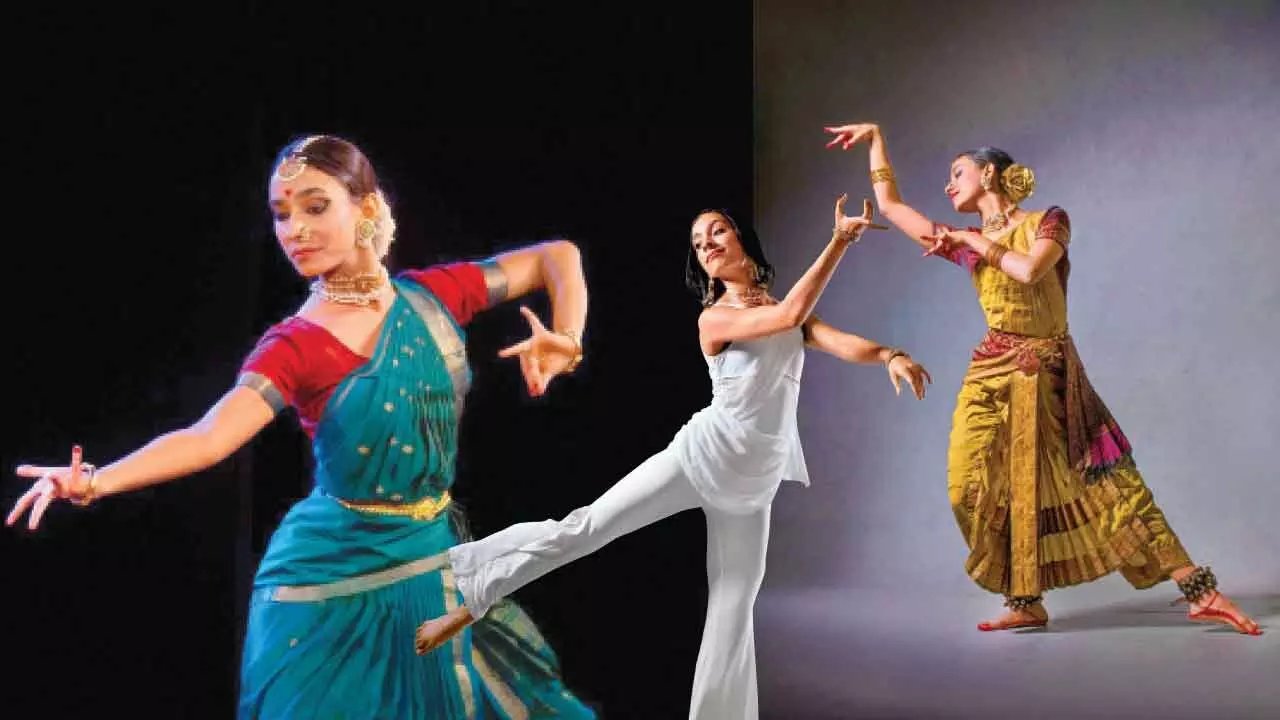
From the rehearsal halls of Hyderabad to the dance studios of New York, Yamini Kalluri has built a life steeped in rhythm, resilience, and reinvention. A disciple of the legendary Dr. Sobha Naidu, Yamini now runs Kritya, a foundation dedicated to Kuchipudi and Carnatic music in the U.S., while establishing herself as one of the most innovative young voices in the global classical dance landscape.
For Yamini, the lessons from her guru went far beyond dance technique. “More than the style of dancing itself, what truly influenced me was her mindset and presence,” she recalls. As Naidu’s rehearsal director, assistant teacher, music production aide, and even a singer accompanying her on stage, Yamini absorbed not only artistry but also the values and devotion that defined her guru’s life.
“She often reminded me that if she had another life, she would have chosen to be a musician,” Yamini says, recalling how Naidu recognised her voice and pushed her to nurture it. But the lessons were not always gentle. “She made me aware that the arts world can be brutal and that one must fight to survive. Even as a disciple of the legendary
Dr Vempati Chinna Satyam, she forged her own path rather than joining a cult of imitation. From her, I learned the importance of creating my own niche, of being a strong woman, and of embracing my full potential.”
Choosing the Artist’s Path
Despite skepticism from others, Yamini knew early that dance was her calling. “When I danced, I always felt invincible—like a superhero. As a child, I would rehearse past midnight, wake at six, walk four kilometers to class, and practice again. Dance was never separate from music—it was my way of expressing my love for it,” she says.
Yet her journey wasn’t without struggles. Naidu herself once felt Yamini wasn’t “pretty enough” to be a lead dancer, and she never had an Rangapravesham. “By the time I was 18, I was already touring internationally, so the idea of a traditional Rangapravesham didn’t make sense anymore,” she notes. The harsh realities of surviving as a performer in India eventually drew her abroad. “In India, outside of teaching, there are hardly any sustainable ways to earn as a full-time artist. Too often, the only way to ‘make it’ is to marry into wealth or political power. For me, that felt like a dead end.” In the U.S., she discovered freedom—freedom to produce her own work, connect across cultures, and be respected on her own terms.
Bridging Worlds
Training in ballet and modern dance at the Martha Graham School gave Yamini fresh tools to expand her Kuchipudi practice. “It taught me anatomy, injury prevention, and strengthening practices—principles I now incorporate without disturbing tradition,” she explains. Her style also reflects influences from Odissi, Bharatanatyam, Kathak, Mohiniattam, Chinese classical dance, and Hindustani music.
But perhaps what sets her apart most are the themes she explores. “Many of my choreographies reflect progressive ideas—female sexuality, female friendships, nature—which today’s generation relates to immediately. When I teach in universities and ballet schools, I can bridge worlds because I speak both classical Indian and Western dance languages.”
Western Training as Renewal
Far from being a distraction, ballet and contemporary dance fuel her creativity. “Honestly, if I did only Kuchipudi all day, I’d burn out. Exploring Western styles recharges me—it gives me new ideas I bring back with more force.”
Her ballet journey was anything but easy. “When I first stepped into class at 19, my alignment was off, I had no core strength, and I was inflexible. I thought, maybe I’m not even a dancer anymore. But that challenge lit a fire in me.” She threw herself into yoga, ballet, and Graham classes with relentless discipline until her body transformed. “Slowly, I gained strength, alignment, flexibility, and confidence,” she says.
Choreography, Collaboration, and Control
Choreography, for Yamini, is instinctive. “Once you’ve put in enough hours, the art starts to live inside you. At that point, rules don’t bind you—you become the rulebook.” But the field remains tough. “In India, there’s prestige but no money. In the West, dancers still survive on crumbs. Cult behaviour and diva egos thrive where resources don’t. I don’t have patience for it—either create real opportunities or get out of the way.”
Her collaborations with Western classical musicians have been transformative. “They pay fairly, the venues are stunning, and suddenly I was performing at institutions I never imagined walking into as a lower middle-class girl. But true power isn’t elite access—it’s building a loyal community that has your back.”
That mindset led her to create the New York Kuchipudi Festival. “I don’t wait for governments or institutions that don’t care. When I see a gap, I solve it. Some call it being a control freak. I call it taking responsibility. The more we give, the more addicted people become to excellence.”
Building the Future
Yamini’s vision now centers on Kritya Foundation. “I want to expand education, develop our ensemble, curate festivals, and standardise the Kritya technique. One of my dreams is to build the Kritya Conservatory in the Pacific Northwest—a place where dance, music, theatre, and literature come together. Something like a haj for artists.”
Fitness remains central to her approach. “Dance is not just choreography—it requires understanding alignment, anatomy, nutrition, stamina. Too often in Indian dance, the focus has been on the body’s shape rather than its strength. For me, fitness is non-negotiable.” Her ensemble, though still quasi-permanent, embodies her vision of collective art. “My musicians aren’t accompaniment—they’re my body parts. Of course, funding isn’t there yet, but I hope to give them real salaries one day. I lead without illusion: nothing is permanent. People leave, life moves. But you keep building.” With her fierce determination, Yamini Kalluri is shaping more than performances—she is creating an ecosystem for Kuchipudi to thrive on the world stage. “Ultimately, I want to build not just an institution, but a global Kuchipudi community. Wherever I go, I see how hungry the world is for this art. My job is to feed that hunger.”