




Mental Math: The key to cognitive strength in the age of AI
In Short
n the digital era, the need to practice mental math often gets overshadowed by new technological advancements like Artificial Intelligence (AI) and automated computational tools.

Share :
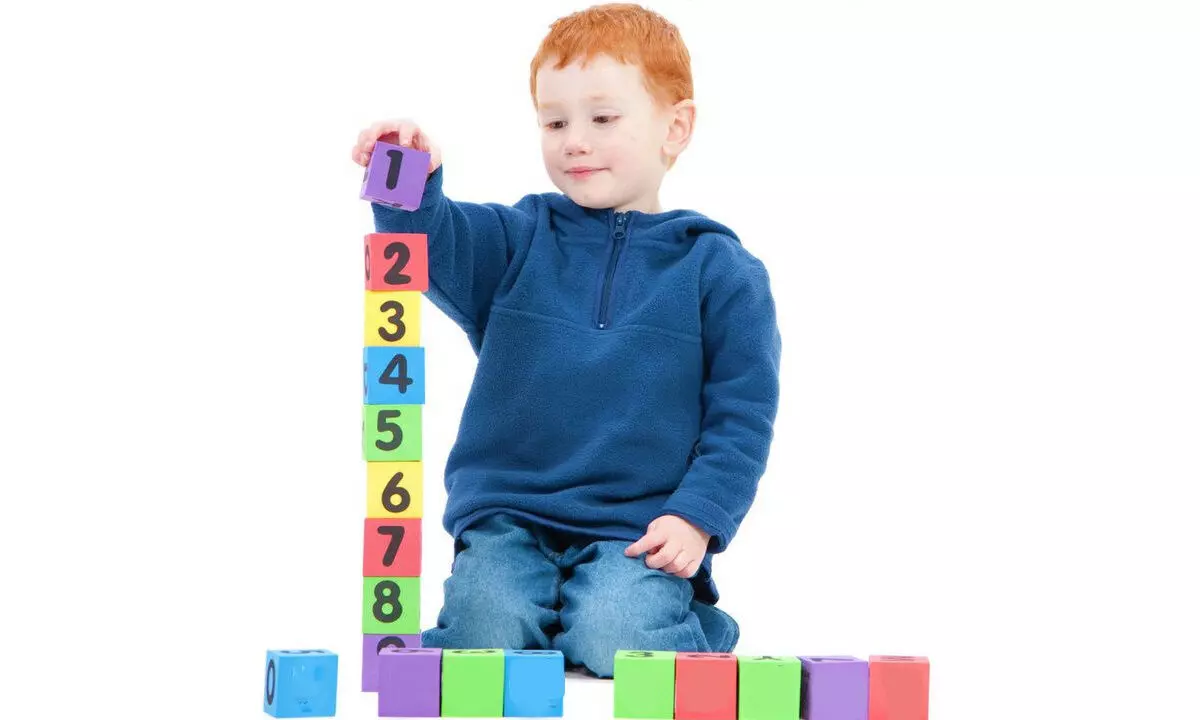
In the digital era, the need to practice mental math often gets overshadowed by new technological advancements like Artificial Intelligence (AI) and automated computational tools. However, the art of mental math remains indispensable, cultivating cognitive resilience, logical reasoning, and problem-solving abilities in those who regularly practice it. Legendary minds like Albert Einstein, Ramanujan, and Gauss had strong mental math abilities that fueled their groundbreaking discoveries. Einstein himself once said, “Pure mathematics is, in its way, the poetry of logical ideas.” Here are a few ways in which mental maths helps in the holistic development of a child:
Cognitive Gym for the Brain
Mental math is akin to a workout for the brain, activating key regions such as the prefrontal cortex and parietal lobes, which govern problem-solving and numerical processing. Engaging in mental arithmetic strengthens neural connections, enhancing cognitive agility and memory retention. Research from the University of Chicago highlights that children who practice mental math exhibit greater long-term memory retention and academic performance in STEM subjects. Furthermore, techniques like Vedic math or abacus training enhance mental agility, enabling individuals to decompose complex problems intuitively, a capability unmatched by machines. Just as physical exercise keeps the body fit, regular mental calculations keep the brain sharp and resilient against cognitive decline.
Combating Digital Dementia
An over-reliance on digital tools can lead to what neuroscientists describe as “digital dementia”—a condition characterized by weakened memory and diminished problem-solving skills. Research from the University of Tokyo has indicated that students who depend solely on calculators not only struggle with basic arithmetic but also show reduced critical thinking abilities. This underscores the necessity of balancing technological tools with mental practice to preserve cognitive vitality. Mental math reinforces a deep, intuitive understanding of numbers and patterns that digital aids cannot replicate. This “number sense” is crucial for logical reasoning and underpins the ability to make quick, accurate decisions.
Practical Reliability and Quick Thinking
Even in the digital world, technology often lacks and is subjected to failures such as battery drain, software glitches or network disruptions. In high-stakes professions such as aviation or engineering, the ability to rapid mental calculations can be vital. Even in daily life, mental math fosters self-reliance by training individuals to think independently and swiftly, ensuring that cognitive abilities remain robust when technology fails.
Builds Neural Plasticity & Prevents Cognitive Decline
The human brain thrives on challenge. Solving problems mentally strengthens synaptic connections and builds new neural pathways, a process critical for maintaining cognitive health. Harvard Medical School research suggests that individuals who engage in daily mental calculations may experience up to a 30% reduction in Alzheimer’s risk. Additionally, a Stanford University study reported that students relying on mental math scored 20% higher on problem-solving tests than those who predominantly used calculators. This protective effect is comparable to the benefits observed with physical exercise, underscoring that cognitive training, including mental math, is vital for long-term brain health.
AI and Calculators Lack Number Sense
While AI and calculators are capable of processing vast quantities of data at remarkable speeds, they lack the “number sense” that is intrinsic to human cognition. Number sense is the ability to estimate, approximate, and grasp numerical relationships intuitively, developed through mental arithmetic. This faculty enables individuals to critically assess and verify the outputs generated by machines. As such, mental math not only augments our computational skills but also ensures that we remain in control of our cognitive processes rather than being entirely dependent on technology.
Fostering Future Excellence in STEM
Foundational mental math skills serve as a predictor of future academic achievement, particularly in STEM fields. According to a report by the National Mathematics Advisory Panel, children who develop strong mental arithmetic skills by age 10 are more likely to excel in STEM careers later in life. Thus, cultivating these skills from an early age is essential not only for personal cognitive health but also for fostering future innovators and problem solvers.
Mental math is not a rejection of technology but a safeguard for human ingenuity. As AI advances, our ability to think independently, analyze swiftly, and solve problems without machines will remain a uniquely human advantage. By nurturing mental math, we equip future generations to harness technology wisely—ensuring they stay smarter than their tools.
(The author is Founder and Mentor at nischals)


