The unspoken epidemic of student suicides taking a heavy toll in TG and AP

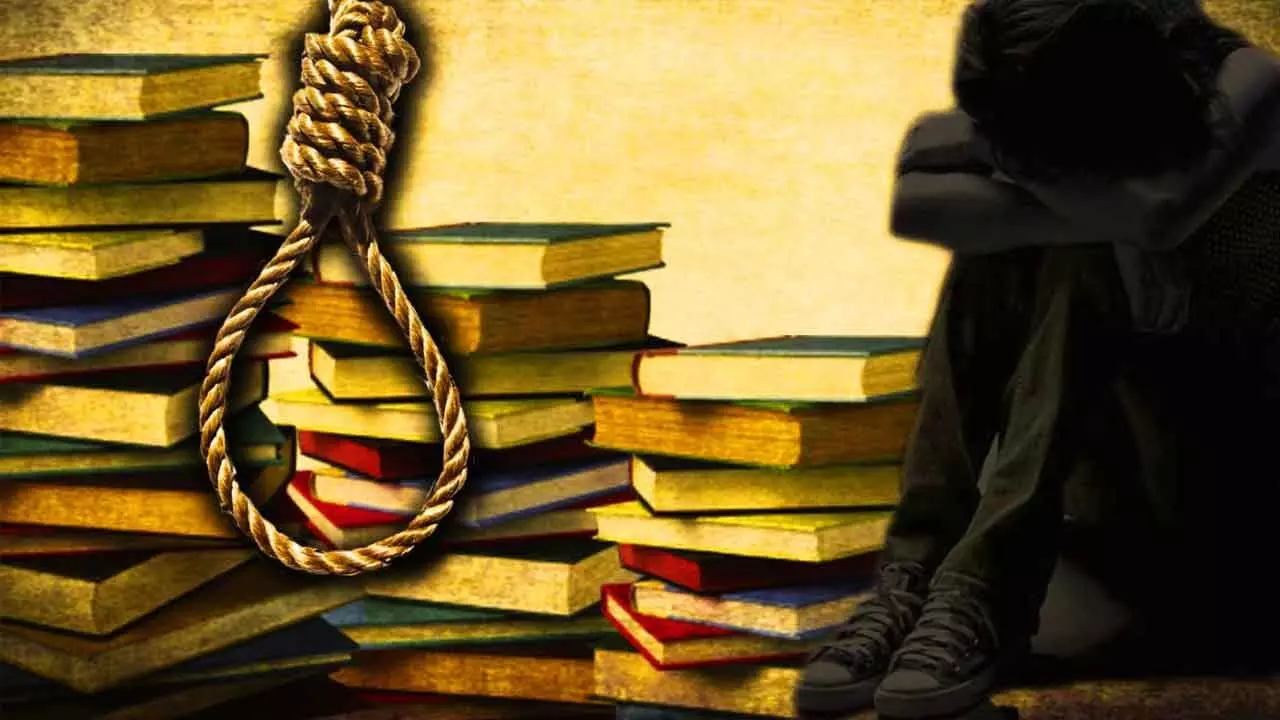
In the shadow of India’s booming economy and educational aspirations, a heart-breaking tragedy unfolds every day-young lives extinguished by the crushing weight of academic failure. The 2022 data of National Crime Records Bureau’s (NCRB) reveals 170,924 suicides nationwide, a 4.2 per cent rise from the previous year, pushing the suicide rate to 12.4 per lakh population.
Amid this grim tally lies a particularly devastating subset: students driven to despair over exam results. This year alone, the crisis hit home with brutal clarity.
In April 2025, seven students in Telangana took their lives within 24 hours after the Intermediate exam results were declared. On September 17, two medical students ended their lives in Visakhapatnam, overwhelmed by academic pressure. These are not isolated incidents; they are symptoms of a systemic failure that demands urgent, collective action.
Nowhere is this epidemic more acute than in the southern states of Andhra Pradesh and Telangana, bastions of academic rigor and cutthroat competition. While these regions contribute significantly to India’s intellectual capital, they also bear a disproportionate burden of despair.
NCRB figures show Andhra Pradesh reporting 8,908 suicides in 2022 (5.2 per cent of the national total) and Telangana 9,980 (5.8 per cent).
Drilling down, student suicides paint an even bleaker picture: 575 in Andhra Pradesh, with 121 (78 boys and 43 girls) attributed to exam failure accounting for six per cent of the all-India total of 2,095 such cases. In Telangana, 543 students died by suicide, including 66 (41 boys and 25 girls) due to perceived academic defeat, representing 3.3 per cent nationally.
These statistics are not cold numbers; they represent shattered families, unfulfilled dreams and a society that has normalised toxic perfectionism.
In Andhra Pradesh and Telangana, education is often a high-stakes gamble where success opens doors to prestige and prosperity, while failure invites shame and isolation. Parents, fuelled by intergenerational aspirations, pile on expectations, viewing top ranks as the sole path to social mobility. Peers amplify this through relentless comparisons, while societal narratives glorify ‘toppers’ and marginalize the rest.
The result? A hyper-competitive ecosystem where exams like the JEE, NEET or state boards become life-or-death battles. Failure is not a learning opportunity; it is a personal catastrophe, compounded by stigma that discourages seeking help.
The consequences ripple far beyond individual tragedies. Student suicides erode community trust in education, deter enrolment and perpetuate cycles of poverty and inequality. They highlight broader mental health gaps: India’s suicide rate among youth aged 15-29 is alarmingly high, with academic stress cited as a leading factor in multiple studies. If unaddressed, this crisis threatens to undermine the demographic dividend of our young population, turning potential innovators into statistics of loss.
Yet, this is not an inevitable fate. Overcoming student suicides requires a multifaceted strategy that reimagines education, bolsters support systems and shifts cultural norms. First, we must overhaul the educational framework to reduce pressure and promote well-being. Policymakers should mandate a holistic curriculum that balances academics with life skills, creativity and emotional intelligence.
In Andhra Pradesh and Telangana, where coaching centres thrive, regulations could cap class sizes, limit hours and enforce mental health breaks. The government could pilot ‘exam-free zones’ in select districts, evaluating students on diverse metrics like community service or innovation projects.
Second, mental health infrastructure must be embedded in every school and college.
This means prioritising mental health training for teachers, equipping them to provide timely counselling and act as the first line of support for students in distress. Teachers should be trained to identify warning signs such as withdrawal, anxiety or declining performance and offer empathetic guidance in confidential settings, with at least one trained teacher-counsellor per 500 students. Helplines like the national 14416 or state-specific ones should be aggressively promoted through school campaigns, with AI chatbots for anonymous initial outreach. In high-risk areas like Visakhapatnam or Hyderabad, mobile counselling units could reach underserved communities.
Parents and families, often unwitting contributors to the pressure, need targeted interventions. Community workshops, perhaps led by NGOs like The Live Love Laugh Foundation, could teach empathetic parenting: celebrating effort over outcomes, fostering open dialogues about failure and recognizing non-academic talents.
Likewise, society must play its part. Media outlets should shift from sensationalizing suicides to highlighting prevention success stories. Corporate partnerships could fund scholarships based on potential rather than scores, signalling that failure is not fatal.
Research is the key: the NCRB should expand data collection to include real-time tracking and root-cause analyses, enabling evidence-based policies. Collaborations with tech firms could develop apps for mood tracking and early alerts, while universities research culturally sensitive interventions.
Finally, government commitment is non-negotiable. A national task force on youth mental health, with representatives from education, health, and civil society, could coordinate efforts.
Inspired by Kerala’s progressive mental health policies, States like Andhra Pradesh and Telangana could lead by example, enacting laws for mandatory suicide prevention protocols in schools.
In conclusion, the student suicide epidemic is a clarion call to reclaim education as a nurturer of potential, not a destroyer of spirits. By fostering empathy, resilience, and support, we can ensure no young life is lost to an exam slip. This isn’t just policy but a moral imperative.
(The writer is a former principal and founder of the NGO Supporting Shoulder)