The voice within and the need for poetry

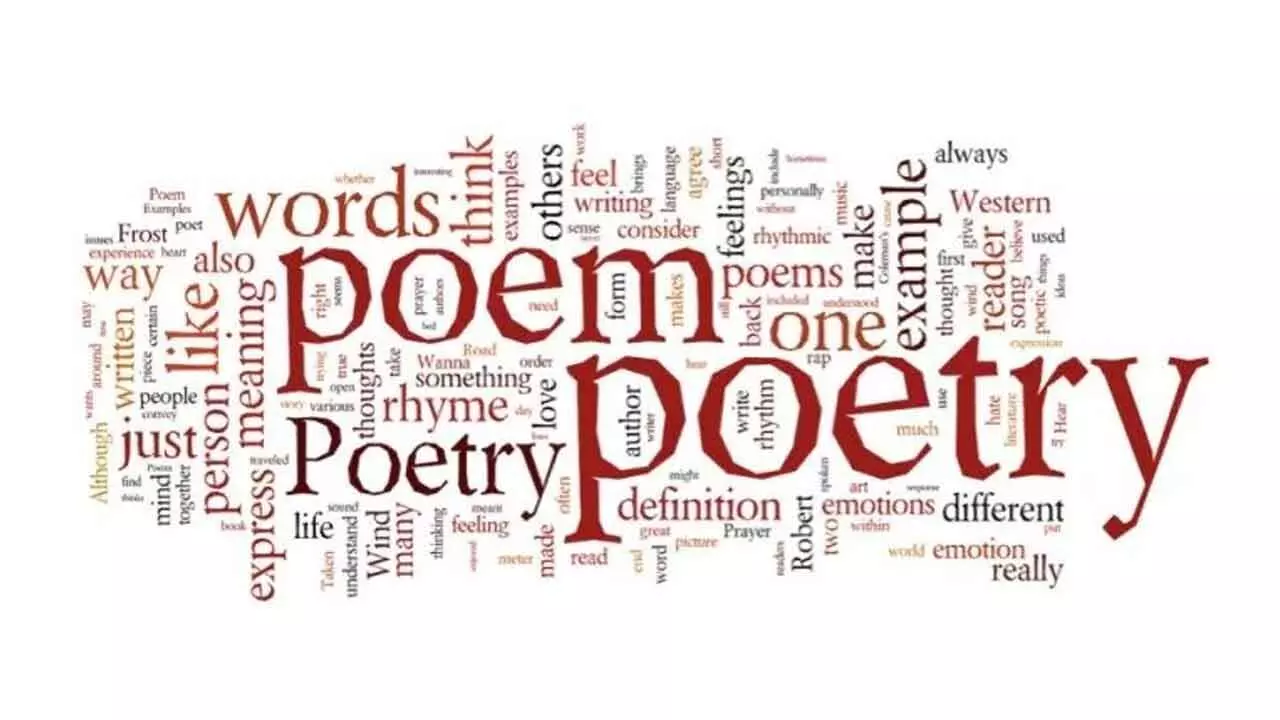
Every individual needs poetry in life- not just as written verses, but as the inner rhythm of thought
In today’s rapidly shifting geopolitical and economic landscape — where policy reversals, technological advances, and business disruptions are the norm — poetry teaches us that balance. It reminds us that victory is not about defeating others, but about overcoming the confusion within ourselves, and leading with vision and compassion
A human being speaks — but not always from the heart. In today’s ultra-connected world, dominated by artificial intelligence (AI) and instant messaging, our communications are often filtered through screens, algorithms, and trending narratives.
When the heart wants to speak in its own rhythm, it takes the form of poetry.
A poem is born out of the urge to express what we truly feel. When we fail to convey our emotions directly — whether silenced by power imbalances in geopolitics or the high-pressure environments of business boardrooms — those emotions find their way through words.
Gentle, honest and rhythmic, poetry becomes not an ornament of language, but the purest reflection of the human mind, able to cut through the noise of propaganda, market sensationalism, and technological overload. Poetry is not just an emotional flow; it is also a courageous voice that seeks to unveil truth. In an era where deepfakes and misinformation shape public perception, poetry helps us distinguish between reality and illusion, allowing us to see things more clearly. Where news reveals facts, a poem adds a heartbeat to those facts, humanising headlines about conflict, recession, innovation, or migration. It is this pulse that links the lived experiences of people to unfolding events — and serves as a reminder to people in power of the human consequences beneath the statistics.
Over time, poetry has evolved:
Today’s poet is not confined to flowers, the moon, rivers or nature. The modern poet writes about computer screens, smartphones, supply chains disrupted by conflict, and the human mind caught between economic volatility and the rapid pace of technological change. The poet observes how technology — from AI to blockchain — changes not only our surroundings but also our inner world, bringing with it questions of privacy, autonomy, and identity.
Poetry acts like a mirror — one that reflects our weaknesses, hopes, fears, and the most profound aspects of our consciousness. On the global stage, this mirror reflects the anxieties of societies facing job displacement due to automation or the divisiveness fuelled by social media echo chambers. Once we begin to see ourselves through this mirror, change starts within.
Every true poem asks a question: “Who are you really?” The search for this answer becomes a journey toward self-understanding, an inner resilience that is much needed in a time of rapid political, economic, and technological flux.
The fact is that poetry is also a form of knowledge sharing. In business education, a lesson may fade from one’s memory, but a poem about a leader’s vision, an entrepreneur’s struggle, or a worker’s dream stays in the heart. Poetry teaches not just about what to think, but how to think — with empathy, with creativity and with an appreciation for complexity.
Through simple words, poetry sparks imagination and keeps erudition alive across generations, bridging the knowledge gap that often exists in the pursuit of innovation, policy and enterprise.
In society, differences of opinion are natural — whether over trade policy, climate action or regulation of new technologies. Poetry builds bridges of understanding across those divides.
A poet brings different perspectives onto the same page and encourages respect for each of them, much as successful global businesses and diplomatic initiatives navigate diverse viewpoints to reach a consensus. Poetry is not a voice of division; it is a song of connection, essential for collaboration and peaceful progress in our interconnected world.
Every individual needs poetry in life — not just as written verses, but as the inner rhythm of thought. A poem can offer courage when words fail, comfort when silence feels heavy, and clarity when the mind is restless, whether one is a policymaker, entrepreneur, student, or citizen seeking direction amid uncertainty.
Life is like a pair of horses pulling a chariot — it needs balance, patience, and direction to reach its destination.
In today’s rapidly shifting geopolitical and economic landscape — where policy reversals, technological advances, and business disruptions are the norm — poetry teaches us that balance. It reminds us that victory is not about defeating others, but about overcoming the confusion within ourselves, and leading with vision and compassion.
The question “Why poetry?” may sound simple, but its answer is infinite. For every heart that feels deeply — especially in a world transformed by geopolitics, business cycles, and technology — a poem is already being written within. Poetry is the voice of that inner self — a bridge between the silent heart and the speaking mind. It guides us gently toward understanding ourselves, and through that, understanding the world. This version weaves in the roles that policy, business, and technology play in shaping today’s emotional and cultural landscapes, and highlights poetry’s power as a counterbalance and guide in a complex, rapidly changing world.
Summary:
In a world of constant noise — from news feeds about global summits to the buzz of financial markets and relentless social media updates — poetry brings back silence. This silence helps us listen to our own hearts and regain perspective amid the turbulence of geopolitics and economic uncertainty.
(The writer is Program Head – PGDM BFS, Institute of Public Enterprise, Hyderabad)