
Karnataka: State still struggles to curb child marriages, teenage pregnancies

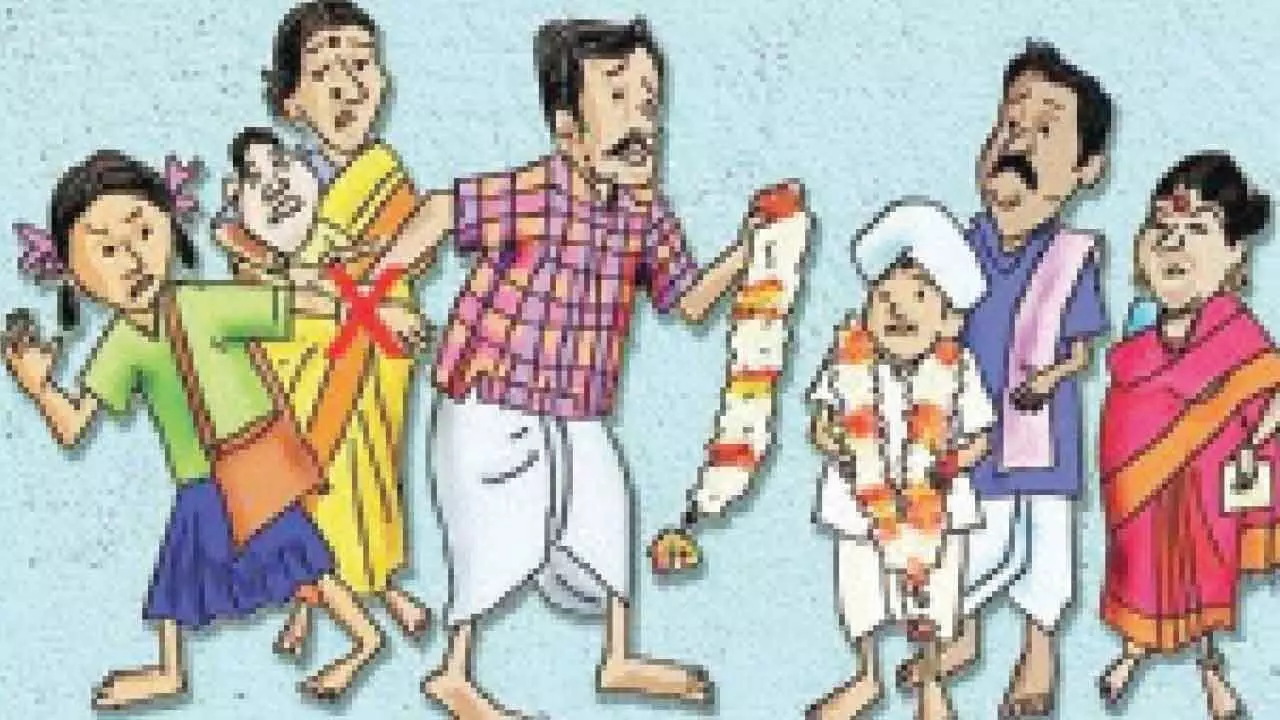
Bengaluru: Despite being a state that has made rapid strides in education, technology, and social awareness, Karnataka continues to grapple with the serious social issues of child marriage and teenage pregnancies. Despite government-led awareness campaigns and strict enforcement of laws, the number of such cases continues to rise, raising alarm among policymakers and citizens alike.
In the 2024–25 period alone, Karnataka reported 700 instances of child marriage. According to the Women and Child Development Department, out of 3,049 complaints received related to child marriage, officials managed to prevent 2,349. However, the fact that 700 marriages still took place despite these efforts has emerged as a significant concern for the state administration.
Chief Minister Siddaramaiah, during a recent two-day meeting with Deputy Commissioners and Zilla Panchayat Chief Executive Officers, expressed serious concern over the issue and issued strict directives to curb such practices.
District-wise data reveals the spread of the issue across Karnataka. Shivamogga reported the highest number of child marriages at 79, followed closely by Belagavi with 78, which is notably the home district of Women and Child Development Minister Lakshmi Hebbalkar. Other districts with a high number of reported child marriages include Chitradurga with 74, Bagalkote and Mysuru with 60 each, Mandya with 57, and Haveri with 42.
Mysuru, the Chief Minister’s home district, not only recorded a high number of actual cases but also saw the highest number of complaints, at 284. Authorities managed to prevent 224 of those marriages. Similarly, Mandya had 180 complaints, of which 129 were prevented. In Bengaluru Urban, out of 83 complaints, 53 marriages were stopped but 30 still took place.
Districts such as Chikkaballapur, Vijayanagara, Ballari, and Chikkamagaluru each reported 11 cases. Koppal received 168 complaints, out of which 161 marriages were stopped, while 7 went ahead. Relatively fewer cases were reported in Dakshina Kannada, Kodagu, and Udupi, with 7, 7, and 6 cases respectively. Over the last four years, from 2021–22 to 2024–25, the state witnessed a total of 2,165 child marriages. The yearly breakdown shows 418 cases in 2021–22, 328 in 2022–23, 719 in 2023–24 (the first year under the current Congress government), and 700 in 2024–25. The sharp spike in the last two years has become a matter of concern, prompting the Chief Minister to sternly question officials during recent reviews.
Equally alarming is the number of teenage pregnancies recorded under the Protection of Children from Sexual Offences (POCSO) Act. In 2024–25, Karnataka registered 3,489 POCSO cases, of which 685 involved teenage girls who became pregnant. These figures highlight not just sexual violence but the broader social neglect and vulnerability of young girls in the state. Bengaluru Urban reported the highest number of POCSO cases at 343, with 28 teenage pregnancies. Shivamogga followed with 231 cases, including 55 pregnancies. In Belagavi, 179 cases were registered, with 20 teenage pregnancies. Chikkaballapur had 170 cases and 32 pregnancies, while Mandya recorded 160 cases and 8 teenage pregnancies.
Despite Karnataka’s reputation as a progressive and modern state, these statistics expose the persistence of regressive social practices and highlight the urgent need for stronger enforcement, better education, and community-level engagement to protect the rights and futures of young girls.


