MyVoice: Views of our readers 25th January 2026

MyVoice: Views of our readers 2nd February 2026
Take the R-Day pledge: Strive for a corruption-free India
Eversince becoming a Republic in 1950, India has come a long way. As the only country with a history dating back to over 5000 years, she has an envious glorious past to boast of.
Valdimir Putin has eulogised India saying that "The centuries-old culture and history of India, majestic architectural monuments, and museums of Delhi, Agra, and Mumbai have a unique attractive force." A knowledge society, India was foremost across diverse fields, including medicine, philosophy, mathematics, economics and political science, to name a few.
In his "A Wonder that was India" masterpiece, A L Basham summoned up our greatness in one line. Martin Luther King Jr showered his own praise thus: "To other countries, I go as a tourist, but to India, I come as a pilgrim." India is endowed with rich natural resources, a great variety of fauna and flora and a diversified richness, thanks to which it is hailed as 'the world's lab'.
Alas, one is left wondering what ails this holy, rich, multicultural, multi-lingual land, which is also the world's largest democracy. Why is there such poverty? Statistics indicate that 30 per cent of Indians belong to below poverty line (BPL) families. In his thought-provoking book, Ecology and Equality, Madhav Gadgil, the people's scientist who passed away this month, makes a statement fraught with sincere concern and shock when he says that we have created an India where islands of prosperity peep out of a sea of poverty!
In the land of Vedic knowledge and spiritual abundance, how is that blind beliefs, superstitions, and ignorance exist. In the land that had the world's first university, around 27 per cent of the 125-crore population are still illiterates.
"India happens to be a rich country inhabited by very poor people", was the anguine observation of former Prime Minister Dr Manmohan Singh.
Penury and illiteracy are at the root of all ills and maladies in our society. But the real and major dark force that has eclipsed our entire system for long years is cankerous corruption.
With a tally of 38 marks out of 100, India stands at the 83rd position as per the International Corruption Index 2025. Denmark is the least corrupt country with 81 marks!
Everyone knows that corruption has eaten into all vital parts of our society and arms of the governing system, vertically and horizontally. In its varied forms, corruption is called bribery in one area of our activity and raises its ugly head as nepotism in another area, and as red-tapism elsewhere. Mediocrity, adulteration, levity and laziness are colouring our work culture in the fields of education, commerce, defence, internal security, media and creativity.
"We have islands of excellence floating in a sea of mediocrity," contends Shashi Tharoor.
It has an all pervading, tempting, and powerful presence in politics and governance. In fact, it is watered here and nurtured like a banyan tree. This tree has cast its long, creeping, and dark shadow on our every activity, depriving us of the fruits of our love and labour.
It has touched and changed every conceivable method and manner of governing and attempts to better us as a nation. Where is the redemption for us? Who can give it to us and when?
The answer to this is within us. We must change as an individual and as a society. Change as an individual will bring in change in our thinking as a collective society. This is what Mahatma Gandhi wanted. If every one of us is willingly and sincerely ready to strive to find and remove corruption from our life, India can hopefully become a happy place to live in, at least by 2047.
Like charity, change should also begin at home. Parents have a decisive role in changing a person. Here is where the teacher comes in as a friend, philosopher and guide. In his "Ignited Minds", APJ Abdul Kalam said that "Behind the parents stands the school and behind the teacher, the home." There are many evils and maladies like unemployment, poverty, inequality, and insecurity that are plaguing our society and economy with corruption being the root of it all. Make some sacrifices to realise the vibrant India of our dreams. Let us change ourselves to change India.
M Somasekharprasad,Hyderabad-20
Make a difference this R-Day
I wish to draw attention to the way we treat our national flag after every Independence Day and Republic Day celebration. Every August 15 and January 26, the tricolour is seen fluttering proudly across the nation, including educational institutions, offices, shops, vehicles, and even pinned to clothes. It fills every Indian with pride, reminding us of the sacrifices made by our great freedom fighters, who had sacrificed their lives to uphold the honour of the flag and gave us Independence in 1947.
However, a day after the celebrations comes a different and deplorable story. The same flags that were held high with pride are found lying on the roads, in garbage bins, or trampled upon. Where does that ‘patriotism’ go the next day? Is our remembrance of freedom fighters only for one day? Do we honour our martyrs just by waving the flag for a few hours and then throwing it into the dustbin? Is this the respect our national symbol deserves? Do we call ourselves true Indians if we cannot even respect our own flag? What kind of patriotism is this -- one that lasts only for a few hours and then dies the very next morning? Have we forgotten that countless men and women, our very own forefathers, sacrificed their lives, so that this flag could be held high and not fall?
The widespread use of paper and plastic flags has worsened this situation. Despite clear instructions from the government, urging citizens not to use plastic flags, and to ensure proper disposal in accordance with the Flag Code of India, the practice continues unchecked. This disrespect towards our national symbol is heartbreaking. The tricolour is not just a piece of cloth – it embodies courage, sacrifice, and the spirit of freedom. To discard it like waste, is to dishonour the countless patriots who have laid down their lives for our motherland.
It is the duty of every Indian to always respect the dignity of the national flag. Parents, teachers, and elders must instil in children the value of treating the flag with honour, not just on Independence or Republic Day, but every day. Citizens must ensure that after the celebrations, paper flags are disposed of respectfully, and plastic flags are avoided altogether. Let us not reduce patriotism to a one-day event. True respect for our nation lies in protecting the honour of its symbols, especially the tricolour. May we always remember the sacrifices behind it and ensure that it continues to sway proudly, inspiring generations to come.
As Indians, we should respect our country’s national flag, national anthem and national song. We must understand that the country needs more than patriotic songs or celebrations twice a year.
Be sincere and honest with your work. A common man cannot change the whole system but many together can do this. It is the best way to make a difference.
Jubel D'Cruz,Mumbai
Shifting the capital to south will be a viable move
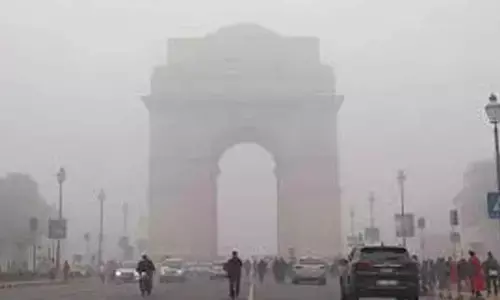
Amidmoves to rename Delhi as Indraprasta, The Hans India has published a timely article on January 23) in which the writer has touched upon various options to shift the national capital to other cities, most probably south Indian cities like Hyderabad, Amaravati, Bengaluru, Mysuru, Coimbatore, Tirichurapalli, Thiruvananthapuram and Kochi. Hyderabad is the best option as it was also supported by none other than B R Ambedkar, who felt that it was the ideal city as the second capital. In the last seven decades, Hyderabad has seen phenomenal growth both in infrastructure and administrative capacity and geopolitical centrality. Moreover, its climate makes it viable as the country’s second capital. Meanwhile, the other contender in the writer’s opinion, Amaravati, being developed as a world class capital, is at the beginning stage. It can therefore be built to cater to the requirements of a state and national capital. Thus remaining Delhi as Indraprasta may not resolve the persisting issues of Delhi especially the deadly pollution levels. Under these circumstances shifting of the capital to a south Indian city, especially to Amaravati, not only reduces excessive dependence on north India and also relieves Delhi from the stress caused by pollution. Moreover, shifting of capital from one city to another and having more than one city as the capital is not a new concept. There are enough precedents.
Pratapa Reddy Yaramala,Tiruvuru (AP)
TG and AP hit it big at Davos
Theefforts of the Telangana and Andhra Pradesh Chief Ministers at the Davos Investors Meeting were a huge success, as they attracted investments from global giants from IT, AI, power and startups. (Revanth-Lokesh meet in Davos, says cooperation key to development of Telugu States: THI Jan 23. Telangana, in particular, secured commitments from companies like Google, Tata's and L'Oréal and signed MoUs for AI and aerospace partnerships. The Telangana government has announced its intention to review Davos follow-ups annually. Set to witness significant growth with partnerships in AI, semiconductors, and aerospace, Telangana is poised to become a hub for tech and innovation, creating new employment opportunities with new startups. It is a good augury
Ganti Venkata Sudhir,Secunderabad
EVMs have been game changers
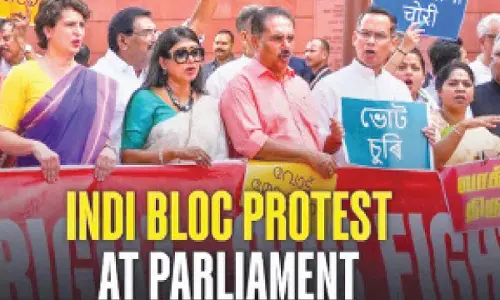
Thequestion of whether Electronic Voting Machines (EVMs) represent an "end game" for the opposition in India is a subject of intense political debate, characterised by allegations of manipulation from opposition parties and assertions of integrity from the ruling BJP and the Election Commission of India (ECI). EVMs are part and parcel of our election process, and we need to depend on this system keeping in view the rising population. It is an easy and foolproof system followed to provide a quick and most dependable verdict for all parties. The criticism against them ahead of state elections can never serve the purpose. The Election commission is not interested in motivated slugfest and firmly stands up by the empirical facts about the foolproof nature of EVMs deployed in earlier elections in India. It is quite evident that EVMs have been a game-changer in Indian elections.
Jayanthy Subramaniam,Mumbai-22
Bengaluru road chaos is dreadful
Thisis further to "Bengaluru second most congested city globally in 2025" (THI, Jan 23). It is deeply disturbing to note that Bengaluru is at the dubious second rank among the world’s most congested cities in 2025. Once celebrated as India’s Silicon Valley, the city is now choked by unplanned urban expansion, inadequate public transport and relentless spurt of private vehicles. Daily commutes have turned into exhausting ordeals, eroding productivity and quality of life. Traffic congestion has also worsened air pollution, fuel wastage, and mental stress among commuters. Despite repeated promises, infrastructure development has failed to keep pace with population growth. The ranking is a stark reminder of policy paralysis, poor coordination among civic agencies, and the urgent need for sustainable urban planning. Unless corrective measures are taken on a priority, Bengaluru risks losing its economic edge and liveability that it enjoys.
N Sadhasiva Reddy,Bengaluru-56
Don’t make Medaram a recreation centre
TheGovernment of Telangana deserves appreciation for its advance planning vis-à-vis Sammakka Saralamma Jatara at Medaram. Over the years, the inflow of pilgrims to this biennial festival is increasing at a great pace. One of the reasons for this influx is the availability of better road infrastructure to reach the destination amid thick forests. Around 25 years back, there used to be frequent traffic jams that resulted in vehicles getting stranded for hours together. With enhanced and better cooperation among government departments, many such bottlenecks have been eliminated completely or at least partially. This is the positive and proud side of the Jatara.
However, one needs to have a relook at the Jatara and its management with a longer and better perspective. When you assemble lakhs of people in a thick forest area once every two years, crowd management becomes tough. Provision of safe uncontaminated water for the pilgrims for days together on a continuous basis becomes difficult year after year. Sanitary arrangements require a lot of imaginative approaches and arrangements that involve huge public funds. Pooling of buses by TGSRTC and their accident-free operation remains a litmus test. It is time one anticipates all emerging challenges and brings in measures to combat them. Overenthusiasm on the part of politicians, administrators and citizens, who parade their promotional and marketing skills is likely to give room for unwanted, undesirable and unsafe consequences. The pilgrim centre need not be transformed into a recreation centre with all its disadvantages coming to the fore. This should be on top of the agenda.
M N Saraswathi Devi,Secunderabad-10
Why meet in Davos and not on home soil?
Onthe sidelines of the World Economic Forum (WEF) at Davos, Telangana Chief Minister A Revanth Reddy and Andhra Pradesh HRD & IT Minister Nara Lokesh met and exchanged presentations and emphasised on cooperation between the two Telugu states for their development. Lokesh highlighted Andhra Pradesh’s education reforms, including digital learning and industry-linked skill training, while Revanth Reddy outlined Telangana’s welfare and development initiatives in healthcare, rural growth, and IT governance. Both leaders stressed skill development as a shared priority to prepare youth for global opportunities.
Yet such cordial exchanges abroad contrast with the contentious realities back home. Since the 2014 bifurcation, disputes over division of assets, institutions, and liabilities remain unresolved. More critically, Krishna and Godavari river water sharing continues to spark litigation, with both states preferring courts over negotiation. The Davos meeting symbolised collaboration, but lasting progress requires political will and institutional mechanisms to resolve long-pending issues amicably.
Dr O Prasada Rao,Hyderabad