Trump Claims Near-Complete Trade Agreement With India While Imposing Tariffs On 14 Nations

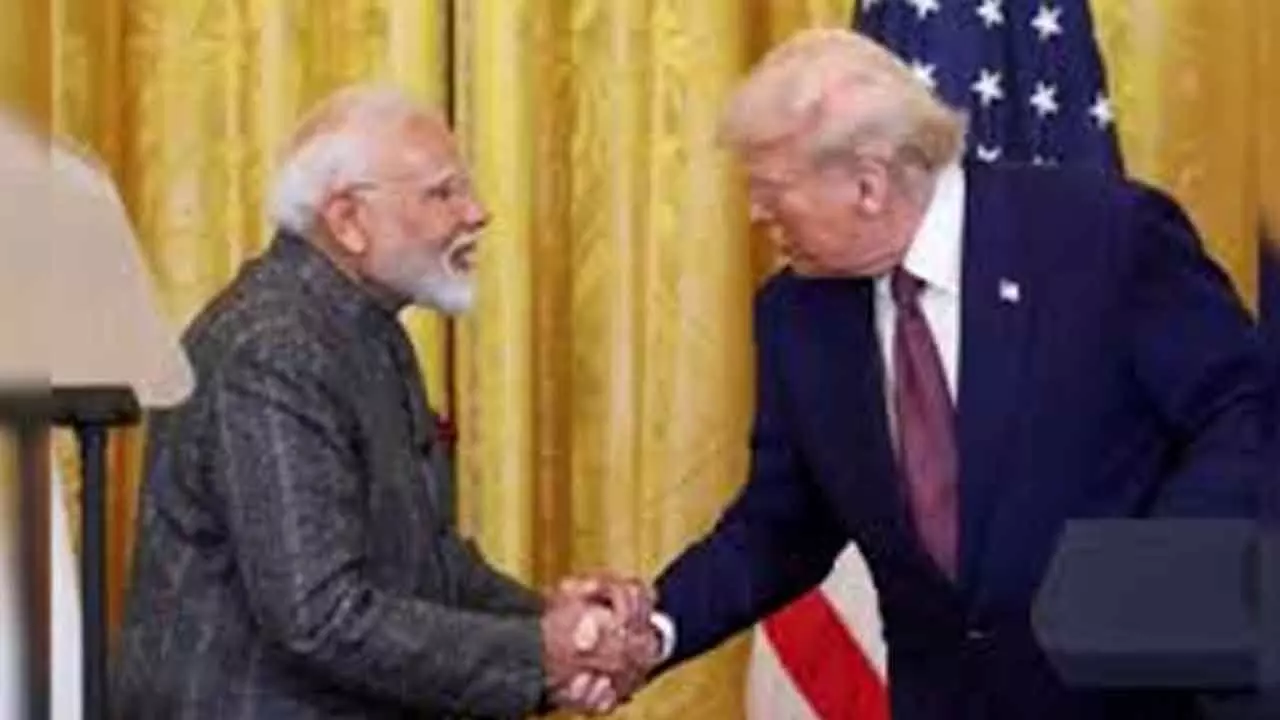
- President Trump announces US is close to finalizing a trade deal with India while introducing new tariffs on 14 countries.
- Agriculture and dairy sectors remain key sticking points in negotiations.
President Donald Trump announced on Tuesday that the United States is nearing completion of a trade agreement with India, even as his administration imposed fresh tariffs on 14 countries. The declaration came during a White House address where Trump outlined his administration's latest trade enforcement measures.
"We've secured agreements with the United Kingdom and China, and we're approaching a final deal with India," Trump stated. "For other countries where agreements seem unlikely, we're simply sending them notification letters."
The announcement coincided with the US unveiling the first wave of threatened tariff increases on major trading partners, including Bangladesh, Thailand, South Korea, and Japan. These new tariff rates are scheduled to take effect from August 1st.
"Various countries are receiving letters specifying their required tariff payments. Some nations may receive slight adjustments if they present valid cases - we aim to maintain fairness," the President explained.
Despite Trump's optimistic assessment, trade negotiators from both Washington and New Delhi continue wrestling with significant obstacles, particularly regarding agricultural and dairy market access. The disagreements center on fundamental policy differences that have historically complicated US-India trade relations.
Washington is demanding that India open its markets to genetically modified crops, a proposal that New Delhi has consistently rejected due to concerns about potential risks to its farming community. The US is also seeking expanded access to India's agricultural and dairy sectors, but both areas are likely to remain excluded from any potential agreement due to domestic concerns about rural employment and food security.
India's agricultural sector, while contributing only 16 percent to the nation's $3.9 trillion economy, provides livelihoods for nearly half of the country's 1.4 billion population. The possibility of cheaper American imports flooding the market could depress local prices, potentially creating political challenges for the current government.
New Delhi has historically excluded agriculture from its Free Trade Agreements with other nations. Granting market access to the United States could establish a precedent requiring similar concessions to other trading partners, further complicating India's trade strategy.
Conversely, India is advocating for substantial tariff reductions on its labor-intensive exports, including footwear, textiles, and leather goods, which represent significant employment sectors. Indian negotiators maintain that without comprehensive tariff cuts, particularly on high-employment industries, the ambitious goal of doubling bilateral trade to $500 billion by 2030 remains unrealistic.
According to industry reports, the negotiations have increasingly focused on reciprocal tariff reductions or eliminations, with officials from both countries emphasizing the need to reduce overall duty barriers. New Delhi has indicated it will not accept an agreement that fails to address both market access and reciprocal tariff treatment for its exports.
The current discussions represent a narrowed approach compared to earlier comprehensive trade talks, with both sides acknowledging that meaningful progress requires addressing the fundamental tariff disparities that have long characterized US-India trade relations.