Budget 2025: Key Expectations and Economic Challenges for India

Budget 2025: Key Expectations and Economic Challenges for India
Ahead of Budget 2025, the Modi government faces scrutiny on its handling of economic slowdown, with key focus on industry, social welfare, and growth.
As Parliament prepares for the 2025 Budget Session, political parties are gearing up for heated debates, with significant scrutiny on the Narendra Modi government's handling of the economy. The upcoming session, which begins on Friday, is expected to be pivotal for both the ruling party and the opposition. The Modi government is facing its most critical budget since coming to power, with growing concerns over an economic slowdown and global uncertainties.
For the first time since its inception, the Modi government will present a full Budget without a majority in the Lok Sabha, following a setback in the 2024 general elections. The ruling Bharatiya Janata Party (BJP) was reduced to 240 seats, creating a challenging political environment. Adding to the pressure, the government’s handling of the Kumbh Mela stampede tragedy has further complicated its position.
A senior BJP leader noted that the previous Budget, presented in July 2024, was rushed due to the political climate at the time. The leader pointed out that in 2014, there were low expectations, and in 2019, the country hoped for change. However, this year's Budget comes at a time of volatile markets, a depreciating rupee, and an unpredictable international political environment.
The opposition parties, led by Congress, are poised to challenge the government’s economic policies, especially regarding the country’s growth trajectory. With inflation rising, unemployment levels high, and a perceived slowdown in private investment, the opposition has flagged these issues as key areas for debate.
Congress leaders have already highlighted the Kumbh Mela stampede as a major failure of the Uttar Pradesh government, calling for an investigation into the lack of crowd control measures. Additionally, the Congress has focused on other long-standing grievances against the BJP, including allegations of favoritism toward business tycoon Gautam Adani and the government’s perceived neglect of social justice issues.
The Communist Party of India (Marxist) (CPI(M)) has also expressed concerns about the government’s claims regarding achievements in the manufacturing sector. Rajya Sabha MP John Brittas criticized the lack of concrete measures to stimulate the economy, especially after a breakthrough by a Chinese firm in artificial intelligence. Brittas emphasized that India must keep pace with global technological advancements to remain competitive.
CPI(M) leaders have also pointed to the weakening of the Indian rupee as a symbol of economic mismanagement, arguing that it reflects the government's failure to address fundamental economic issues. This sentiment is echoed by Congress MP Manish Tewari, who highlighted the lack of success in stimulating private investment despite tax cuts introduced in previous Budgets.
One of the central themes expected to dominate the upcoming Budget is the need to boost private consumption and investment. Economists and policymakers alike are stressing that the government must focus on measures that put money in the hands of ordinary citizens, thereby stimulating demand and reviving the economy.
Tewari further criticized the lack of transparency in economic reporting, suggesting that opaque GDP data has eroded trust among both domestic and international investors. He argued that clear, consistent figures are necessary to rebuild confidence in India’s economic future.
Both the BJP and opposition parties are keenly watching what the Budget will hold for industries, especially micro and small enterprises, which are seen as key to creating jobs and driving growth. BJP MP Sanjay Jaiswal highlighted the importance of supporting labor-intensive industries to ensure economic stability.
With increasing concerns over unemployment and poverty, the opposition will likely press the government on its handling of social security programs. Congress whip Manickam Tagore pointed to cuts in allocations for essential sectors like health, education, and employment generation. These issues will be a focal point of the opposition’s strategy to challenge the government in the upcoming Budget discussions.
The BJP is expected to push for policies aimed at revitalizing industry and infrastructure, particularly as the party prepares for upcoming state elections in Bihar, West Bengal, Assam, and others. Senior BJP leaders have acknowledged that fresh support for agriculture and industry is critical if the party hopes to maintain its political momentum.
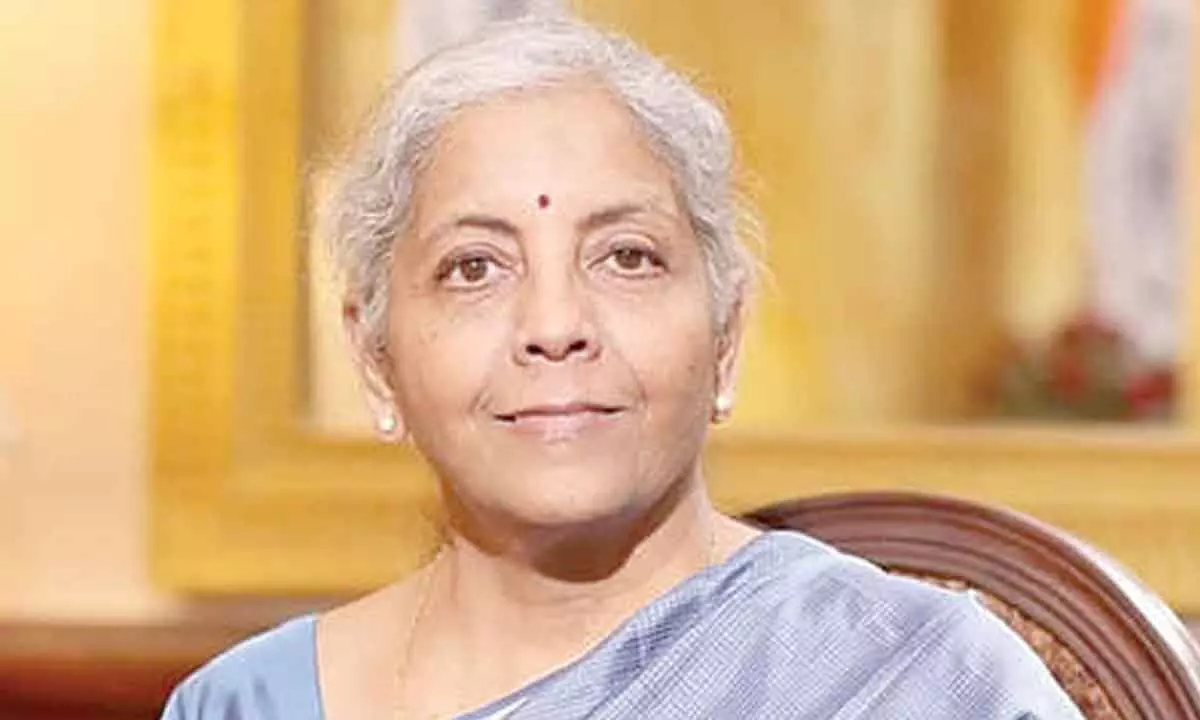
Shiv Sena MP Shrikant Shinde also called for significant investment in emerging technologies such as artificial intelligence, emphasizing that such technologies are essential for India’s future competitiveness on the global stage. With these challenges in mind, all eyes are on Finance Minister Nirmala Sitharaman’s speech as she unveils the government’s strategy to address these economic hurdles.
Ultimately, the Budget 2025 will serve as a critical test for Prime Minister Modi’s leadership, as both the ruling party and opposition prepare to scrutinize the government's economic policies. With the global economy in flux and domestic challenges mounting, this year's Budget is expected to provide important insights into the government's ability to navigate these turbulent times and deliver on its promises of growth and stability.
As the political landscape braces for the session, both the government and opposition will focus on a range of issues, from fiscal responsibility to social security, as the country looks to chart a course through one of its most uncertain economic periods.