Elon Musk Says AI Will End Poverty, Making Savings Obsolete

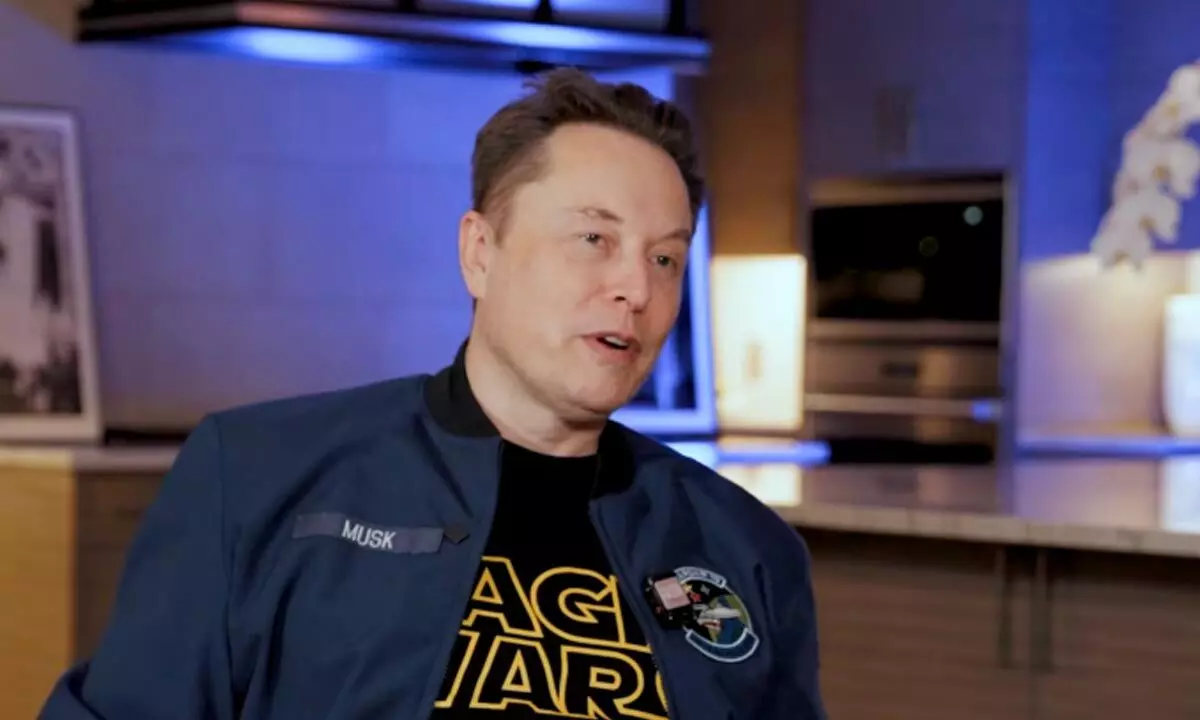
Elon Musk predicts AI-driven abundance will eliminate poverty, reduce the need for money, and make traditional savings irrelevant worldwide.
Elon Musk has once again sparked global debate with bold claims about the future of money, work, and poverty in an age dominated by artificial intelligence and robotics. According to the Tesla and SpaceX CEO, society is moving toward a future where saving money may no longer be necessary, as poverty itself could cease to exist.
Musk made these remarks while responding on X to a post by American billionaire investor Ray Dalio. Dalio had announced that he and his wife were contributing to newly launched savings accounts for children born between 2025 and 2028, an initiative backed by the Trump administration. He also highlighted a major pledge by Michael Dell and his wife, who committed $6.25 billion to the same fund.
While acknowledging the generosity behind such efforts, Musk questioned the long-term need for savings. In his reply, he wrote, “It is certainly a nice gesture of the Dells, but there will be no poverty in the future, and so no need to save money. There will be universal high income.” The comment quickly drew attention, reigniting conversations about whether technological progress can realistically deliver economic equality on a global scale.
Musk’s optimism is rooted in his long-standing belief that artificial intelligence and robotics will dramatically increase productivity. According to him, machines will eventually handle most forms of labour, allowing goods and services to be produced in abundance at minimal cost. This, he argues, could fundamentally reshape how wealth is distributed.
In a separate post, Musk reinforced this vision, writing, “The future is going to be amazing with AI and robots enabling sustainable abundance for all!” He has repeatedly emphasized that AI-driven automation could eliminate scarcity, a core factor behind poverty and inequality.
These views are consistent with statements Musk has made throughout the year. In October, he suggested that while AI and robots may take over nearly all jobs, this shift would not necessarily be harmful. Instead, humans would be free from economic compulsion and could pursue activities for personal fulfillment. He even remarked that people could choose to grow vegetables or engage in hobbies simply because they enjoy them, not because they need to earn a living.
Musk has also painted a picture of a future where robots outnumber humans, with each person having access to advanced mechanical assistants capable of meeting everyday needs. In such a world, he believes, the traditional link between work and income would weaken significantly.
His vision extends beyond employment to the very concept of money. Just last month, Musk suggested that money itself might lose relevance as AI and robotics continue to advance, replacing today’s economic systems with something entirely new.
While many experts remain skeptical about the timeline and feasibility of such a transformation, Musk’s comments highlight a growing conversation around universal basic income, post-scarcity economies, and the societal impact of AI. Whether his predictions come true or not, they continue to challenge conventional thinking about savings, work, and the future of human prosperity.