How pollution accelerates skin aging and what you can do about it

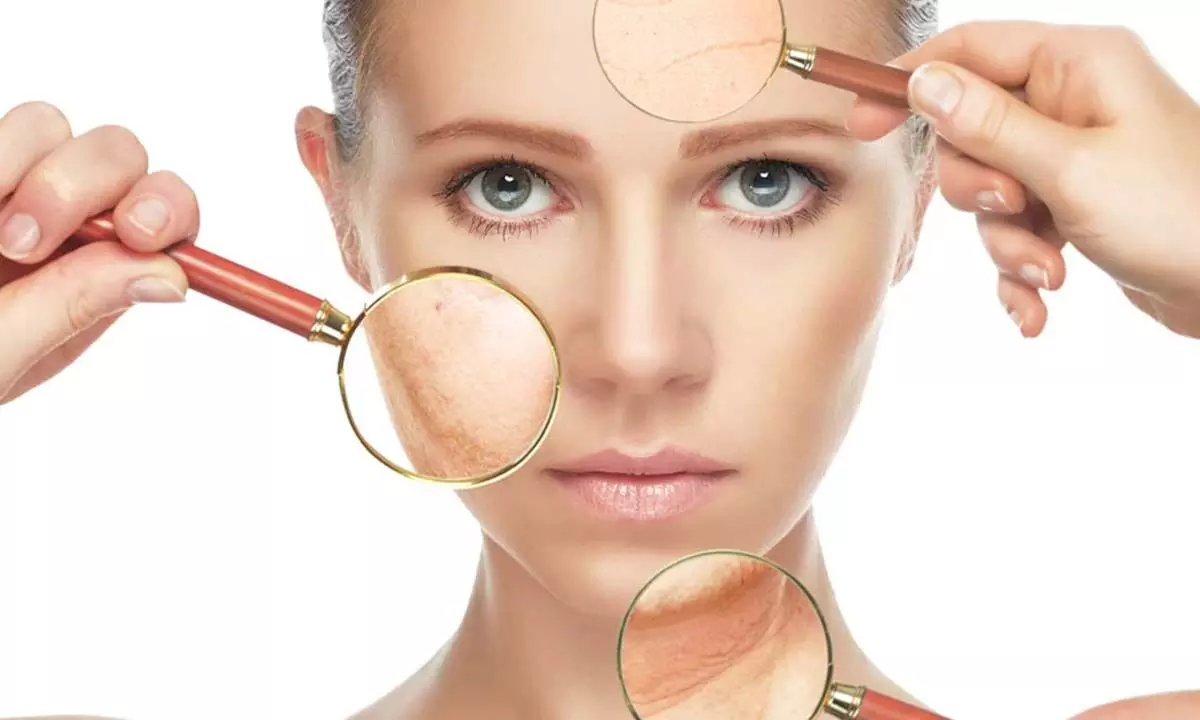
Invisible pollution and dry air silently weaken your skin barrier, accelerating aging—protect, purify, and strengthen your routine daily.
You can double-cleanse, use SPF, and invest in every serum on the shelf, but if the air around you aren’t clean, your skin is still fighting an uphill battle. Pollution is increasingly being recognised as one of the biggest external factors in premature skin ageing. And unlike UV exposure, its invisible, quietly affecting skin elasticity, tone, and texture every single day. Emily Blance, Dyson Engineer and Dr Geetika Mittal Gupta, aesthetic dermatologist and founder of ISAAC Luxe, explain how pollution impacts your skin and what you can do to manage it.
How Pollution Affects Skin
“Fine particulate matter (PM2.5 and PM10) and gases like nitrogen dioxide (NO₂) are among the pollutants most often found in the air we breathe, both outdoors and inside our homes,” shares Emily Blance from Dyson.
Studies have shown that even a small increase just 1 μg/m³ of PM2.5 can raise the risk of developing psoriasis by 65%. Nitrogen dioxide, largely produced by traffic and gas cooking, can worsen eczema, dull the complexion, and intensify pigmentation.
What makes things trickier is that pollution isn’t only an outdoor issue. Indoors, pollutants from candles, air fresheners, and cleaning products linger long after use. Combined with heating or air-conditioning, this creates dry, stale air that speeds up moisture loss and leaves skin feeling sensitised. “We spend about 90% of our time indoors,” adds Emily Blance from Dyson.
Dr Geetika Mittal Gupta, aesthetic dermatologist and founder of ISAAC Luxe, agrees: “Pollution particles are extremely small, they can settle on the skin, clog pores, and trigger inflammation. Over time, this contributes to dullness, uneven tone, and premature ageing.” She adds that poor indoor air quality worsens the effect. “Polluted and dry air can disrupt the skin’s natural barrier, making it less capable of retaining moisture. The result is skin that feels dehydrated, sensitised, and prone to flare-ups.”
Why Dry Air Makes It Worse
Low humidity can dehydrate the skin’s top layer, the stratum corneum, leading to trans-epidermal water loss (TEWL). When skin loses moisture faster than it can replenish, fine lines appear more visible, and barrier repair slows down. Cold weather and constant heating only intensify this effect, making skin feel tight and rough. “The combination of pollution and dry air creates a cycle of damage,” explains Dr Geetika Mittal Gupta. “Pollutants weaken the barrier, and dry air prevents it from recovering.”
What You Can Do About It
You can’t control city air, but you can control what surrounds your skin indoors. Here’s how to strengthen both your skin and your environment.
1. Purify Your Environment
Cleaner air means calmer, more resilient skin. Dyson’s De-NOx purifier range, including the Dyson Purifier Hot+Cool HP12, helps remove invisible irritants from your home. The system is engineered with a K-Carbon filter that captures up to 50% more nitrogen dioxide (NO₂), a gas that can worsen eczema and dermatitis, while HEPA H-13 filtration traps fine particulate matter (PM2.5 and PM10).
2. Strengthen Your Barrier
Pollution weakens the skin’s natural barrier, so reinforcing it is essential. “Start with ceramide- and peptide-rich moisturisers that help ‘fill in’ the gaps in the skin’s protective wall,” explains Dr Geetika Mittal Gupta. She recommends pairing barrier-supportive creams with antioxidants like vitamin C, vitamin E, and niacinamide, which neutralise environmental damage, and using gentle, pH-balanced cleansers that don’t strip natural oils. “Over-cleansing is one of the most common mistakes, it makes skin more prone to dryness and inflammation.” she adds.
3. Build an Anti-Pollution Routine
Modern skincare is designed to work smarter against environmental stress. “Pollution-defence serums with green-tea, moringa, or algae extracts can help prevent tiny particles from adhering to the skin. And, in today’s time, using an air purifier has become a necessity for your overall health as well as your skin health.” says Dr Geetika. These act as an extra shield before makeup or sunscreen.
And yes, sunscreen is non-negotiable, even indoors. UV rays and pollution work together to accelerate pigmentation and fine lines. “A broad-spectrum SPF 30 or higher is your simplest anti-ageing and anti-pollution step. It should be part of your daily ritual, rain or shine.” she notes.