This Saibaba’s miracle transforming sports enthusiasts

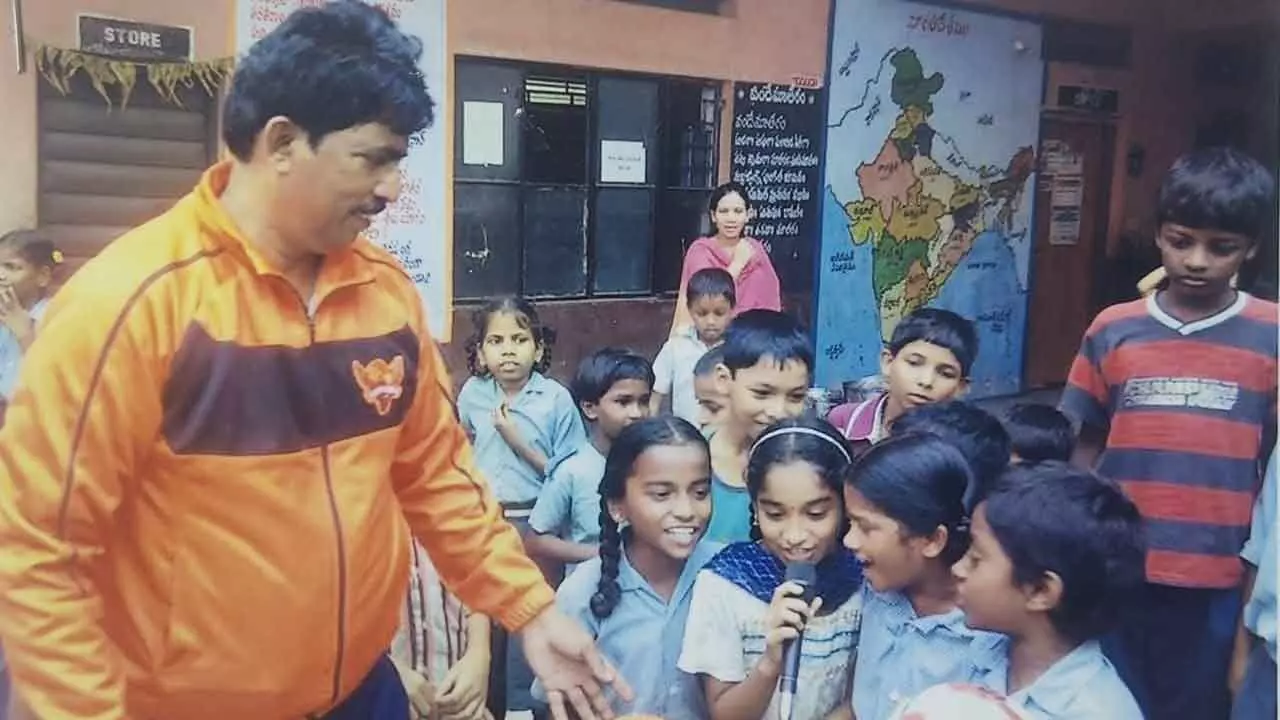
Hyderabad: In a country where cricket is revered, Kammela Saibaba, a former Andhra Ranji cricketer, has dedicated his life to nurturing young talent among underprivileged children. He believes that sports is the cheapest and most effective medicine available to society, and he has spent the last three decades proving it.
Saibaba, who played for the Andhra Ranji cricket team in 1989, initially followed the traditional path of securing a corporate job like many of his contemporaries. However, a visit to Puttaparthi changed his perspective on life and society. He recalls an incident that left a lasting impression on him. “A friend took me to Puttaparthi. Though I did not believe in Satya Sai Baba, I went along. As I entered the Ashram, I left my slippers on the floor. A man picked them up, placed them in the rack, and greeted me with folded hands. Later, I was astonished to learn that he was the Chief Secretary of Orissa.
That moment made me rethink my purpose and my role in society.” This newfound perspective led Saibaba to resign from his corporate job and establish the Sports Coaching Foundation (SCF) in 1991 at Masab Tank, Hyderabad.
His vision was clear: to prevent street children from falling into the traps of substance abuse and to give them a constructive outlet through sports.
Over the last 32 years, he has successfully trained thousands of children, not just in cricket but in various other sports, fos-tering a sporting culture that was previously absent in many government schools and orphanages.
Saibaba’s commitment to sports development is evident in his work. His foundation has provided sports infrastructure to 381 schools across Tel-angana, Andhra Pradesh, Mumbai, Nanded, and Delhi. His goal is to ex-pand this reach to 1,000 schools, ensuring that every child, regardless of their economic background, gets the opportunity to engage in sports. “Children in government schools often have no exposure to sports. Many of them cannot even differentiate between football and basketball. We have taken up the responsibility to change this scenario by organising camps and training programs,” he explains.
A firm believer in the necessity of a strong sports culture, Saibaba em-phasizes that encouraging the younger generation to take up sports is es-sential for India’s future in global competitions like the Olympics. “If we want more Olympic medals, we need to start at the grassroots level. Sports is the cheapest medicine, and everyone should dedicate some time to physical activity,” he asserts.
His contributions to social change through sports have earned him na-tional recognition, including the prestigious President of India Award in 2015. Saibaba also cites UNESCO’s declaration that sports and physical education are fundamental rights for all, reinforcing his belief in the transformative power of sports.
His journey serves as an inspiring testament to the power of sports in changing lives and communities.