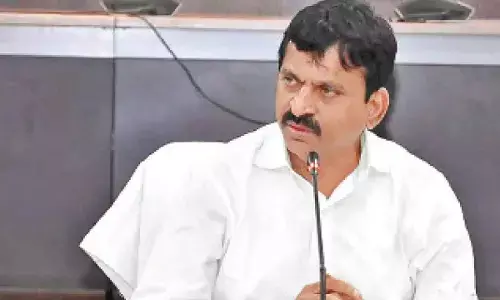
Two IAS officers summoned to HC to implement judicial directives


Hyderabad: The Telangana High Court on Tuesday took a stern view of the casual approach demonstrated by two senior IAS officers in executing court orders, directing them to appear to explain their non-compliance. The single bench of Justice N V Shravan Kumar, while hearing a contempt petition, issued summons to Navin Mittal and Sandeep Kumar Jha, to be present on March 24.
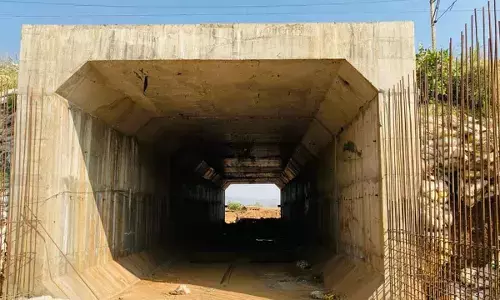
The issue pertains to the long-pending land acquisition compensation case of 74-year-old Bommena Ramavva of Kodurupaka village in Boinpally mandal of Rajanna Sircilla district. Her land of 0.14 acres was submerged under the Mid Manair reservoir project since August 14, 2024, yet she continues to await the compensation that should have been disbursed years ago. The government acquired her property in 2010 for the project, but despite nearly 15 years and the filing of both a writ and a contempt case, the compensation remains unpaid.
Justice Kumar expressed grave concern over what he termed ‘lackadaisical’ attitude of the two senior bureaucrats, who failed to implement the court orders dated December 29, 2025. They sought to justify their inaction on grounds of being transferred to other posts. At the time the original orders were passed, Mittal was serving as Revenue Secretary, while Jha held the post of collector of Rajanna Sircilla. Both officials were specifically responsible for implementing the court directives, passing the necessary award, and ensuring the compensation reached the petitioner.
The judge took such a serious view of the issue that he directed the HC registry to issue Form-1 notices against both officers. During hearing the contempt case, Justice Kumar firmly rejected the defence of transfer, observing that officials cannot take refuge that they have been transferred to other places of work when they were holding the relevant posts when the court passed orders. This observation underscores the principle that administrative responsibility cannot be evaded merely through transfers or re-assignments.
The court declined to accept submissions made by the government pleader (land acquisition), who informed officials would follow the provisions of the 2013 Act and complete the award proceedings within 12 weeks. Justice Kumar directed the officials concerned to pass a general award within eight weeks, strictly adhering to the procedure of law contemplated under the relevant statutory provisions.
The background of the case reveals the prolonged ordeal faced by Ramavva. After her land was acquired in 2010, she waited for years without receiving any compensation. Eventually, she approached the HC by filing writ 12937 of 2024, seeking directions to the government to pay the compensation due to her.
The single judge hearing that petition passed orders on August 14, 2024, directing the government to disburse the compensation within three months. However, when the State authorities failed to comply with the clear judicial directions, the petitioner was compelled to initiate contempt proceedings by filing contempt case number 575 of 2025. The case highlights the plight of citizens whose lands are acquired for public projects, but who are left waiting indefinitely for their rightful compensation. It also raises serious questions about accountability in the administrative machinery, particularly when senior officers seek to avoid responsibility for implementing court orders by citing routine administrative transfers. The court’s decision to summon the officers personally sends a strong message that judicial orders must be implemented irrespective of changes in administrative postings, and that those who hold office at the time of such orders bear responsibility for their execution.
The case is scheduled for further hearing on March 24, when the officers will be required to appear before Justice Kumar and explain their conduct. The eight-week deadline set by the court for passing the general award also expires well before that date, placing the current officials under time-bound obligation to complete the compensation process.
Whether the State machinery will finally deliver justice to the elderly petitioner after a wait of 15 years remains to be seen when the case comes up for its next hearing.