Archer art gallery and the timeless craft of serigraphy

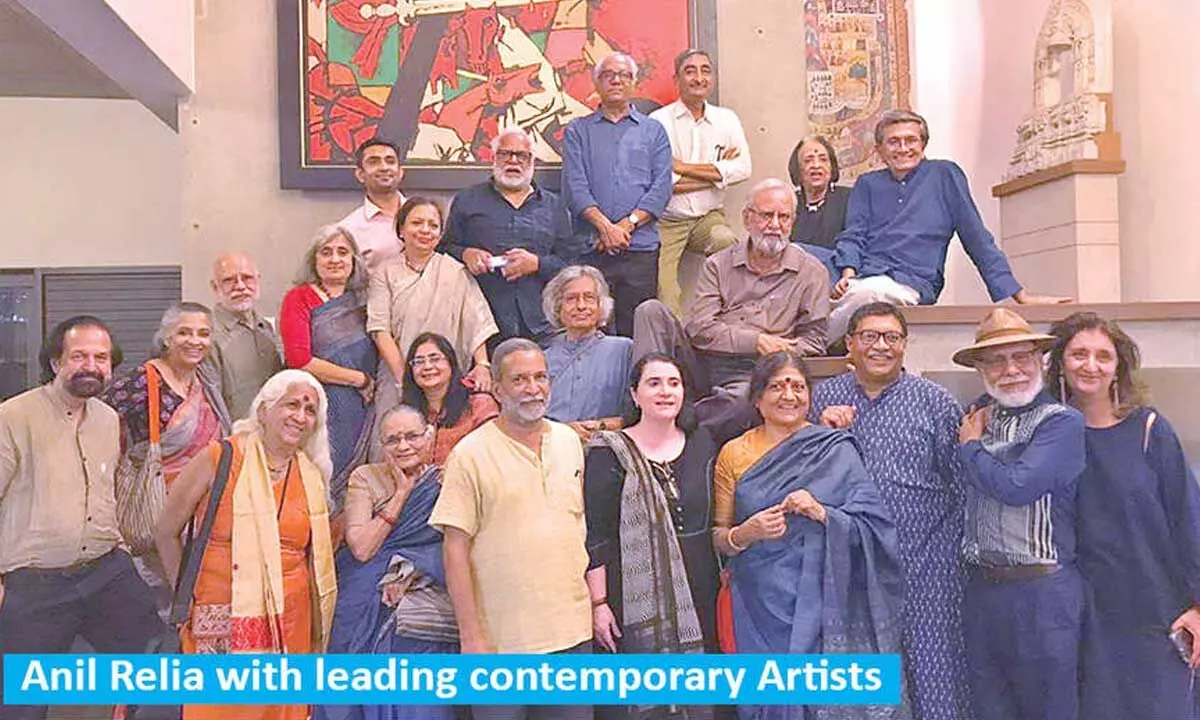
In 1978, a quiet but significant chapter in India’s contemporary art movement began in Ahmedabad with the founding of Archer Art Gallery by Anil Relia. A Fine Arts graduate from the M. S. University, Baroda, Anil specialized in Applied Arts, Serigraphy, and Photography. His deep-rooted passion for art naturally drew him into close, almost familial relationships with some of India’s most celebrated artists, including M. F. Husain, Jogen Chowdhury, Bhupen Khakhar, Amit Ambalal, and Manu and Madhvi Parekh. Their homes became spaces not just for exhibitions, but for animated discussions, shared meals, and the exchange of ideas.
It was this close-knit circle that helped shape the future direction of Archer Art Gallery. Recognizing Anil Relia’s expertise in screen printing, M. F. Husain encouraged him to explore the publication of limited-edition serigraphs by contemporary artists. Acting on this advice, Archer Art Gallery began producing limited-edition graphics in 1994, marking a pioneering step in making high-quality original prints accessible to a wider audience.
A new dimension was added in 2010 when Manan Relia, Anil’s son, joined the gallery’s journey. A computer science graduate from Purdue University, USA, Manan had grown up surrounded by artists and artworks, witnessing creative dialogues and collaborative work sessions at close quarters. Though trained in technology, art had always been a part of his life. Under his leadership, Archer Art Gallery embraced the digital age, establishing a strong online presence and expanding its reach beyond physical boundaries.
Recently, Manan represented the gallery at the Hyd.Art Festival in Hyderabad, whereArcher Art Gallery showcased an impressive collection of limited-edition serigraphs by masters such as M. F. Husain, S. H. Raza, Jogen Chowdhury, Manjit Bawa, Manu Parekh, Madhvi Parekh, Thota Vaikuntam, Amit Ambalal, and Jyoti Bhatt. Reflecting on these associations, Manan says, “Our relationship with these artists has always been like family. Selling their works was secondary; the bond came first.”
One of the gallery’s most remarkable achievements came in 2004 with the creation of the largest serigraph ever produced in India—M. F. Husain’s Mother Teresa. The monumental work was launched in Paris, drawing international attention and reinforcing Archer Art Gallery’s commitment to excellence. “For us, quality is of prime importance,” Manan emphasizes. “All our limited-edition graphics are signed by the artists, and we use only archival-quality materials to ensure their longevity.”
In an age dominated by digital technology, Manan believes it is vital to educate collectors about the distinction between a handcrafted serigraph and a digital reproduction. Serigraphy demands mastery in screen preparation, precise color mixing, and meticulous printing—skills that transform each print into a work of art in its own right. “Serigraphs can shape the future of affordable art,” he explains. “They have the power to bring original art into every Indian home.”
Today, Archer Art Gallery operates in a hybrid model, combining online outreach with offline exhibitions. These physical showcases continue to play a crucial role in bridging the gap between artists and collectors, fostering meaningful connections and nurturing a shared appreciation for art. Through this harmonious blend of tradition and technology, Archer Art Gallery remains dedicated to spreading the joy of art across the country—one carefully crafted serigraph at a time.