Dr. Dipak Giri: Giving voice to India’s marginalised through literature

Dr Dipak Giri, born on 7 March 1984 in Cooch Behar, West Bengal, is an author, editor, and critic dedicated to amplifying the voices of marginalised communities in India. Through his extensive literary and scholarly work, he has consistently advocated for Dalits, Tribes, LGBTQ+, and other underrepresented groups.
Dr Giri, an author-cum-editor, has over twenty books to his credit and currently serves as Editor-in-Chief of the non-profit international biannual journal Creative Flight. For his contributions to literature and humanity, he was honoured with the ‘Emerging Editor of the Year’ award at the Vishwabharati Literary Festival in 2018 at Professor Jayashankar Telangana State Agricultural University, Hyderabad, and the ‘Mewadev Laurel Award’ by the Contemporary Literary Society of Amlora, Banda, Uttar Pradesh, the same year. In 2020, the Journal of Commonwealth Literature, published by Sage, U.K., recognised his work as worthy of inclusion in the Indian section of ‘The Bibliography of Commonwealth Literature’. His works on LGBTQ+ issues explore the invisibility and social stigma faced by non-heteronormative minorities. Despite legal rights, many struggle to come out of the closet. ‘Transgender in Indian Context’ highlights the challenges of the transgender community, examining both literary portrayals and real-life autobiographies of activists such as A. Revathi, Laxmi Narayan Tripathi, Manobi Bandyopadhyay, and Living Smile Vidya. ‘Same Sex Desire in Present India’ and ‘ Queer Sexualities in Indian Culture’ explore non-normative sexual behaviours and the stigma endured by sexualminorities in India.
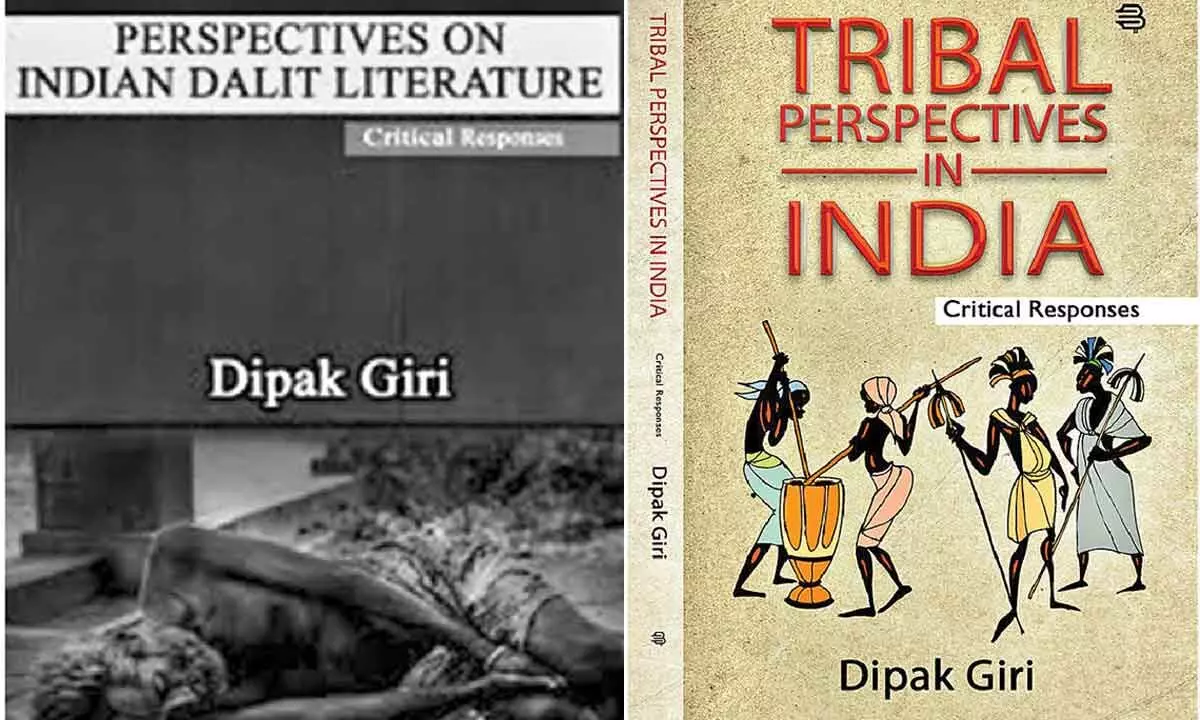
Dr Giri’s other significant works, including ‘Perspectives on Indian Dalit Literature’, ‘Tribal Perspectives in India’, and ‘Subaltern Perspectives in Indian Context’, advocate for marginalised communities. These books analyse how caste, class, race, religion, and gender marginalise people, forcing them to live on society’s periphery, and examine the gaps in government policies intended for their welfare. His concern for women is evident in ‘New Woman in Indian Literature’, which portrays women free from patriarchy, and ‘Woman-Nature Interface’, which draws parallels between women and nature.
Dr Giri’s writings reflect contemporary India’s ongoing struggles with inclusivity and marginalisation. They give voice to those living in despair and denial of basic rights, resources, and opportunities. Continuing this focus, his forthcoming books ‘Indian Tribal Literature: A Critical Study’ and ‘LGBTQ Studies: An Indian Perspective’ are expected to further advance discourse on marginalised communities.
(The writer is a reviewer, critic, and contemporary poet who writes in Indian English)