Tobacco cultivation declines due to health concerns

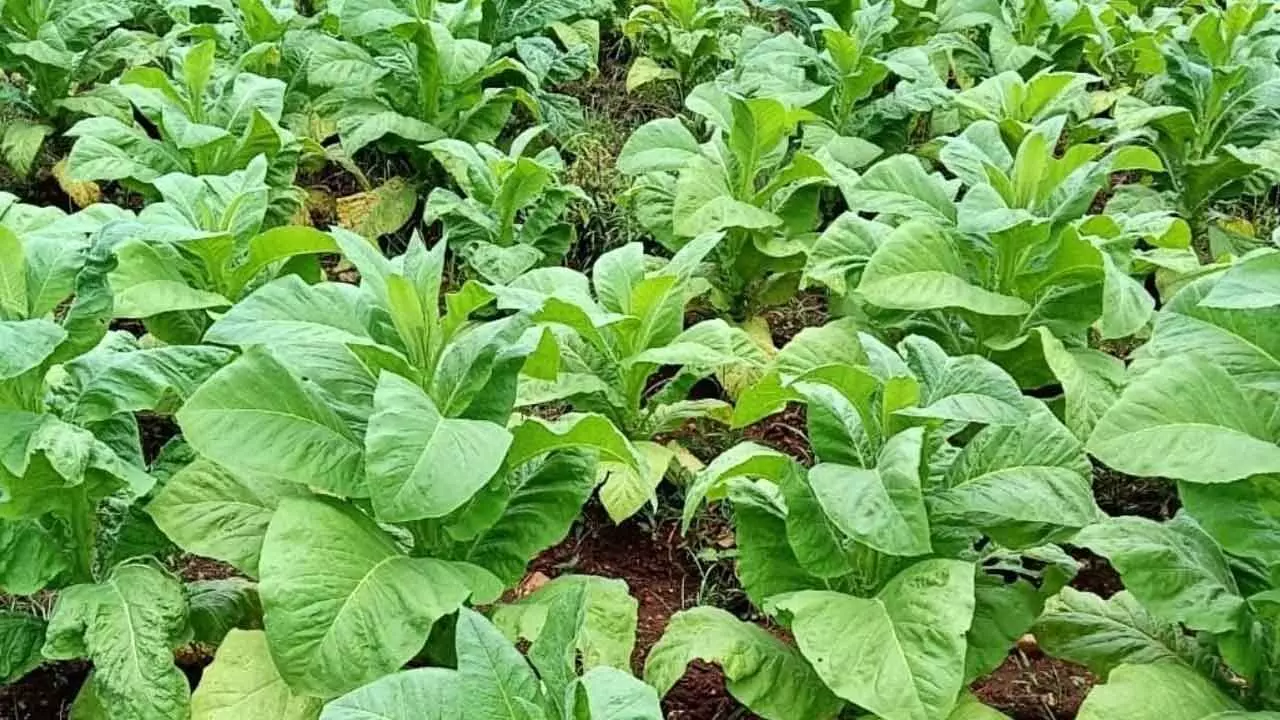
90% of farmers have moved away from tobacco farming, say officials
Davanagere: The number of tobacco farmers in Davanagere has significantly decreased due to alarming findings from the District Survey Department highlighting the detrimental health effects of tobacco. District tobacco board Officer G.D. Raghavan stated that many farmers are unaware of the health risks associated with tobacco cultivation.
In response to the health impacts, the state government issued a circular in 2019 aimed at raising awareness among farmers and encouraging them to shift to alternative crops. The Davanagere Survey Department, along with a team from the National Tobacco Control Officers, conducted awareness programs in villages to guide farmers away from tobacco cultivation. Currently, approximately 90% of farmers in the district have moved away from tobacco farming.
Tobacco Officer G.D. Raghavan noted, “Under the National Tobacco Control Program, there are two committees headed by the honourable District Commissioner and the Additional District Commissioner. These committees are actively working to curb tobacco cultivation in the district. We are enforcing the Cigarettes and Other Tobacco Products Act (COTPA) of 2003 and raising awareness about the harmful effects of tobacco. We also impose fines for violations of the Act as per sections 4, 5, 6A, 6B, and 7 of POCTOPOAct.Addressing the health impacts, Raghavan emphasized the need for officials to create awareness among farmers about the issues they face while growing and processing tobacco. The primary goal of the government’s directive is to encourage tobacco farmers to switch to alternative crops. In the 2018-19 period, around 50-60 farmers in the Honnalli and Nyamati taluks were involved in tobacco cultivation. However, as a result of awareness efforts, only 5-6 farmers remain engaged in tobacco farming today.
Tobacco cultivation poses several health risks to farmers and workers due to exposure during the growing, packing, and processing stages. Health issues reported include respiratory problems, lung infections, allergies, asthma, and exacerbation of Chronic Obstructive Pulmonary Disease (COPD).
Furthermore, long-term tobacco cultivation leads to soil degradation and reduced fertility, which many farmers are unaware of, despite scientific confirmation. The Agriculture and Horticulture Departments have been tasked with informing farmers about these consequences.
For instance, in Honnalli and Nyamati taluks, the number of tobacco farmers has plummeted from approximately 50-60 in 2021-22 to only 5-6 farmers currently. With licenses issued for tobacco farming, farmers receive financial support of ₹16,000, but they express intent to grow alternative crops once their licenses expire.
Farmers are concerned that crops like ragi, rice, and corn can be easily stored in jute bags, unlike tobacco, which contains nicotine that enters the respiratory system when burned. Awareness campaigns have helped farmers understand the health implications associated with tobacco farming.
Reports indicate that some tobacco cultivation persists in the Jagalur region, and local health officials have been informed. Raghavan mentioned plans to raise awareness in Jagalur about alternative crops and to ensure that tobacco cultivation should be deemed a last resort.
In a conversation with reporters, farmer Shanmukappa from Nyamati shared, “The price for tobacco is good right now, around ₹340-330 per kg, so I am cultivating on a total of 6 acres. Although I have heard that tobacco can cause health issues, I wasn’t aware of it initially. I had stopped cultivating for a brief period, but since prices are good, I’m back to it.”