Opt Under Attack: Indian students hardest hit by F1 visa shake-up

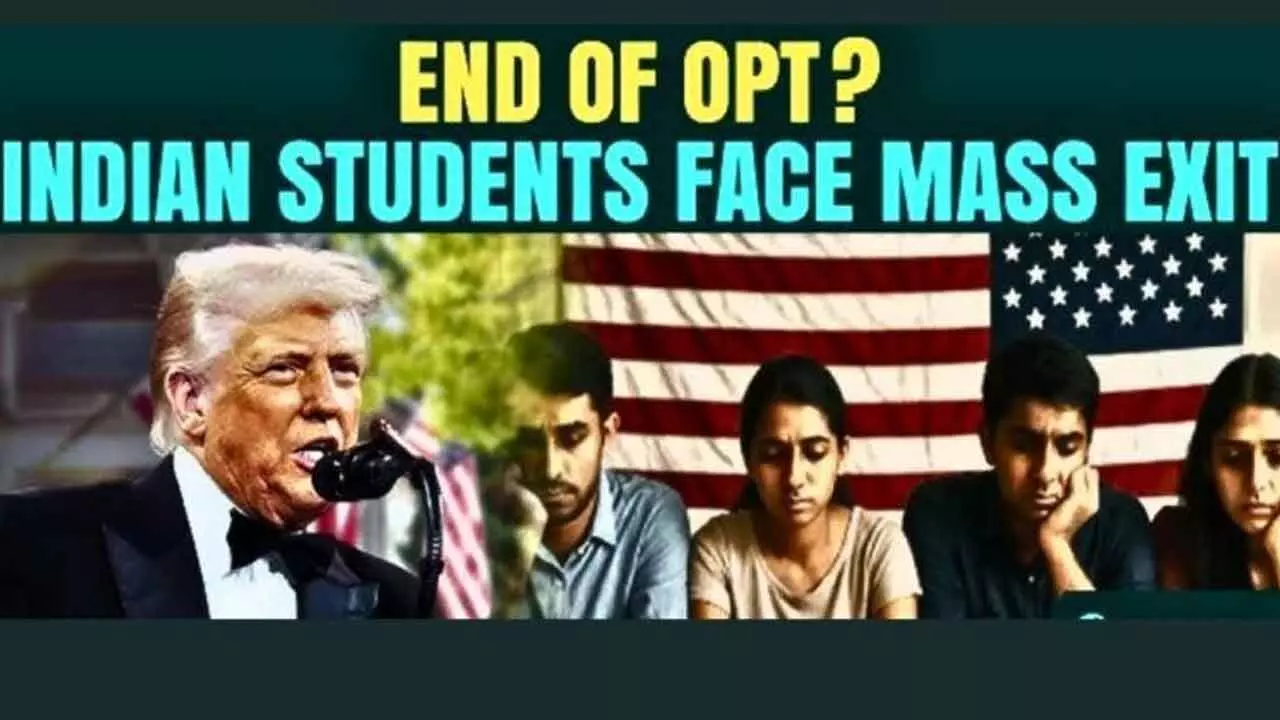
Washington: The Optional Practical Training (OPT) program has been a lifeline for international students worldwide providing real-world work experience in the United States after years of academic investment.
In fact, it’s not just an internship opportunity, it’s the difference between a global career and returning home without practical exposure for many. But now, that lifeline is under serious threat. Proposals to eliminate OPT, introduce new payroll taxes, and tighten compliance are creating uncertainty for students and universities alike.
For Indian students, the largest group of STEM graduates in the US, these changes could be especially devastating, potentially altering the value proposition of an American degree and redirecting global talent flows to competitor nations like Canada, the UK, and Australia.
OPT is a work authorisation program for F1 visa holders, allowing them to work in roles directly related to their field of study. Students get: 12 months of work authorisation during or after graduation. Additional 24 months for STEM graduates, making a total of up to 36 months in the US.
This is a major draw for international students, who collectively contributed $40 billion to the US economy in 2024. According to recent estimates, over 200,000 students use OPT annually, with the majority coming from India, China, South Korea, and Brazil. For these students, OPT is not optional—it’s essential for career prospects and financial justification of their education investment.
India sends over 270,000 students to the US each year, most in STEM fields like computer science, data analytics, and engineering. Nearly 80% of Indian students in the US enroll in master’s or higher degree programs, specifically attracted by the prospect of work experience through OPT and potential H1B sponsorship afterward.
Without OPT: Many students would lose their only US work experience, reducing global employability. And families investing ₹50–70 lakh or more in American degrees would see a poor return. Also, Indian enrolment in US universities could decline sharply, similar to trends seen when Canada and Australia tightened work rules in previous years.
Critics of OPT argue it undercuts US workers and lacks a clear legislative basis. Key voices include:
Jessica Vaughan, Director of Policy Studies at the Center for Immigration Studies, advocating for stricter student visa programs.
Joseph Edlow, expected to lead USCIS, pushing to eliminate OPT work authorisation altogether.
If enacted, these proposals would dismantle OPT—removing a critical incentive for international students and prompting universities to lose a major recruitment advantage.