Putin and Xi Condemn U.S. Actions, Vow to Strengthen Russia-China Relations

Putin and Xi reject U.S. attempts to contain them, vow to strengthen Russia-China ties, and criticize U.S. missile defense plans in joint Moscow statement.
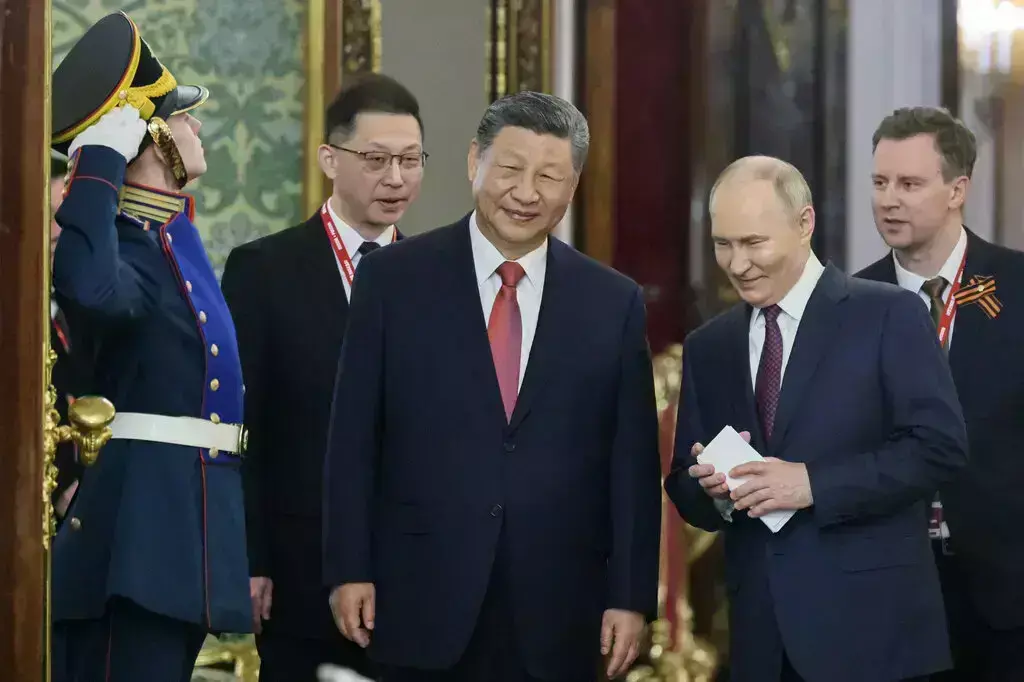
President Vladimir Putin of Russia and Chinese President Xi Jinping issued a pointed rebuke to the United States on Thursday, rejecting Washington’s efforts to "contain" their countries. The two leaders met in Moscow for talks, which coincided with the lead-up to Russia’s 80th anniversary celebrations of the Soviet victory over Nazi Germany. The discussions underscored the growing alignment between Russia and China, despite the challenges posed by U.S. foreign policy.
In a joint statement following their discussions, Putin and Xi expressed their intent to "increase interaction and strengthen cooperation" to counter what they called U.S. attempts to destabilize their nations. Both leaders are confronting the unpredictable nature of U.S. President Donald Trump’s foreign policy, with Russia dealing with ongoing negotiations over Ukraine and China facing a severe trade war with the U.S.
Their meeting also addressed the contentious issue of missile defense. The two leaders condemned Trump’s "Golden Dome" missile defense shield plans, calling them “deeply destabilizing” and accusing the U.S. of seeking to weaponize space.
Xi, in his remarks, highlighted the stability and strength of the Russia-China relationship, describing it as "more calm, confident, stable, and resilient." He emphasized their shared goals of pushing back against "unilateralism and bullying by powerful countries," a clear reference to the United States. Putin echoed these sentiments, calling the Russia-China alliance a "stabilizing factor" in international politics, despite the current geopolitical challenges.
The two nations also focused on increasing their economic ties, with most of their trade now conducted in rubles and yuan, bypassing the U.S. dollar. This shift, they argued, helps shield them from external pressures.
In addition to diplomatic talks, Russia and China’s space agencies signed a memorandum to collaborate on a lunar power plant, a significant step towards building a permanent research base on the moon. This ambitious project includes plans to build an automated nuclear reactor to provide energy for the base.
As Moscow prepares for the Red Square military parade marking the Soviet victory, Putin’s ties with Xi have grown even more crucial. Russia’s isolation from the West, following its invasion of Ukraine, has made China a key ally, with Beijing supporting Russia’s economy by purchasing oil and replacing Western brands in Russian markets. However, China has refrained from offering direct military support to Russia in its conflict with Ukraine.
Putin, reflecting on the historical significance of World War II, emphasized the need to combat "modern manifestations of neo-Nazism and militarism," likely alluding to his justification for the invasion of Ukraine. The anniversary celebrations will further cement the memory of the Soviet Union’s wartime sacrifices in Russian national identity.
Despite growing collaboration between Russia and China, their partnership remains largely centered on countering U.S. influence, with both leaders eager to push back against what they perceive as Washington’s domineering role on the world stage.