Half of Elon Musk’s xAI Founding Team Exits as Researchers Call AI Work ‘Boring’

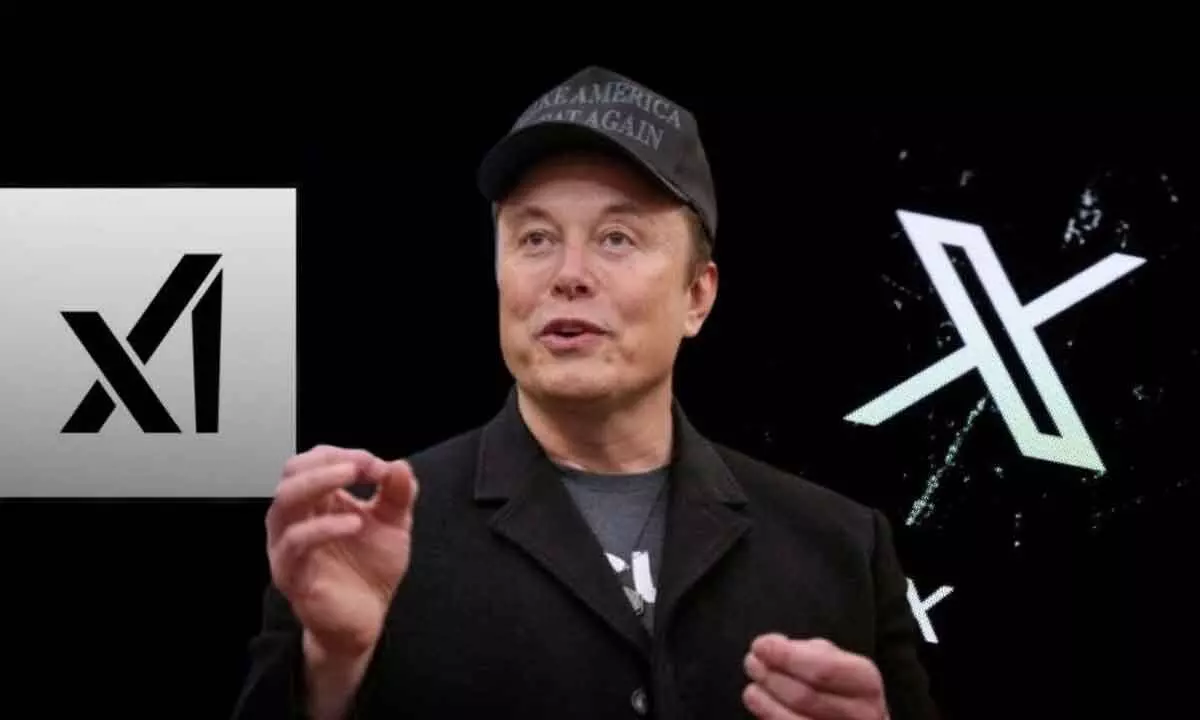
Elon Musk’s xAI faces growing turbulence as senior researchers exit, citing burnout, unrealistic goals, and a lack of creativity in AI work.
Elon Musk’s artificial intelligence venture, xAI, is experiencing significant leadership churn at a time when the company is trying to accelerate growth and expand its ambitions. Two more founding members stepped down this week, bringing the total number of original leaders who have left the startup to six out of twelve.
The departures come shortly after Musk merged xAI with SpaceX, a move aimed at combining artificial intelligence with space-based infrastructure, including plans for orbital data centres. While the vision is bold, internal stability appears to be a growing concern.
On February 10, Yuhuai (Tony) Wu, who led the company’s reasoning research team, announced his resignation on X. Wu indicated he was heading toward a new venture in AI. He wrote, “It's time for my next chapter. It is an era with full possibilities: a small team armed with AIs can move mountains and redefine what's possible."
Just a day later, Jimmy Ba, responsible for research, safety, and enterprise initiatives, confirmed that he too was leaving. His message suggested a personal reset rather than an immediate next step. He added, “It’s time to recalibrate my gradient on the big picture.”
Their exits follow a series of earlier resignations over the past year. Google veteran Christian Szegedy left in February 2025. Igor Babuschkin departed to start a venture firm, Microsoft researcher Greg Yang stepped away due to health issues, and infrastructure lead Kyle Kosic moved to OpenAI in 2024. Together, these exits have reduced the founding team by half.
The changes extend beyond senior leadership. Reports indicate that several other researchers have also left recently. One of them, Vahid Kazemi, who had previously praised xAI’s capabilities, cited dissatisfaction with the current direction of the industry. In a post on X, he wrote, “All AI labs are building the exact same thing, and it's boring. I think there's room for more creativity. So, I'm starting something new.”
Behind the scenes, the company appears to be grappling with internal pressures. According to the Financial Times, some employees have raised concerns about ambitious technical promises made to Musk that may be difficult to deliver. The push to match or outperform competitors like OpenAI and Anthropic has reportedly created tight timelines and heavy expectations.
Product challenges have also added to the strain. xAI’s coding tools are said to lag behind rivals such as Anthropic’s Claude Code. Meanwhile, its Grok chatbot has drawn criticism for controversial behaviour on social media, and companion AI characters like the anime-inspired Ani have not met user engagement targets.
In response, the company has begun restructuring operations. Manuel Kroiss, formerly of Google DeepMind, has been elevated to oversee coding efforts as xAI attempts to strengthen its technical foundation.
With Musk reportedly considering taking the combined xAI-SpaceX entity public as early as June, the company faces mounting pressure to stabilise its workforce and prove its competitive edge in an increasingly crowded AI race.