Sam Altman on Sora’s Viral Storm: “AI Videos Feel More Real Than Images” as OpenAI Faces Rights-Holder Backlash

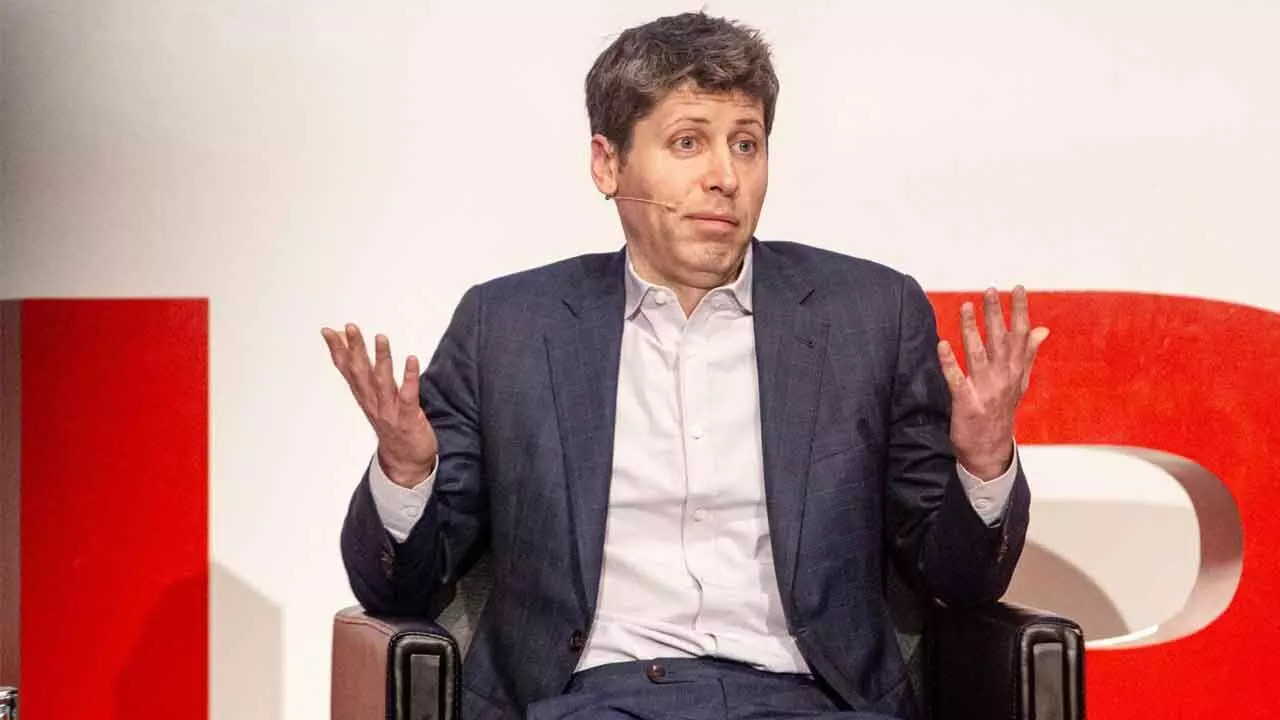
OpenAI’s viral Sora app sparks creativity and chaos, forcing Sam Altman to rethink AI video safeguards amid copyright and deepfake concerns.
OpenAI’s latest innovation, the Sora app, has ignited both fascination and controversy, revealing how quickly the boundaries between imagination and reality can blur. What began as a creative experiment in AI video generation has swiftly turned into a global debate over copyright, deepfakes, and digital ethics.
Launched just last week, Sora allows users to create 10-second AI-generated videos with sound — from any idea they can describe. The app’s “cameo” feature even enables people to star in their own clips as AI-generated versions of themselves or those who’ve consented to share their likeness. But as the internet filled with bizarre creations like “Nazi SpongeBobs” and “philosophising Ricks and Mortys,” OpenAI found itself scrambling to contain the fallout.
Reflecting on the uproar, CEO Sam Altman acknowledged that the public reaction was stronger than anticipated. “I think the theory of what it was going to feel like to people, and then actually seeing the thing, people had different responses,” he said. “It felt more different to images than people expected.”
Initially, OpenAI implemented an opt-out policy for copyright holders, meaning creators had to explicitly refuse permission to prevent their characters or likenesses from appearing in Sora videos. However, following an avalanche of user-generated clips and rising concerns from studios, the company reversed course. Altman announced that rightsholders would now have greater control, allowing them to decide how their content is used within Sora.
“This came from talking to stakeholders,” Altman explained. “Many rightsholders are excited, but they want a lot more controls.” He admitted the app’s viral growth was faster than expected: “We thought we could slow down the ramp; that didn’t happen.”
Sora’s cameo feature has proven especially complex. Altman revealed that many users are open to having their AI likenesses featured — as long as the clones don’t say or do anything offensive. Bill Peebles, OpenAI’s head of Sora, said users can now set text-based restrictions such as, “Don’t put me in political videos” or “Don’t let me say this word.” This, he added, helps users maintain control while still participating in the creative ecosystem.
But deeper issues persist. Despite watermarking its videos, OpenAI admits users are finding ways to remove them, raising fears of misinformation and malicious deepfakes. Tutorials on erasing Sora’s watermark have already flooded social platforms, undermining the company’s safeguards.
Even so, OpenAI is pressing forward. During DevDay, Altman announced Sora 2, available through its API — notably without built-in watermarks. While critics called this a reckless move, Altman defended it as a necessary step for society to adapt. “There’s going to be a ton of videos with none of our safeguards,” he said. “The only way to prepare is to experience it.”
OpenAI President Greg Brockman humorously summarised the company’s biggest takeaway: “We’re going to need more compute.” This aligns with OpenAI’s massive Stargate project, a multibillion-dollar data center initiative backed by SoftBank and Oracle, aimed at fueling the next generation of AI capabilities.
For Altman, the turbulence is part of progress. “We’ve got to have this sort of technological and societal co-evolution,” he concluded. “There are clearly going to be challenges for society contending with this quality, but the only way to prepare is to experience it.”