Ghose panel blames KCR for KLIS fiasco

Hyderabad: Justice(retired) PC Ghose Commission, which submitted its report on July 31, has left it to the discretion of the state government to proceed legally against former chief minister K Chandrashekar Rao and others.
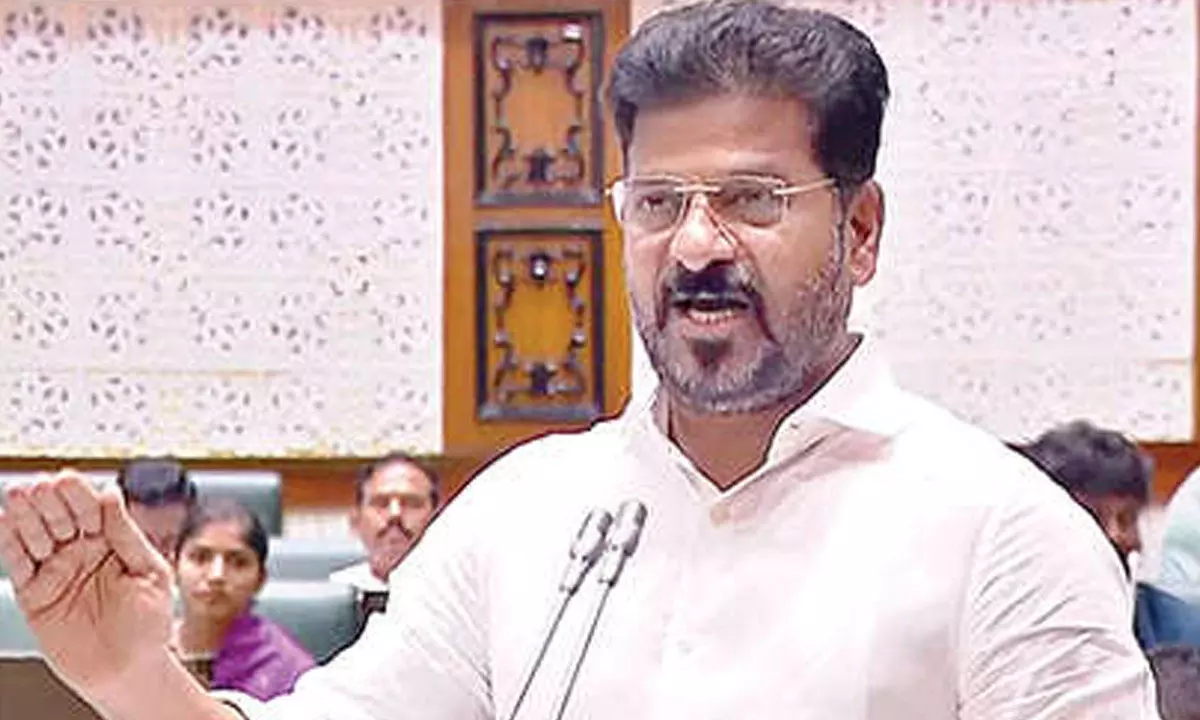
Chief Minister A Revanth Reddy tabled the 650-page Ghose Commission report in the Assembly on Sunday. Thereafter, the Assembly took up a short discussion on the Commission's report. The Commission inquired into irregularities in the Kaleshwaram Lift Irrigation Scheme (KLIS).
Going by the report tabled in the House, the Commission also recommended appropriate action against S K Joshi, then Principal Secretary, and Smita Sabharwal, then Additional Secretary to the CM, for committing irregularities and violating the Business Rules of the Government.
“While the then Minister for Irrigation gave instructions at random and the Minister for Finance & Planning conducted himself apathetically towards the finance and economic health of the State, it is the then chief minister who can be directly and vicariously made accountable for the irregularities and illegalities in planning, construction, completion, operation and maintenance of the three barrages. However, it is for the government to examine and take action against them, if any, in accordance with the law,” the report said. The Commission also said that then Finance Minister Eatala Rajender and Finance Secretary K Ramakrishna Rao conveniently remained oblivious to the manner of funding the KLIS. It suggested action also against several engineers and officials for the alleged irregularities.
The Commission, however, refrained from making recommendations regarding the action, though it considered the interim report as well as the final report submitted by the Vigilance & Enforcement Directorate on the damage caused to Medigadda barrage under Kaleshwaram project. The Commission left it to the state government to take a decision on the implementation of the NDSA (National Dam Safety Authority) report on the safety of the barrages.
Justice PC Ghose mentioned in the report: “This Commission does not prefer to review the interim report and the final report submitted by the Vigilance & Enforcement Directorate. The state government is at liberty to take appropriate steps pursuant to the said reports, in accordance with law”.
However, the Commission said that it maintained regular communication with Irrigation Department officials and sought clarifications on the Vigilance report during the probe into Kaleshwaram project. Referring to the NDSA report, Justice PC Ghose said that the government is at liberty to take steps pursuant to the final report of the National Dam Safety Authority as suggested by it and in accordance with law. “This Commission restrains itself from making any further comment with respect to the steps taken or to be taken by the state authorities pursuant to the enquiries already made by the different wings of the state.”
The Commission observed that the then state government had not accorded administrative approval of the project as a whole; instead it had issued separate approvals, in fact as many as 73 administrative approvals aggregating to Rs1,1O,248,48 crore. There are no orders from the government about the funding pattern for the project.
Out of the total expenditure of Rs. 86,788.06 crore incurred on the project (till March 2022), an expenditure of Rs. 55,807.86 crore (i.e., 64.3 per cent) was met from the off-budget borrowings (OBBs) raised by KIPCL. The Benefit-Cost Ratio (BCR) of the project was inflated. Even with the understated project cost of Rs. 81,911.01 crore, BCR works out to 0.75. Considering the latest likely project cost (Rs. 1,47,427.47 crore), the BCR works out to 0.52. This means that every rupee spent on the project would yield only 52 paise. This makes it clear that the project was economically unviable.
Further, the peak energy demand, when all the pumps are operated, is more than the average daily energy availed in the entire State (2021-22). Providing power to lift irrigation schemes will pose a challenge to the State.
The absence of a comprehensive plan duly spelling out the sources of funds for a project of this scale, which will have a long-term impact on the finances of the State, is an indication of improper planning.