




- Delhi Metro seat dispute: 48-year-old man dies; former IAS officer, son arrested
- TN BJP to hold protests today against Cong for no action against its Manipur MP Akoijam
- JNU sexual harassment case: Cong MP Angomcha Bimol Akoijam named in FIR
- US judge blocks taxpayer-funded Trump ads
- Devotees throng temples on 2nd day of Navaratri dedicated to Goddess Brahmacharini
- Delhi Metro shuts entry, exit at six stations till 4 pm ahead of INDIA bloc march
- Indian equity markets open higher amid positive global cues
- CMRL-Exalogic scam: Pinarayi Vijayan, Riyas named first accused in two separate cases
Kazipet Dargah Urs, a divine symbol of communal harmony
In Short
- Arrangements made to ensure no inconvenience to devotees

Share :
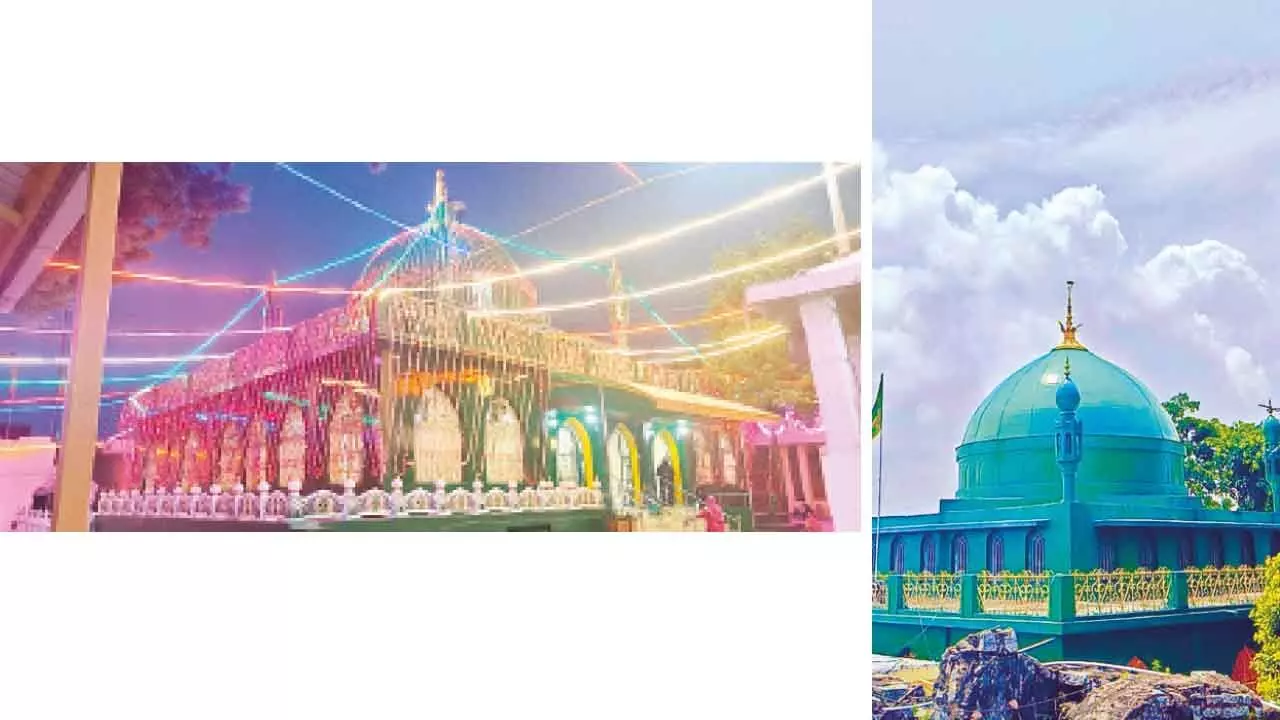
Hanumakonda: The three-day Urs at Kazipet dargah, a symbol of harmony, unity, and love, os celebrated every year as a visual feast. Among the world’s most renowned dargahs, the Kazipet Hazrat Syed Afzal Biabani Dargah has earned a special reputation. The festivities are set to begin at midnight on Thursday with the Gandhotsavam procession starting from Bade Ghar in Ambedkar Nagar. On Friday, a special Sufi spiritual gathering will be held in the dargah after the afternoon namaz. On Saturday, the Rifai Fakirs will showcase their unique spiritual performances, concluding the celebrations with Badhva.
Muslims from across the world attend the Urs, offering special prayers and fulfilling vows. Remarkably, people of other faiths also take part in the namaz and show their devotion; the Dargah holds unique recognition as one of the three most prominent green-coloured dargahs of international fame.
Haj committee chairman and the seventh successor of the dargah, Khusro Pasha, stated that special interfaith meetings with Muslim, Hindu, and Christian religious leaders have been organised. He emphasised that the Urs represent unity among all religions, with about 50,000 devotees participating daily from different countries.
All arrangements have been made so devotees face no inconvenience. As per tradition, the dargah has been freshly painted green. Officials of the Greater Warangal Municipal Corporation have taken all measures to ensure a smooth and safe festival for the devotees.
Hazrat Afzal Biabani was born in 1795 to Syed Ghulam Mohinuddin and his wife in Kazipet. From a young age, he was believed to have performed many miracles, attracting numerous followers. At just 12 he had memorized the Quran and began teaching it. He spent his life in a simple hut, serving the poor and the sick, working to bridge the gap between rich and poor, and imparting teachings to the Muslim community.
It is said that Prophet Muhammad (PBUH) appeared to him in a dream, instructing him to become a spiritual teacher and spread Islam. Once, during a severe drought, Biabani and his disciples held special prayers, after which abundant rains relieved people from famine. His teachings stand as symbols of communal harmony and social justice.
During the reign of Nizam Ali Khan, Biabani was appointed as the Qazi of Warangal. The name "Kazipet" originated from his title “Qazi.” After his death in 1956, his tomb became the dargah where the Urs are held.
Asian shares mixed, oil prices fall about USD 1.50 as Trump says US will buy diesel from Russia
Delhi Metro seat dispute: 48-year-old man dies; former IAS officer, son arrested
Former BJP MLA Attar Singh Bhedana dies after mob attack in Rajasthan’s Bharatpur
Sindhu faces nemesis An Se-young, Lakshya gets Chou test at Denmark Open
Shiv Sena(UBT) condemns crackdown on anti-govt protests in 'Saamana'
AP to take up 2,569 tribal works costing Rs 2,052 crore
Rs 30,000-crore outlay for piped water to every household: CM Chandrababu Naidu
Sanna biyyam, doddu dara! Rice prices skyrocketing in TG amid export push
Man from Hyderabad killed in attack on Riyadh Airport
Power bank triggers fire on Delhi-Chennai flight


