Nripendra Misra’s good counsel deserves saffronites’ attention

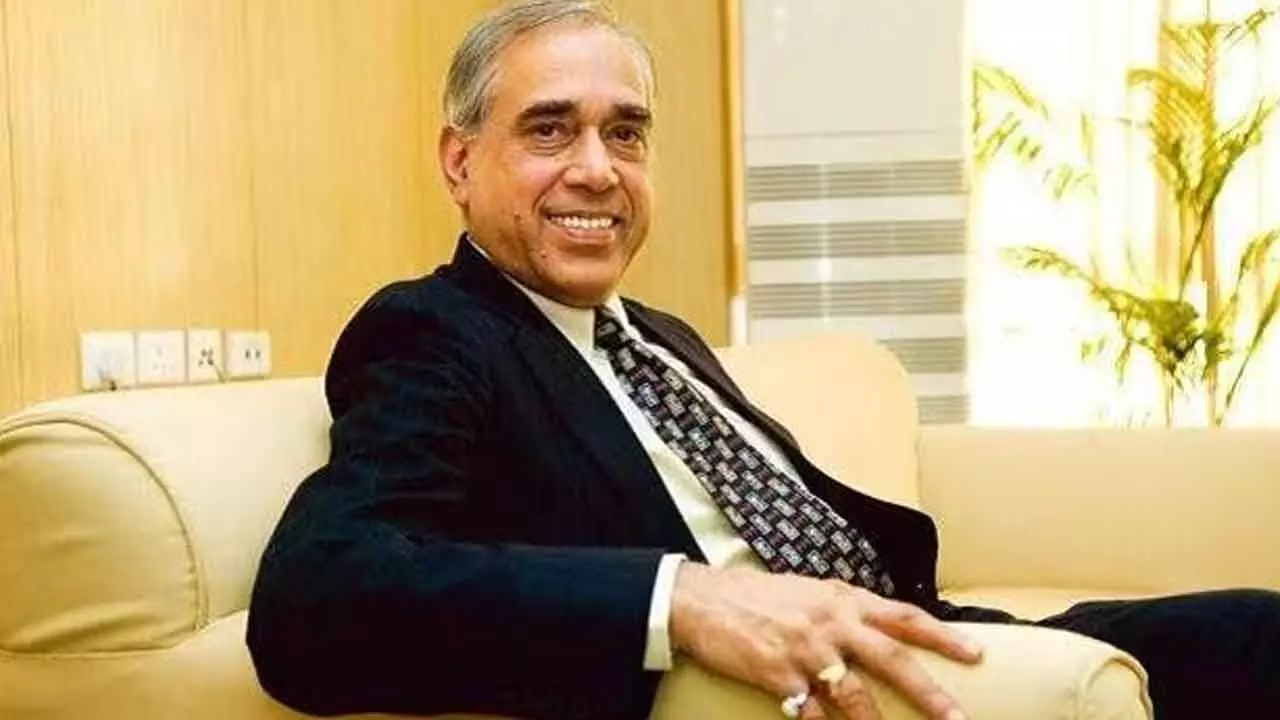
There are “limits” to correcting historical wrongs, Nripendra Misra recently told a newspaper. It is a sagacious remark that has come not a moment too soon. Misra is Ayodhya Ram temple’s officer-architect-in-chief; he also headed the temple construction committee which was set up in February 2020. Additionally, he served as the principal secretary to Prime Minister Narendra Modi throughout his entire first term. By all accounts, he is a man of the system—and of the saffron ecosystem.
Three years ago, Rashtriya Swayamsevak Sangh chief Mohan Bhagwat made a similar statement against the backdrop of the Gyanvapi dispute. “Why escalate the fight? Why look for a ‘Shivling’ in every Masjid?” he had asked Mohan Bhagwat while addressing the concluding ceremony of the third-year RSS officer training camp in Nagpur.
Now that the Ram Temple has been built, would there be closure to other temple controversies or more claims would arise? Misra said, “I place this responsibility not so much on the government. It will have to be of various social groups, representatives, elected or not elected—they must recognise. They have limits on correcting issues.”
By shifting the responsibility from the government to broader society—social groups, elected and unelected representatives—he underscores the importance of collective wisdom and restraint. His perspective suggests that healing and reconciliation are not solely the work of political institutions but also civil society. The maturity of a nation is often judged not just by its ability to confront its past, but also by its capacity to move beyond it constructively. Misra’s remarks advocate for a forward-looking approach, one that does not become trapped in an endless cycle of retribution or religious one-upmanship.
His advice must be heeded not just by the general public but also by those in positions of influence—especially individuals and organisations with ideological stakes in temple reclamation. Misra, with his considerable standing in the administrative and cultural spheres, is well-placed to guide this discourse. His voice carries credibility and gravitas, and he must use this to ensure that zealous elements within the saffron camp do not attempt to stake claims on more religious structures—be they mosques, dargahs, or other sites of shared heritage.
India’s cultural and religious landscape is layered and complex. Addressing every historical grievance by altering places of worship risks unsettling the delicate pluralism that has long defined the nation. Such pursuits would only lead to further polarisation, unrest, and alienation of communities. Misra’s call to acknowledge limits is a call for societal maturity.
The Ram Temple should, ideally, be seen as a closure—a symbolic culmination rather than a beginning of further contentious campaigns. There must be a conscious effort to ensure that the temple serves as a bridge between communities, rather than a wedge. If the temple’s construction is to have a truly unifying legacy, then the rhetoric and actions surrounding it must reflect reconciliation, not triumphalism.
In this context, Misra’s cautionary words gain even more relevance. Leaders from all walks of life—political, religious, intellectual—must rally around the idea that true justice and national harmony lie in peaceful coexistence, not in the pursuit of perpetual cultural correction. The time to heal is now, and that healing can only come through restraint, empathy, and a shared vision for the future.