A critical journey: Exploring the mystical universe of Rumi

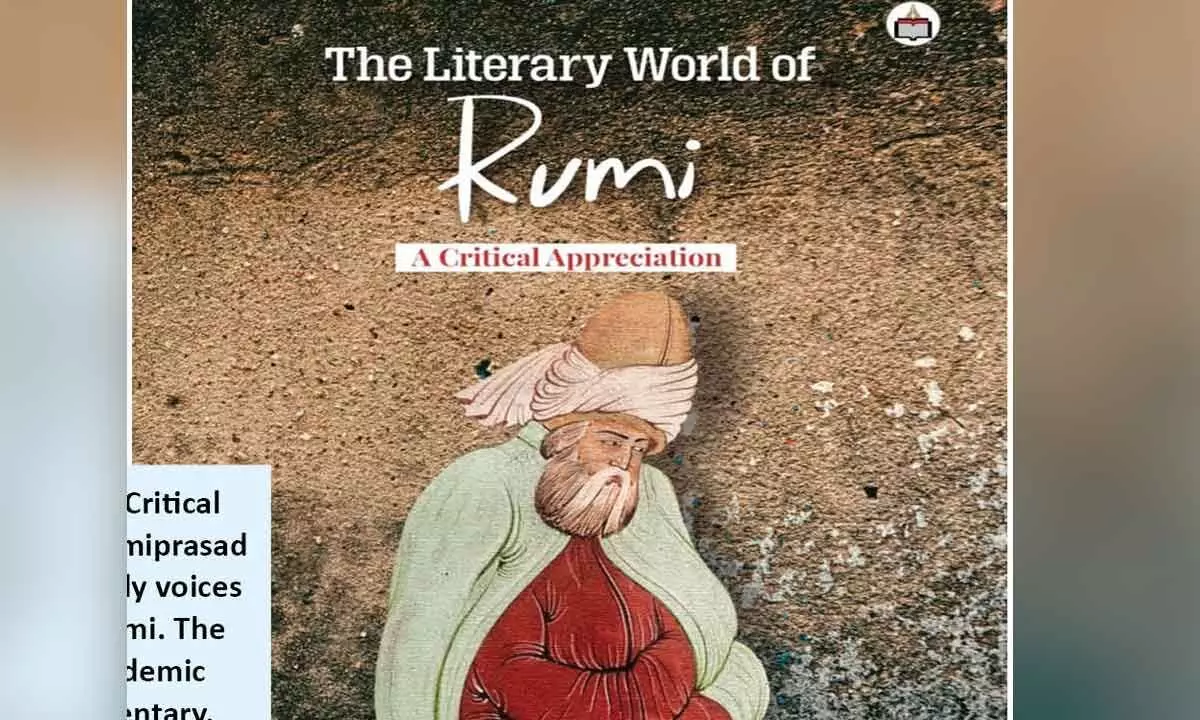
‘The Literary World of Rumi: A Critical Appreciation’ edited by PV Laxmiprasad is a remarkable attempt to bridge cultures, philosophies, and literary traditions through the lens of one of history’s greatest mystic poets. This anthology serves as both a critical resource for scholars and an engaging exploration for general readers.
‘The Literary World of Rumi: A Critical Appreciation’ edited by PV Laxmiprasad, an Indian author, is an ambitious and multifaceted critical anthology that aims to bring together a spectrum of academic and interpretive voices on the enduring mystic and poet Jalal al-Din Rumi. It is recalled that Rumi, a 13th century Persian poet, is renowned for his spiritual and mystical poetry that explores themes of love, spirituality, and self-discovery.
The collection of critical essays offers substantial insights into Rumi’s spiritual, literary, and philosophical dimensions while making deliberate efforts to connect them to contemporary discourses in literature, translation, and cultural studies.
This critical anthology comprises essays from scholars across disciplines, offering a rich tapestry of interpretations—from spiritual readings and philosophical parallels to cultural translations and film studies.
This pluralism reflects Rumi’s own universalism and adds depth to the volume. A particularly compelling feature is the inclusion of region-specific studies on Rumi’s influence in Kerala. This localized focus balances with the global resonance of Rumi’s work, showing how Persian mysticism found expression in the South Indian cultural landscape—especially in translation, Ghazal traditions, and cinema.
Several chapters, such as those comparing Rumi with Swami Vivekananda, Paulo Coelho, and the Bhagavad Gita, showcase an intellectual synergy across cultural and religious traditions. These comparisons affirm Rumi’s spiritual humanism as cross-cultural and perennial.
The inclusion of introspective commentaries makes the book relatable even to readers unfamiliar with academic prose. PV Laxmiprasad’s editorial vision is commendable in its clarity and breadth. The introductory essay ‘Rumi – The Writer par Excellence is informative,’ setting a thematic foundation for the rest of the anthology.
‘The Literary World of Rumi’ is an intellectually stimulating homage to one of the world’s greatest mystical poets. While there are editorial and stylistic shortcomings, they do not overshadow the book’s essential value: to bring Rumi’s timeless wisdom into new cultural and academic spaces. The work edited by PV Laxmiprasad successfully democratizes Rumi, making his mysticism speak not only to scholars butalso to seekers, poets, and students across disciplines and geographies.
This critical anthology is best suited to scholars of comparative literature, religious studies, and mysticism, educators seeking multi-angled studies of Rumi, and finally to general readers interested in Sufism, cultural philosophy, and poetic introspection.
In conclusion, ‘The Literary World of Rumi: A Critical Appreciation’ is a thought-provoking analysis of Rumi’s poetry. Through its exploration of themes, symbolism, and literary devices, this book provides a deeper understanding of Rumi’s works and their enduring significance. P.V. Laxmiprasad’s expertise as a literary critic and editor shines through in this comprehensive analysis, making it a valuable contribution to the field of literary studies.