Congress in tatters, India in the ascendant: The story Modi wrote
Vadnagar to Global Vanguard: Modi’s saga of boldness
The Congress party’s hollow rhetoric and its political irrelevance in today’s India has been exposed. It brings out their petty attempts to belittle India’s military achievements and undermine national institutions with Narendra Modi’s bold, unapologetic leadership over the past 11 years. From Operation Sindoor’s daring success to sweeping developmental reforms and a reassertion of India’s sovereignty, the piece highlights a nation transformed by decisive governance. As the opposition clings to obsolete slogans and self-inflicted irrelevance, India surges forward—confident, assertive, and determined to define its future on its own terms. This sharp, incisive analysis cuts through the noise to reveal the stark contrast between empty rhetoric and transformative action.
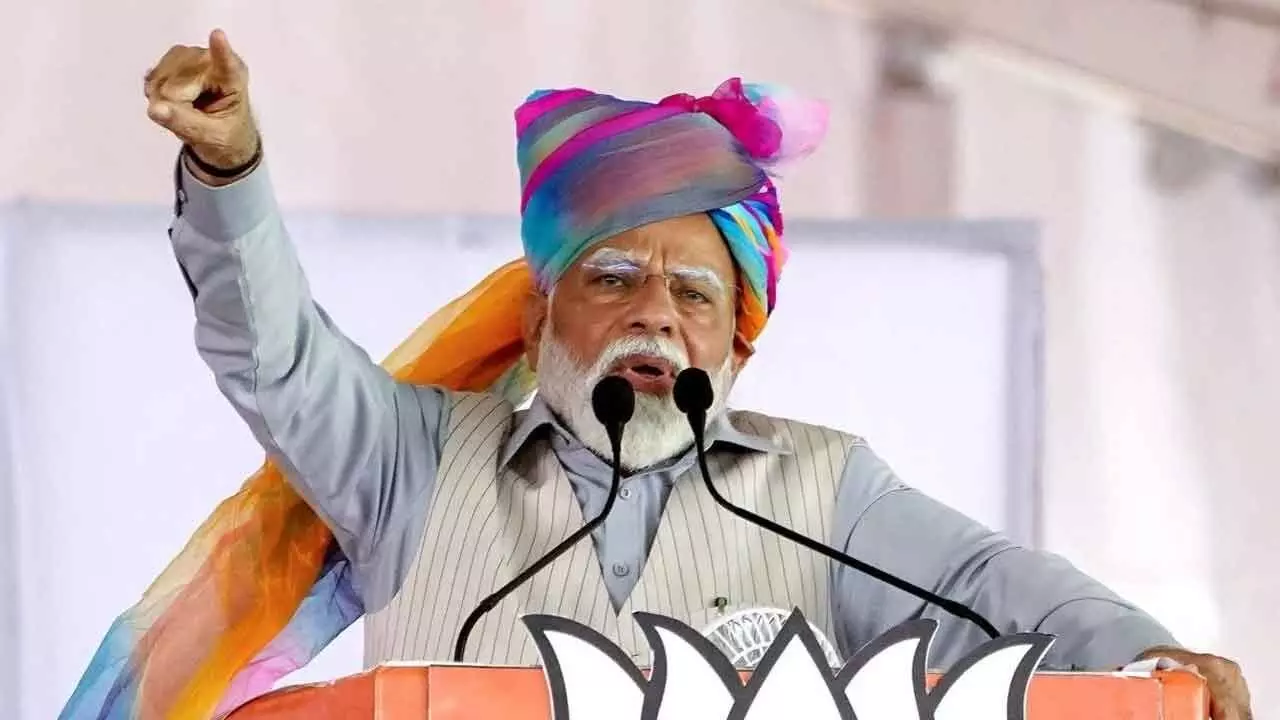
In the annals of Indian politics, few leaders have reshaped the national landscape as dramatically as has Narendra Modi. Since taking office as India’s 14th Prime Minister on May 26, 2014, Modi has not merely consolidated power—he has redefined the very vocabulary of governance, development, and national pride.
His journey from a tea-seller’s son in Vadnagar to the most formidable political figure of the 21st century India is as much a testament to personal grit as it is to an uncanny grasp of India’s pulse.
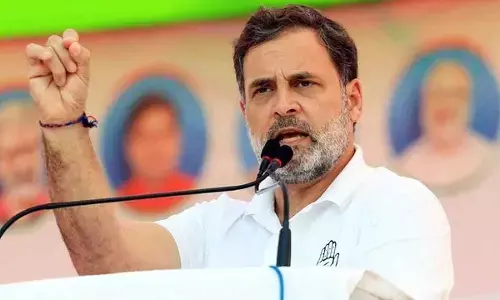
Yet, when I sat down to critically analyse his transformative 11-year tenure, some self-styled members of the so-called intelligentsia accused me of giving undue attention to Rahul Gandhi—a man who, by any measure, is now a political relic. If they choose to serve as cheerleaders for a party that has collapsed into irrelevance, so be it.
But let’s be blunt: a party that once ruled India for over five and a half decades and preens itself as the liberator of India from British rule (a claim that is, at best, a selective half-truth), now speaks the language of our rogue neighbour, undermines the valour of our armed forces, with dangerous half-truths and baseless cynicism.
Just look at their post-Operation Sindoor antics. Instead of saluting the audacity and precision with which India struck deep into hostile territory—neutralising terror infrastructure and humiliating an enemy emboldened by nuclear bravado—Congress chose to scoff and smear. Their questions were not those of a loyal opposition but of a party marinated in pettiness: Why hasn’t PoK been taken back yet? How many aircraft did we lose? These aren’t queries rooted in strategy or statecraft—they’re the desperate gasps of a party sinking under the weight of its own irrelevance.
Rahul Gandhi’s crew—flailing in their frustration—ignored clarifications from the Prime Minister, the Director General of Military Operations, the service chiefs, and External Affairs Minister Dr S Jaishankar.
An octogenarian AICC President dismissed Operation Sindoor as a mere “chut phut.” Jairam Ramesh, the party’s designated mouthpiece, stooped to equate Indian parliamentarians—who were briefing global leaders on Pakistan’s perfidy and India’s measured response—with terrorists. It was a spectacle not of leadership but of a circus.
Rahul himself plunged into depths of impropriety by branding Dr Jaishankar a “Jaichand”—an intolerable insult not just to a distinguished diplomat but to India’s collective pride.
Their outbursts aren’t mere gaffes; they’re a declaration of their frustration at being outclassed and outmanoeuvred by a leader with the spine to act decisively.
Congress, once the custodian of national aspiration, has now become the chief apologist for anti-national rhetoric. Leaders like Shashi Tharoor, who dare to articulate a vision of unapologetic nationalism, are derided as “super BJP spokespersons.” It’s saying that Congress punishes its own for standing with the nation while fawning over dynastic mediocrity. Their contempt for nationalism is matched only by their disdain for the armed forces and India’s democratic institutions.
When Modi honours soldiers or praises national resilience, Congress dismisses it as “jumla”. When Modi projects India’s strength, Congress resorts to petty mockery, hiding behind the martyrdom of Indira and Rajiv Gandhi as though no other Indian has made sacrifices for the nation.
And then there’s Mamata Banerjee. West Bengal’s Chief Minister declared there was “no war”—merely a “small incident”—and had the temerity to object to the name Operation Sindoor. Perhaps she should direct her questions to the countless women who lost their Sindoor—their husbands, their protectors—during this operation. Her dismissive remarks were a disgraceful affront to all those women who lost their Sindoor. It is a calculated insult that the nation will neither forget nor forgive.
Against this nauseating backdrop of an opposition mired in cynicism and self-loathing, the contrast with Modi’s leadership could not be starker. When he assumed office, India was staggering under the weight of policy paralysis, corruption scandals, and a crisis of confidence sown by the UPA’s muddled coalition politics.
Modi’s promise of “Sabka Saath, Sabka Vikas” electrified a nation exhausted by incompetence.
Contrast Congress’ feeling of isolation and desperation with Modi’s unapologetic, assertive leadership. His policies—though polarising at times—have undeniably transformed India into the world’s fourth-largest economy. Under his stewardship, the BJP has shattered electoral ceilings, expanding from the Hindi heartland into regions long dominated by opposition parties.
The “Modi wave” is not just a slogan—it’s a tectonic shift in the country’s political geography.
His ambitious development agenda—Make in India, Digital India, Swachh Bharat, Ujjwala Yojana—has brought tangible benefits to millions. Infrastructure projects, renewable energy expansion, high-speed rail, and digital connectivity have reinforced the image of a government that delivers. Welfare schemes like PM-Kisan and Ayushman Bharat ensure that even the most marginalised are not left behind.
Moreover, Modi’s strategic mastery over communication—through social media, symbolic gestures, and “Mann Ki Baat”—allows him to bypass the opposition’s clumsy narratives and connect directly with the masses.
His decisive handling of national security—from surgical strikes to Balakot to Operation Sindoor—underscores his credentials as a leader who prioritises national interests over political correctness. The revocation of Article 370 wasn’t just a political statement; it was a tectonic assertion of India’s sovereignty.
On the global stage, Modi has redefined India’s presence. His government has deepened ties with powers like the US, Japan, Israel, and Australia, while engaging regional forums like the Quad and BRICS. The G20 summit hosted by India in 2023 was a crowning moment, projecting India as a confident, culturally rooted, and globally engaged power.
His emphasis on civilisational pride—through initiatives like International Yoga Day and cultural diplomacy—has sent a clear message: India will not be lectured to by the West.
Operation Sindoor was not just a military manoeuvre; it was a testament to Modi’s decisive leadership. While opposition leaders wallowed in distractions, Operation Sindoor delivered a blow not only to enemy infrastructure but to the defeatist narratives of the naysayers. It was a surgical assertion of sovereignty and a master class in statecraft.
Of course, Modi’s tenure has not been without controversy—concerns over rising majoritarianism, demonetisation, GST, perceived suppression of dissent, and the use of investigative agencies against opponents have been raised. The abrogation of Article 370, the Citizenship Amendment Act (CAA), and handling of protests drew sharp criticism. But despite this, the electorate continues to repose faith in his leadership. The BJP’s resounding victory in 2019, with an even bigger mandate than in 2014, underscored this trust in him.
In just eleven years, Narendra Modi has scaled political heights that few dared to imagine. And as Congress flounders in confusion, clinging to stale slogans and dynastic entitlement, Modi’s leadership continues to command the confidence of a nation that knows the difference between empty rhetoric and decisive action.
The question isn’t whether the opposition can recover from its current irrelevance. The real question is whether they can even comprehend the scale of their self-inflicted demise. As Rahul, Mamata, and their hapless cabal continue to sneer at national achievements, Modi marches forward—undaunted, unapologetic, and unchallenged. While they drown in slogans and scorn, he builds a new India: confident, assertive, and unafraid to confront its adversaries. History, after all, remembers not the whiners and the weak, but the bold who dared—and delivered.
(The author is former Chief Editor of The Hans India)