The Deep State’s Asian playbook: Why India must stay vigilant

South Asia is on fire; governments have been toppled amid waves of public fury, including Nepal. But the unrest follows a troubling pattern: states moving closer to India or China suddenly face chaos, often amplified by foreign toolkits and U.S. “Deep State” interventions under the guise of democracy promotion. India is not immune. As the opposition peddles unproven “vote chori” claims and echoes external narratives, the risk of manipulation grows. The real test is whether India’s political class can unite to safeguard democracy and sovereignty before it is too late.
The political fires burning across South Asia are not random sparks. They are part of a disturbing pattern where foreign toolkits exploit discontent to topple governments. From Colombo to Dhaka, from Islamabad to Kathmandu, we are watching unfolding of the same playbook. The danger for India is real.
This is the moment when our opposition parties must stop playing with matches in a dry forest. They can dislike Narendra Modi. They can prepare to defeat him in 2029. But they cannot open the gates for outside forces looking to destabilise India from within.
Sri Lanka was the first domino. In 2022, economic collapse and street rage forced the president to flee. Two years later, Sheikh Hasina in Bangladesh was pushed into exile after violent protests. Imran Khan’s fall in Pakistan came amid orchestrated turmoil. Indonesia has been kept on boil. And this week, Nepal exploded, its prime minister resigning after mayhem that shook the Himalayan state to its core.
Different countries. Different leaders. Different triggers. Yet a common script: mass anger, collapsing trust in elites, cries of corruption and inequality, and sudden explosions of youth-led fury.
Scratch the surface and the pattern emerges.
• Sri Lanka was moving closer to India.
• Bangladesh resisted U.S. diktats and strengthened ties with New Delhi.
• Pakistan tilted toward China.
• Nepal too was deepening its Beijing connection.
• Indonesia balanced China trade with a growing strategic embrace of India.
These alignments make one thing clear: whenever a state drifts from Washington’s orbit, unrest follows. Coincidence? Hardly.
For decades, America’s “Deep State” — the entrenched network of security, intelligence, and bureaucratic elites — has shaped outcomes abroad. It claims to promote democracy. This creates spaces for chaos, allowing extremist ideologies and pliable regimes to take root.
Nepal is the latest case study. Analysts say the unrest was sparked by the government’s September ban on multiple social media platforms. True — but that is not the full story.
The protests were overwhelmingly youth-led, coordinated online, and carried slogans that echoed global activist playbooks. Commentators on Indian channels were quick to suggest: “Nepal ke youth ne kar diya, ab India ki baari.” Even opposition parties like Congress, Samajwadi Party and RJD echoed such views.
The similarities with India — youth unemployment, corruption, accountability gaps — are being exaggerated to create a sense of impending crisis here. What is left unsaid: India remains the fastest-growing major economy. Flaws exist, yes. But to call India an “anarchy in waiting” is absurd.
The tragedy is that India’s opposition seems eager to play chorus. Having failed to convince voters for nine years, it now clings to the “vote chori” theory. No evidence offered. No authentication attempted. Just rhetoric.
The BJP claims this campaign has foreign fingerprints, crafted abroad to erode trust in Indian democracy. The Congress mocks the charge. But the echoes are troubling.
Rahul Gandhi’s messaging often sounds uncannily aligned with U.S. talking points. His claim of a “dead economy.” His parroting of “Vote Chori.” His bizarre threats that youth will beat Modi with sticks. His silence or absence during critical moments-Punjab floods, the Vice-President’s election. They all raise questions.
This is not healthy opposition. This is reckless politics that risks playing into foreign hands.
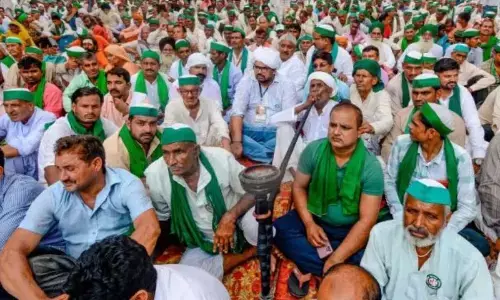
We have seen it before. The farmers’ protest that turned violent at Red Fort. The raising of the Waqf Board issue. The aggressive push for caste census. Each attempt designed to inflame. Each one amplified by social media wings working overtime. Yet each has failed to dent the basic trust people place in India’s democratic process.
But here lies the danger: even failed agitations create fertile ground for external actors. They do not need outright victory. They only need to plant doubt, sow cynicism, and weaken institutions.
Look at the numbers. Reports say over $60 million in U.S. aid has been pumped into Nepal under the banner of “strengthening democracy” and “empowering civil society.” Sounds noble. But it effectively bankrolls activists, media houses, and NGOs that can shape narratives and fuel movements.
India has not been spared similar attempts. The U.S. embassy reportedly invited “influencers” after the BJP secured 240 seats — part of a strategy to cultivate new opinion-shapers through tours, awards, and training.
This is soft regime-change work. It is subtle. It is disguised as partnership. But it aims to mould domestic politics. India is not Sri Lanka or Nepal. Our scale, diversity, and democratic depth make us resilient. But that does not mean immune.
Washington is already uncomfortable with India’s tough stance on tariffs and its refusal to be a junior partner in the global order. The Deep State, when displeased, looks for pressure points. Civil society, social media, and opposition parties become easy targets.
The question is: will our opposition recognise the danger? Or will its desperation to unseat Modi make it a willing pawn?
The opposition has every right to challenge Modi. That is democracy. They should build a credible alternative, win hearts, and defeat him in 2029 if they can. But inviting, echoing, or amplifying foreign interference is a betrayal. Respect institutions. Stop theatrics. Compete fairly. That is the only way to strengthen India.
The youth of South Asia have been weaponised by others’ agendas. Today’s Nepal stands testimony. Tomorrow it could be somewhere else. But India must not trek that path.
Swami Vivekananda’s ‘arise, awake’ call is more relevant than ever before. Our young people must direct their energy toward overcoming corruption, inequality, and social injustices — not toward tearing down their own country in the name of imported slogans. India’s destiny cannot be outsourced. Our democracy cannot be subcontracted. Our sovereignty cannot be pawned.
The Deep State is playing its game. The question is whether India’s leaders — government and opposition alike — are wise enough to see it.
(The author is former Chief Editor of The Hans India)