Bairabi–Sairang railway line ushers in a historic moment for Mizoram

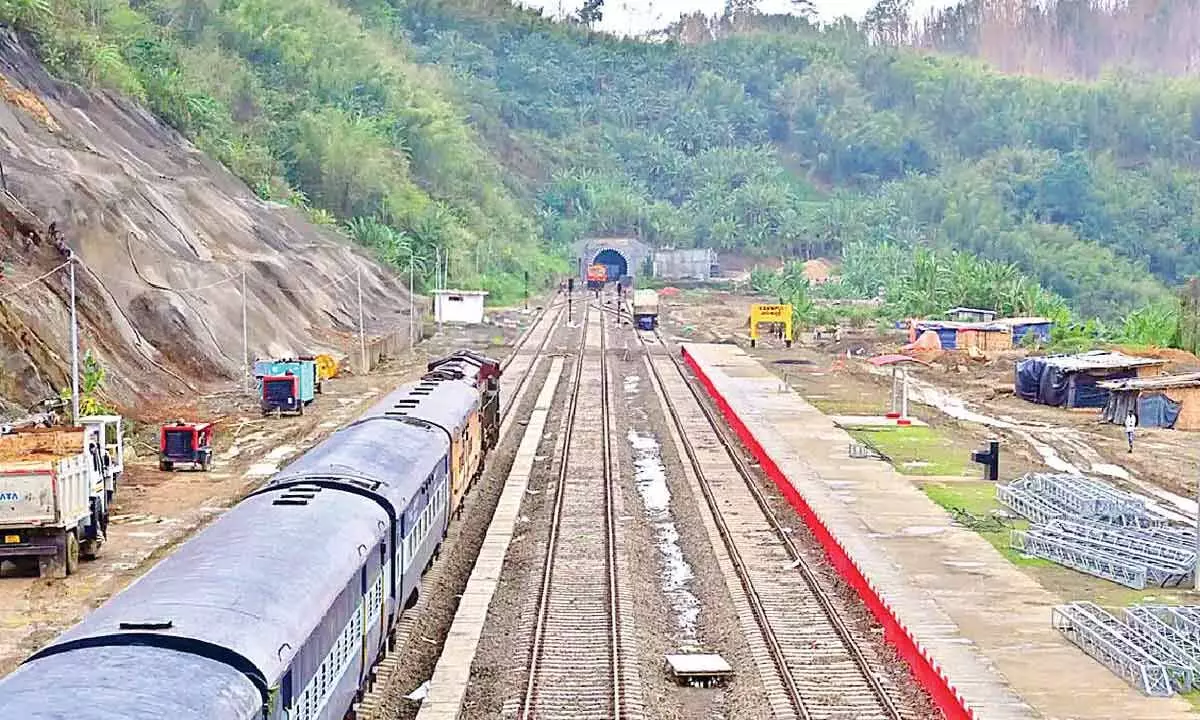
Hyderabad/Aizawl: The inauguration of the Bairabi–Sairang railway line has ushered in a historic moment for Mizoram, promising to reshape livelihoods, expand economic opportunities, and bring the remote hill state closer to the national mainstream after decades of geographical isolation.
Built at a cost of over Rs 8,000 crore, the 51-kilometre stretch connects Aizawl, the State capital, with India’s vast railway network for the first time, overcoming difficult terrain with towering bridges, long tunnels, and complex viaducts that stand as engineering marvels but, more importantly, as pathways to progress.
For the people of Mizoram, long dependent on narrow and landslide-prone roads, the new railway means far more than modern infrastructure—it is the assurance of cheaper goods, faster access, and more reliable lifelines. Analysts suggest transport costs for essentials like fuel, construction materials, farm inputs, and groceries could fall by 30–40 percent, while consumer prices in many districts may drop by 10–20 percent, giving households real savings and easing inflationary pressure on the state’s fragile economy.
“This line is a lifeline for Mizoram,” said CPRO adding that the project will “revolutionise connectivity, bring down costs, and unlock opportunities for both small traders and large industries.” For farmers, who make up a large portion of the workforce, the line will sharply reduce post-harvest losses, ensuring that pineapples, ginger, turmeric, oranges, and other perishable crops can reach markets in Assam, West Bengal, and beyond before they spoil, thereby raising incomes and boosting cultivation.
Tourism, too, is expected to flourish, as the state’s scenic hills, vibrant culture, and biodiversity become more accessible; industry observers forecast a 40–50 percent increase in tourist arrivals within five years, benefiting homestays, hotels, handicraft sellers, and local guides.
“Tourism is one of the sectors that will see immediate benefits,” noted the CPRO, emphasising that “Mizoram can now showcase its beauty to the rest of the country without connectivity being a barrier.” The railway’s impact on employment is equally significant: thousands were engaged during construction, and thousands more are expected to find work in logistics, retail, transport, and hospitality as ancillary industries grow, with experts predicting 3,000–5,000 indirect jobs each year.
Local industries, from bamboo crafts to textiles and food processing, will also gain reliable access to larger markets, reducing dependence on middlemen and opening pathways for Mizoram’s unique products to gain national visibility. Beyond economics, the project is set to enhance quality of life, enabling students to travel for higher education more affordably, patients to access advanced healthcare faster, and schools and hospitals to receive supplies more reliably, especially during monsoon disruptions. Strategically, the Bairabi–Sairang line strengthens India’s Act East policy, improving integration with Assam and potentially linking trade corridors to Myanmar and Southeast Asia, positioning Mizoram as a gateway rather than a cul-de-sac. Economists estimate that the railway could add ₹500–700 crore annually to the state’s Gross State Domestic Product, lifting growth by 2–3 percent—a substantial boost for a small state.
Yet, challenges remain: maintaining the line through rugged hills will require sustained investment, environmental safeguards must be respected, and policies must ensure that benefits reach remote communities rather than concentrating in urban centres.
Still, the mood across Mizoram is one of optimism, with the steel tracks now symbolising a dream finally realised. As the CPRO remarked, “Railways have always been a driver of progress, and with this project Mizoram finally joins the national rail family.
It is not just about trains—it is about growth, opportunity, and hope.” If harnessed wisely, the Bairabi–Sairang railway will not only carry trains but also carry Mizoram into a new era of economic resilience, social mobility, and integration with the wider world.